Wie AG, AF und AR Lösungen kritische Anzeigeprobleme lösen
2026-02-13
10:00
Anzeige Beschichtungen halten eine Schlüsselrolle in heute’ Bildschirm-Setups. Sie beheben gemeinsame Seh- und Gebrauchsprobleme. Starke Reflexionen an hellen Stellen, der Aufbau von Fingerabdrucken auf Berührungsbereichen und der geringere Kontrast durch Außenlicht verletzen die Arbeit in Anwendungen von industriellen Bedienfeldern bis hin zu medizinischen Geräten und Automobildashboards. Diese Probleme verursachen weniger Leistung, mehr Wartungsbedarf und mögliche Sicherheitsgefahrten an wichtigen Orten.
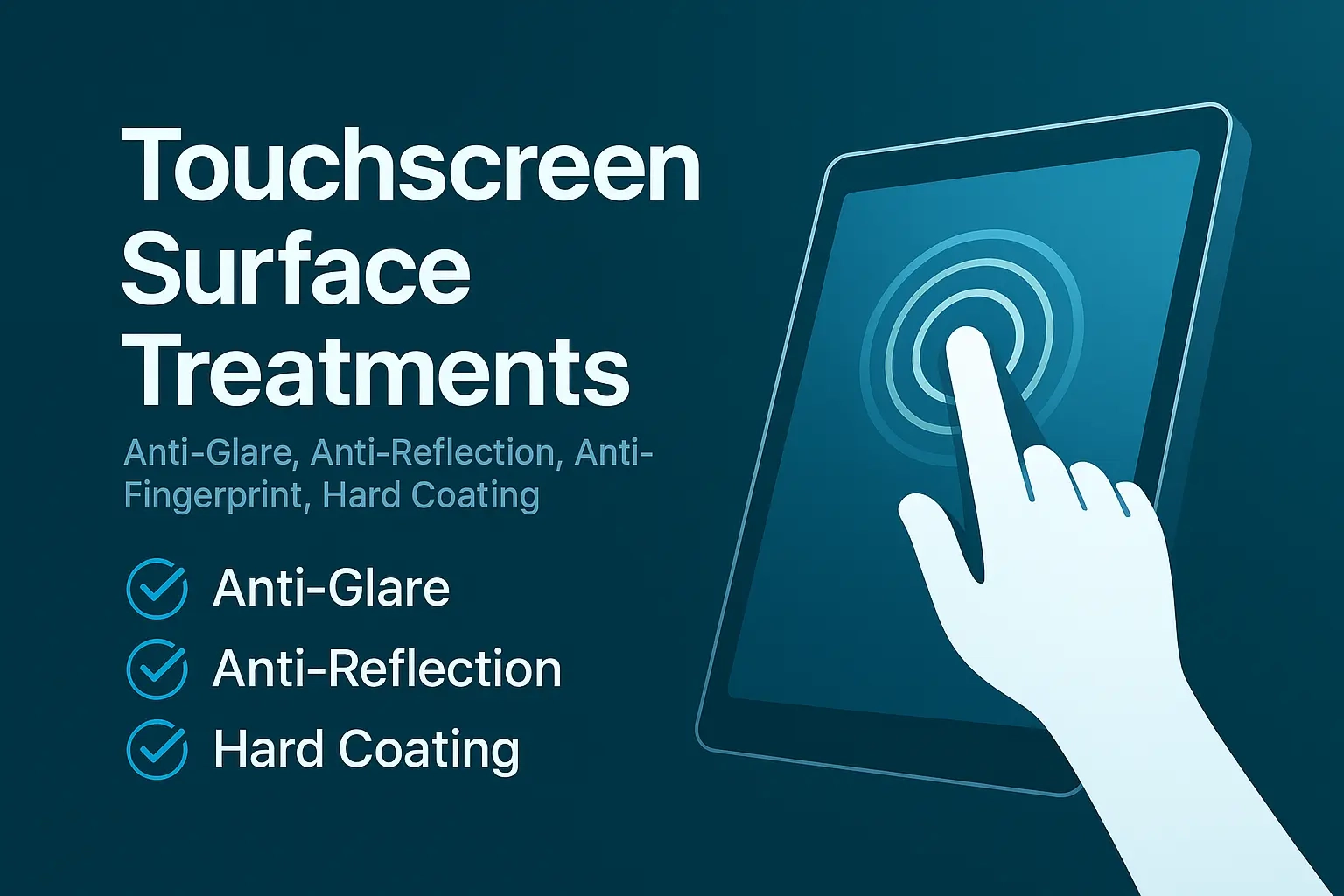
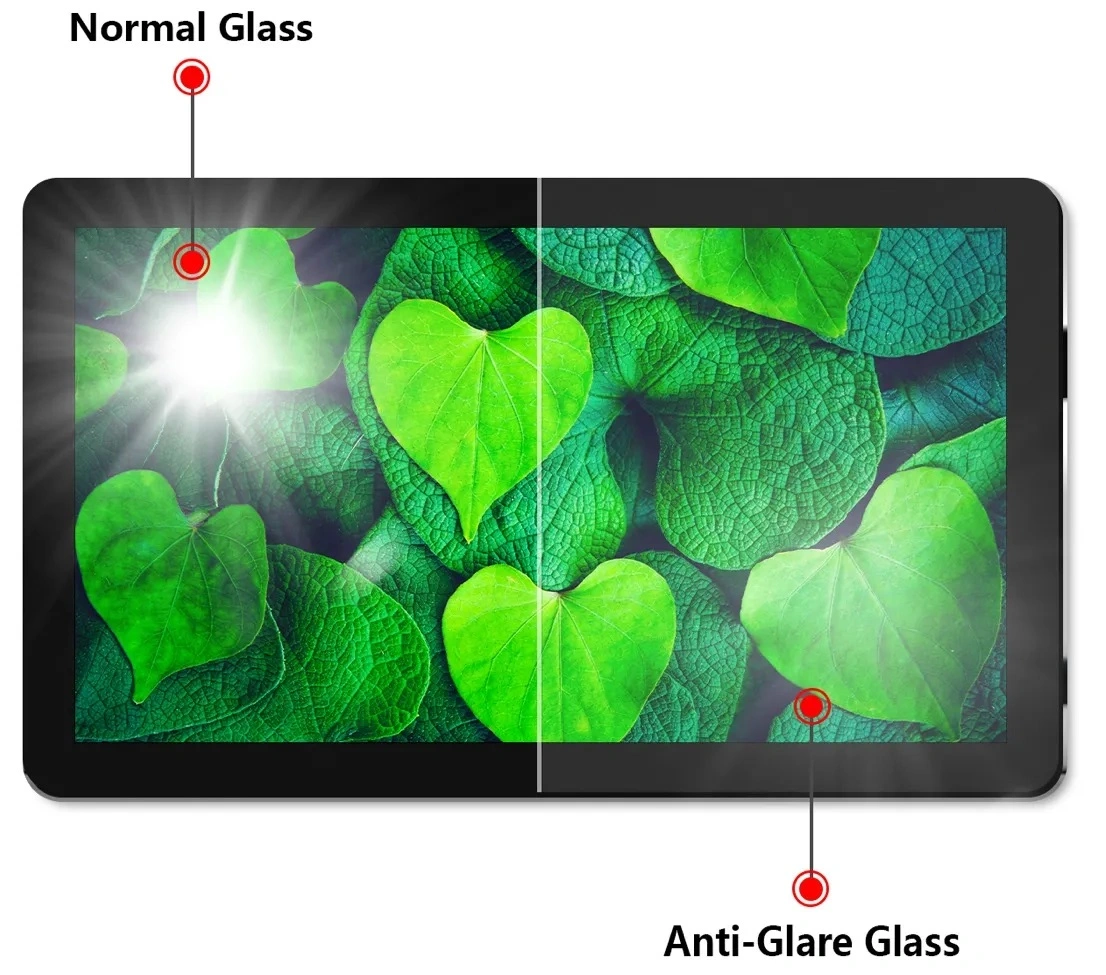
Spezielle Beschichtungen, Anti-Glare (AG), Anti-Fingerabdruck (AF) und Anti-Reflexion (AR)geben gezielte Fixes. AG verbreitet das kommende Licht, um die Blendung zu reduzieren. AF schiebt Öle und Wasser für sauberere Stellen weg. AR senkt Reflexionen durch Lichtwellenkonflikte, um die Bildqualität zu erhalten. Die Wahl der richtigen Beschichtung oder Mischung hängt von Spot-Bedingungen, Verwendung und Arbeitszielen ab.
Warum Display-Beschichtungsprobleme Unternehmen beeinflussen
Schlechte Anzeigesicht führt zu Arbeitsverlangsamungen. Outdoor-Setups beschäftigen sich mit Sonnenlicht verblassen. Dies macht Informationen schwer zu erkennen. In medizinischen Stellen kann Blendung Schlüsseldaten während der Aufgaben verbergen. Touch-Systeme müssen stetig von Fingerabdrücken gereinigt werden. Dies unterbricht die Arbeitsflüsse. Industriebereiche mit Oberleuchten reflektieren auf Steuergliedern störend.
Diese Probleme erhöhen die Stillstandszeiten, erhöhen die Reinigungskosten und reduzieren die Freude des Benutzers. Gute Beschichtungen erleichtern solche Probleme. Sie erhöhen die Stabilität und dehnen das Gebrauchsleben in schwierigen Feldern.
Was sind AG, AF und AR Display Coatings?
AG (Anti-Glare) bildet eine langweilige Oberfläche, die Licht verbreitet. Es verhindert scharfe Spiegelreflexionen. Dies erleichtert die Augenmüdigkeit in beleuchteten Bereichen.
AF (Anti-Fingerabdruck) baut eine öl- und wasserhassende Abdeckung auf. Es drückt Hautöle und Wasser zurück. Dies schneidet Spuren und macht das Wischen einfach.
AR (Anti-Reflexion) setzt viele dünne Filme auf. Sie verursachen schlechte Zusammenstöße von rebounded Lichtwellen. Dies führt zu einem sehr niedrigen Bounce-Back. Es erhöht auch den Durchlauf für klare, kontraststarke Bilder.
Jede Beschichtung trifft Licht- und Berührungsprobleme für eine bessere Gesamtfunktion.
Wie vergleichen sich diese Beschichtungen für Leistung und Anwendungen?
|
Beschichtungstyp |
Hauptfunktion |
Oberflächenaussehen |
Beste Anwendungen |
Hauptvorteil |
|
AG (Anti-Glare) |
Diffusiert Licht, um Blendung zu reduzieren |
Matt mit leichter Textur |
Innenausrüstung, Bürosysteme, HMIs |
Mehr visueller Komfort im Umgebungslicht |
|
AF (Anti-Fingerabdruck) |
Abwehrt Öle und Fingerabdrücke |
Glatt, reibungsarm |
Touch-Schnittstellen, Kioske, Verbrauchergeräte |
Weniger Wartung und verbesserte Hygiene |
|
AR (Anti-Reflexion) |
Minimiert Reflexionen durch Störungen |
Glänzend und transparent |
Außenbeschilderung, Automobil, hohe Helligkeit |
Überlegene Klarheit und Kontrast im Freien |
AG passt zur eingestellten Beleuchtung, wo Nebel in Ordnung ist. AF funktioniert am besten in High-Touch-Fällen. AR führt in hohen Außenlichtpunkten, die Genauigkeit benötigen.
Kombination von Beschichtungen für verbesserte Leistung
Stapelte Fixes bringen bessere Ergebnisse:
- AG AR mischt Blendenverbreitung mit Reflexionsblock. Es funktioniert gut für Indoor-Outdoor-Mischungen in der Automobil- oder industriellen Mensch-Maschine-Schnittstellen (HMIs).
- AG AF verbindet Leichtigkeit mit Reinigung für Bürokioske oder Indoor Touchpanels.
- AR AF bietet saubere Sichtweisen und den Kampf um Spitzenelektronik.
- Die AG AR AF bietet umfassende Schutzmöglichkeiten für medizinische Geräte oder raue industrielle Anwendungen im Freien.
Diese Mischungen wiegen Give-and-Take wie kleine Schärfe Tropfen von AG’ s Ende gegen Gewinne in Gebrauch und Stärke.
Beste Beschichtung für Outdoor Displays
Außenplätze müssen gegen starkes Sonnenlicht halten. AR-Beschichtung zeigt sich durch die Reduzierung von Bounce-Back auf unter 1% in vielen Setups. Es behält Kontrast und Detail. Dies erhöht den Stromverbrauch der Hintergrundbeleuchtung nicht. Der Weg unterstützt hohe Helligkeit Panels gut.
Bei budgetengen Projekten gewährt die AG faire Blendenkontrolle. Aber es fügt etwas Nebel hinzu, der Bilder verschwimmen kann. AR bleibt besser für die Spitzensicht in direkter Sonne.
Empfohlene Beschichtungen für Automobilanwendungen
Automobil-Displays erfüllen Schütteln, Temperaturhoch- und Tiefpunkte sowie Sicherheitsregeln. AG AR mischt Schnittblendung aus Dashboard-Sprüngen. Sie erhöhen auch die Klarheit für Karten und Tools. Hinzufügen von AF-Stopps-Markierungen auf häufig berührten Steuerelementen.
Für Head-up-Displays (HUDs) ist AR der Schlüssel, um Geisterblicke und doppelte Ansichten durch Low-Bounce-Optik zu stoppen. Hochfeste Schritte sorgen für eine lange Lebensdauer unter rauen Stellen.
Optimale Beschichtungen für Touch-Geräte
Touch-basierte Anwendungen setzen glattes Gespräch und Sauberkeit zuerst. AF AR passt zu Consumer Tablets und Smartphones. Es hält leichte Reinheit und leicht rein. Diese Schnitte benötigen eine höhere Helligkeit, um Reflexionen zu fixieren.
Industrielle Touchpanels profitieren von der AG AF. Die AG beschäftigt sich mit Fabriklichtblendung. AF hält der harten Reinigung mit Reinigungsmitteln standzuhalten. Diese halten eine stabile Arbeit in starken Einstellungen.
Fertigungs- und Anwendungsprozesse
AG Verarbeitungsmethoden
- Chemisches Ätzen: Die Säurebehandlung von Glas schafft Mikrorauheit für langlebige, hochtransmissive (88-91%) Oberflächen, die für raue Umgebungen geeignet sind.
- Folienlaminierung: Harzbasierte Folien, die auf Substrate aufgebracht werden, bieten eine kostengünstige Blenderreduzierung (89-93% Transmission) mit einfacherer Integration.
AF-Verarbeitungsmethoden
- Physikalische Dampfabscheidung (PVD): Vakuum-aufgebrachte Fluorpolymere liefern hohe Kontaktwinkel (>110°) und Härte (>6H) für erstklassige Haltbarkeit.
- Lösungsmittelbasiert oder UV-gehärtet: Bieten Sie eine moderate Leistung zu niedrigeren Kosten, geeignet für Standard-Touchanwendungen.
AR-Verarbeitungsmethoden
- Vakuumdünnfilmabscheidung: Mehrschichtstapel (z.B. SiO) ₂, TiO₂) erreichen < 0,5% Reflexivität und nahezu 99% Transmission für erstklassige Klarheit.
- Sol-Gelbeschichtung: Nanoskale Spray- oder Tauchmethoden liefern wirtschaftlich 1-2% Reflexivität.
- Moltenauge-Nanostrukturierung: Biomimetische Muster minimieren die Reflexenz auf < 0,2% für Ultraweitwinkel-Leistung.
Die Auswahl der Methode beeinflusst Kosten, Festigkeit und Passform mit Basen wie Glas oder PET.
Langlebigkeit und Kostenüberlegungen
Stärke ändert sich im Weg. Chemical-etched AG Kämpfe tragen gut. PVD AF hält durch schweren Gebrauch fest. Vakuum AR bietet lange Stabilität gegen Spot-Verschleiß.
Kosten steigen mit harter Arbeit: Lösungsmittel AF ist billig, Vakuum AR ist High-End. Die Lebensprüfung umfasst die erste Einstellung, die Reinigungszeiten und die Austauschbedürfnisse. Top-Mixes brauchen mehr Arbeit, aber reduzieren langfristige Probleme.
Die Wahl der richtigen Beschichtung
Prüfen Sie zuerst die Hauptprobleme: Blendung bedeutet AG, Fingerabdrücke bedeutet AF, Reflexionen bedeutet AR.
Schauen Sie sich Spot an: Indoor mag einfache Beschichtungen; Außenbedürfnisse AR.
Über Bedürfnisse gehen: Verbraucher wiegt Kosten/Arbeit; Industrie setzt Stärke an erster Stelle.
Abbildung voller eigenen Kosten: Betrachten Sie die Startkosten gegen weniger Wartung und bessere Nutzung.
Fragen für Coating Partner
Fragen Sie nach eigenen Fähigkeiten, sogar auf große Größen, Testwege und Gebrauchsanpassungsdaten verteilt.
Suchen Sie nach Refs in den richtigen Feldern und Hilfe für individuelle Bedürfnisse.
Häufig gestellte Fragen (FAQ)
Was unterscheidet AG von AR-Beschichtungen?
AG diffusiert Licht über die Oberflächentextur, um die Blendung zu reduzieren, während AR optische Schichten verwendet, um Reflexionen für eine höhere Klarheit aufzuheben.
Sind kombinierte Beschichtungen möglich?
Ja, Schichten wie AG AR AF lösen in komplexen Anwendungen mehrere Probleme gleichzeitig.
Welche Beschichtung passt am besten zu Außenumgebungen?
AR bietet eine optimale Reflexionssteuerung; Die AG dient als leistungsfähige kostengünstigere Option bei gemäßigten Bedingungen.
Wie haltbar sind diese Beschichtungen typischerweise?
Vakuumbasierte AR und PVD AF zeigen eine ausgezeichnete Langlebigkeit; etched AG widersteht effektiv Abrieb.
Können sich Beschichtungen mit Touch- und Helligkeitsmerkmalen integrieren?
Ja, Beschichtungen ergänzen kapazitive Berührung und erhöhte Hintergrundbeleuchtung, ohne die Funktionalität zu beeinträchtigen.
Partner mit Kadi Display für fortschrittliche Beschichtungslösungen
Kadi Anzeigeein professioneller Hersteller und Lieferant von industriellen TFT-LCD-Modulen und kundenspezifischen Displaylösungen mit Sitz in Shenzhen, China, integriert AG, AF, AR und Verbundbeschichtungen in maßgeschneiderte Produkte. Mit über 20 Jahren Erfahrung, Zertifizierungen wie ISO9001, ISO14001, ISO13485 und IATF16949 und einem Fokus auf Industrie-, Medizin-, Automobil- und Outdoor-Anwendungen bietet das Unternehmen zuverlässige One-Stop-Services einschließlich hochheller Displays, Touchpanels und optischer Verbesserungen.
Unternehmen, die nach maßgeschneiderten Lösungen mit diesen Beschichtungen suchen, können Kontaktieren Sie das Team for consultations, samples, and quotes. Email: sales@sz-kadi.com | Phone: +86-13662585086 | Website: www.kadidisplay.com
Fordern Sie technische Diskussionen oder Projektbewertungen an, um die Displayleistung für spezifische Anforderungen zu optimieren.
Vorherige
Wide Temperatur TFT Displays für industrielle Anwendungen
Nächster
Ein Schritt-für-Schritt-Leitfaden zum Mastering von MIPI DSI
Hinterlasse einen Kommentar

Neueste Blog & Nachrichten
- Electronic Component Obsolescence Management for Industrial Displays: An OEM Guide
- How to Develop a Production Ready Custom Display Assembly TFT Module Touch Cover Glass FPC Bonding and Mounting
- 15 Pin vs 22 Pin Raspberry Pi DSI Connectors Cable Pinout and Compatibility
- Native MIPI DSI vs LVDS or HDMI Bridge: An OEM Display Architecture Decision Guide
- MIPI DSI Display Driver Development for Embedded Linux What Hardware Buyers Need to Confirm