
How to Choose the Best Industrial TFT LCD for Your Embedded Device
2026-03-06
10:00
Introduction
In embedded systems, the display serves as the primary interface between operators and machines—whether in factory HMIs, medical diagnostics, or rugged outdoor kiosks. Choosing the right industrial TFT LCD impacts usability, reliability, performance, and long-term viability. This guide covers key factors—from resolution and brightness to interface and lifecycle support—to help engineers select the optimal display for industrial applications. Kadi Display, a trusted manufacturer of industrial TFT LCD modules, specializes in high-brightness, wide-temperature, and custom solutions for embedded projects.
What Is an Industrial TFT LCD in Embedded Systems?
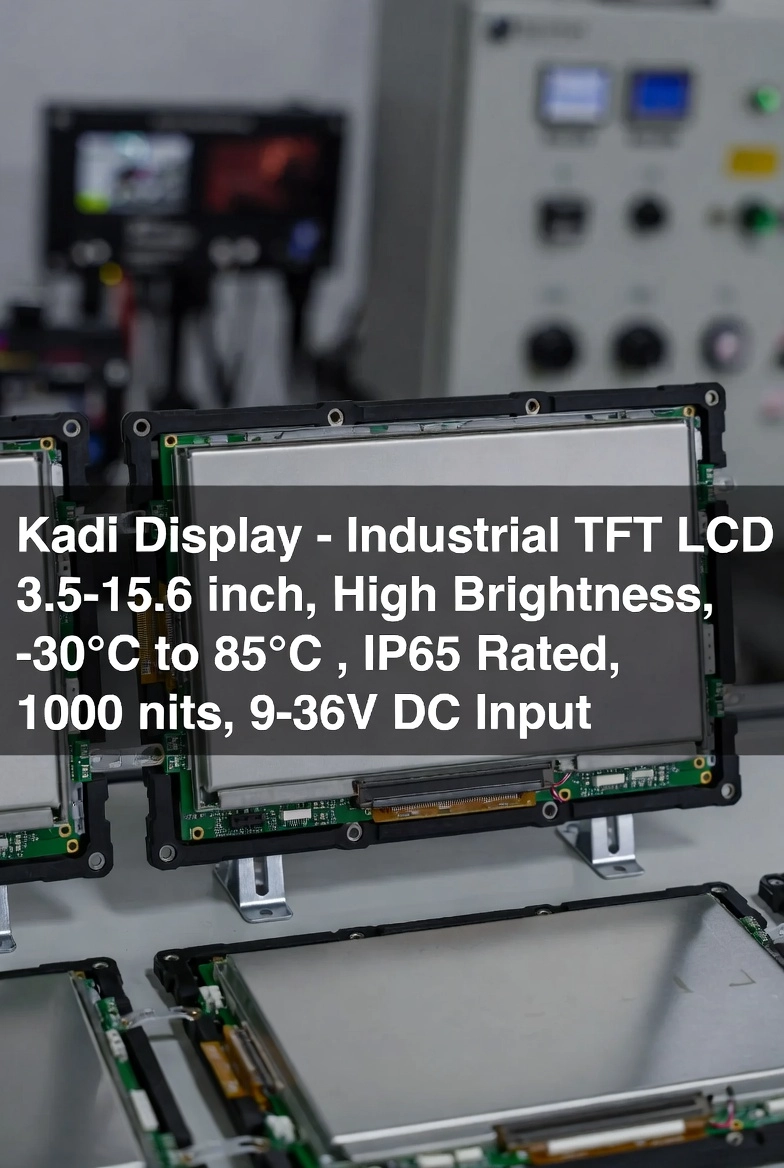
An industrial TFT LCD (Thin-Film Transistor Liquid Crystal Display) module is an active-matrix graphic display engineered for reliability in embedded and harsh environments. Unlike consumer screens, they prioritize wide temperature ranges, high brightness, vibration resistance, and long-term availability (5–10+ years).
Off-the-Shelf vs. Custom Industrial TFT LCD
Off-the-Shelf TFT LCD Advantages
Off-the-shelf (OTS) industrial TFT LCDs consist of prepared units from producers. Their benefits cover:
-
Shorter path to launch
-
Reduced initial expenses
-
Verified dependability and results
-
Fast obtainment and manuals
For initial versions or routine tasks, OTS displays provide straightforward installation. And this eases the process of combining systems.
Off-the-Shelf Disadvantages
However, OTS modules may not fit requirements exactly:
-
Limited choices for dimensions or clarity
-
Unused additional traits
-
Potential clashes with housing layouts
-
Dependency on particular supplier details
In areas such as health assessments or durable external arrangements, adjustments turn out essential.
Custom TFT LCD Advantages
Custom-designed industrial display modules deliver adapted answers:
-
Exact alignment with structural blueprints
-
Enhanced touch arrangement
-
Defined light intensity and coverings (e.g., anti-glare)
-
Brand features like emblems or borders
Bar type TFT LCD modules used in industrial applications often feature ruggedized designs with protective enclosures, ensuring reliability in harsh industrial environments.
Such precision enables creators to boost usability, appearance, and function.
Custom Disadvantages
Even so, adaptations bring drawbacks:
-
Extended delays
-
Increased costs for planning and equipment
-
Minimum order quantities (MOQ)
-
Extra effort in assistance and verification
Balancing these with project scope and item duration is crucial for selecting properly.
Important Factors in Choosing a High-Quality Industrial TFT LCD
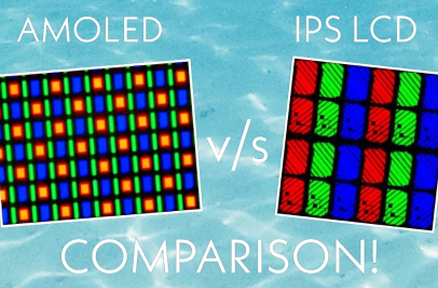
Panel Type (IPS vs TN vs VA)
Panel tech greatly influences sight lines, color fidelity, and expense:
-
IPS (In-Plane Switching): Broad sight lines (178°), solid color display—suitable for HMIs.
-
TN (Twisted Nematic): Rapid reaction but narrow sight lines; affordable for basic panels.
-
VA (Vertical Alignment): Firm contrast level; midpoint between IPS and TN.
IPS panels dominate most industrial and embedded applications due to superior viewing angles and color consistency, while TN remains viable for cost-sensitive, fast-response needs.
Size and Resolution
Screen dimensions typically span from 2″ to 21″, depending on the purpose. Clarity must align with the needed detail amount. For instance, 800×480 fits 7″ units, whereas full HD works for info displays.
Discover our wide range of products, including LCD-TFTs—this indicates broad compatibility with various embedded platforms across different display sizes.
Brightness and Sunlight Readability
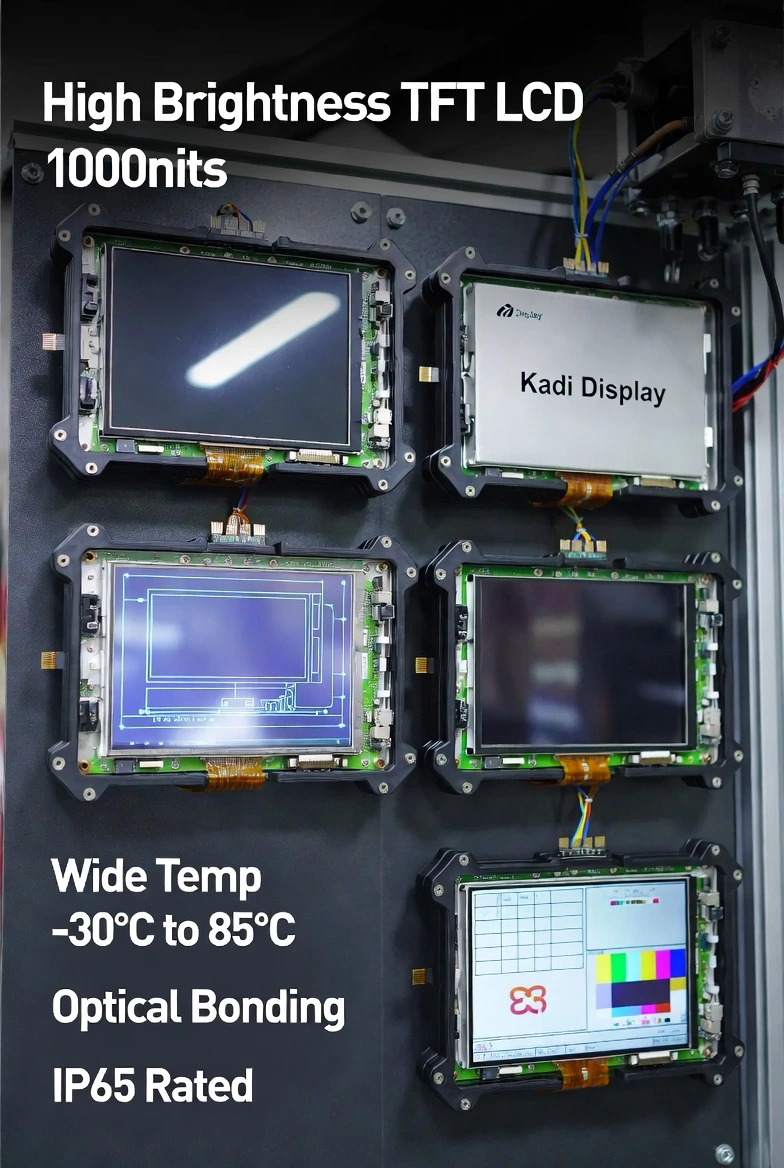
Areas outside or with strong light call for displays with high illumination. Usual industrial screens provide 400–1000+ nits of glow. For visibility under sunlight:
-
Choose 800+ nits illumination
-
Apply optical bonding to lessen shine
-
Consider transflective variants in severe settings
Operating Temperature Range
Industrial locations vary from freezing to boiling. A reliable industrial tft lcd ought to manage:
-
Standard: -20°C to +70°C
-
Extended: -30°C to +85°C or more
They may also support features such as wide operating temperature ranges ensuring functionality in refrigeration units or outdoor kiosks alike.
Display Interface
Matching interfaces is essential for seamless system inclusion:
-
RGB/LVDS: Usual in older setups
-
MIPI DSI/HDMI/eDP: For recent high-clarity screens
-
Match interface type to your embedded board or SoM to avoid additional conversion hardware.
Touch Functionality
Depending on the situation:
-
Resistive touch: Functions with gloves or stylus; not as sensitive
-
Capacitive touch: Supports multiple touches; more instinctive for people
-
Custom overlays can provide anti-fingerprint coatings or water-rejection features.
capacitive and resistive touch screens are part of the product offerings tailored for various interaction modes.
Power Consumption
Reduced energy draw is vital for systems on batteries or in remote spots. Efficiency in LED backlights, ICs for panel driving, and rest modes all contribute to overall draw.
Durability and Environmental Resistance
For demanding applications:
-
IP-rated enclosures (e.g., IP65 for waterproof front)
-
Anti-vibration mounts
-
Protective glass with anti-scratch coating
Bar type TFT LCD modules used in industrial applications often feature ruggedized designs with protective enclosures
Lifecycle and Supply Stability
Industrial tools frequently operate over many years or even longer. Select providers that offer:
-
Long-term availability (5–10 years)
-
Form-fit-function stability
-
Lifecycle management services
This prevents expensive overhauls when components go out of date.
Cost and Customization
Finding equilibrium between funds and adaptation requirements marks a central choice. Although completely adapted displays might deliver perfect blending, mixed versions—regular panels with small alterations—frequently serve as a practical option.Explore custom industrial TFT LCD options from Kadi Display for precise matching to your embedded project needs.
Comparison of Common Industrial TFT LCD Panel Types
| Panel Type | Viewing Angle | Color Accuracy | Cost | Suitability |
| IPS | Excellent | High | $$$ | HMIs, medical, automation |
| TN | Poor | Low | $ | Basic info panels |
| VA | Moderate | Medium | $$ | Consumer-industrial mix |
Picking the appropriate panel kind relies not only on picture quality but also on the location and manner of device usage.
Application-Specific Recommendations
Various uses require distinct specs:
-
Factory Automation: High brightness IPS panels with wide temp range and capacitive touch– see Kadi Display’s embedded solutions.
-
Medical Equipment: High-resolution IPS panels with anti-microbial coatings.
-
Outdoor Kiosks: Sunlight-readable screens with waterproof front and glove-friendly touch.
-
Transportation Systems: Vibration-resistant modules with extended temperature tolerance.
Their compact yet expansive displays enable operators to access critical information at a glance—ideal for scenarios like control rooms or vehicle dashboards.
Final Thoughts & Conclusion
When selecting an embedded TFT LCD for industrial purposes, no single answer fits every case. Elements from visual output to heat endurance each contribute to system durability and user satisfaction. Partnering with a provider who grasps both technical details and real-world setup demands creates a big impact.
Kadi Display offers a wide range of industrial TFT LCD modules, custom solutions, capacitive/resistive touchscreens, controllers, and development tools tailored for embedded systems across industries. The focus on lifecycle support and design flexibility positions Kadi Display as a dependable partner in critical applications.
Contact Kadi Display for samples, recommendations, or custom design support.
FAQs
Q1: What is the difference between consumer-grade and industrial tft lcds?
A: Industrial tft lcds get constructed for tough surroundings with traits like broader heat spans, elevated light levels, sturdy casings, and extended supply pledges. Home displays generally miss these traits.
Q2: Can an off-the-shelf industrial display module be modified?
A: Yes. Numerous providers present partial custom choices. In these, off-the-shelf units receive changes with varied connectors, layers, or casing parts. This helps them suit particular embedded uses better.
Q3: How important is lifecycle support when choosing an embedded tft lcd?
A: It holds great value. Tools in industrial environments often function for years or even decades. Opting for parts with steady supply secures ongoing upkeep. And it steers clear of pricey rechecks down the line.
Q4: What kind of touch screen is better for outdoor industrial use?
A: Resistive touchscreens perform nicely with gloves yet show less sensitivity. Capacitive touchscreens deliver superior user feel but might need adjustments for damp or gloved handling. Certain providers supply unique layers to tackle these issues.
Q5: Does Kadi Display support both standard and custom display solutions?
A: Yes. Kadi Display offers a wide range of standard and custom LCD-TFT modules, touchscreens, controllers, and accessories designed for both off-the-shelf integration and tailored OEM/ODM projects. Contact us for personalized recommendations.
PREVIOUS
How to Choose High Brightness LCD Displays for Outdoor Applications
NEXT
IPS vs Other Panels How to Select Display Interfaces for Embedded and Industrial TFT LCD
Leave A Comment

Latest Blog & News
- How to Choose High Brightness LCD Displays for Outdoor Applications
- How to Choose the Best Industrial TFT LCD for Your Embedded Device
- IPS vs Other Panels How to Select Display Interfaces for Embedded and Industrial TFT LCD
- 7-Inch MIPI DSI Displays: Top Specifications and Best Choices in 2026
- Wide Temperature TFT Displays for Industrial Applications