
Medical Monitors: An In-Depth Look
2026-01-01
11:50
With the constant worries and possible outbreaks of fresh and dangerous illnesses, it is key to think about the impact of good tools in the health field. One such tool, the medical grade monitor, is a special improved screen that follows tough approval rules. It also boosts the build over regular store displays to support safety, neatness, and true picture showing. There are a few big benefits of medical screens versus home level types. When put together, they give a much higher level of care and exactness compared to displays bought from shops.

Certification: Ensuring Safety and Electromagnetic Compatibility
At the core of any medical monitor sits strict following of strong global safety rules. IEC 60601-1 acts as the basic guide. This rule controls the plan, checks, and use of electronic health tools. It covers all from bedside vital sign screens to complex imaging stations. IEC 60601-1 demands full tests for electrical safety, strong build, and electromagnetic compatibility (EMC). It makes sure devices bring no danger to patients or health workers.
A main goal of this approval is to cut down electromagnetic waves that could mess with close life-support units. In a normal hospital room, many tools—like defibrillators, infusion pumps, and electrocardiogram (ECG) machines—work near each other. Bad electromagnetic noise from a weak screen could cause errors. It might lead to wrong readings or slow actions. Approved medical monitors go through hard tests in fake settings. They prove they give off little interference. They often reach Class B or better EMC scores.
Beyond simple safety, IEC 60601-1 adds risk control ideas linked to ISO 14971. It pushes makers to spot and fix possible break points early.
DICOM: Precision in Medical Imaging Standards
Correct diagnosis depends on true showing of health pictures. This area is ruled by the Digital Imaging and Communications in Medicine (DICOM) rule. DICOM was made under the lead of the American College of Radiology and the National Electrical Manufacturers Association. It sets ways for picture capture, save, send, and show across types like X-ray, MRI, and ultrasound. For medical monitors, DICOM following means exact grayscale setup. It makes sure tiny tissue shades and odd spots appear with clinic truth.
Sanitation: Design for Hygiene and Durability
Cleanliness stays a must in health care. There, infection stop directly affects patient results. Medical monitors handle this with built-for-purpose plans. They focus on easy wipe and fight against germ spread. Flat, smooth front edges remove gaps that hold bacteria. Sealed cases reach IP65 or higher protection levels. They guard against dust, splashes, and common clean agents.
Better surface cares raise clean power even more. Antibacterial layers, often with silver-ion or copper-based parts, stop germ growth by up to 99.9%. This is checked by ASTM E2180 tests. Water-repel layers push away liquids. They stop marks during wipes with quaternary ammonium mixes or bleach fluids—usual in plans against viruses like SARS-CoV-2. These traits go past looks. They keep ongoing clear sight. Buildup on untreated faces can twist light by 15-20% over time.
In busy spots like emergency rooms, such strength means less stop time. Monitors built for 50,000+ hours of non-stop work stand heat changes from often cleans. They keep build strength. This toughness fits rules from the Centers for Disease Control and Prevention (CDC). It pushes screens as key to hospital clean plans.
Resolution: Capturing Fine Details for Accurate Diagnoses
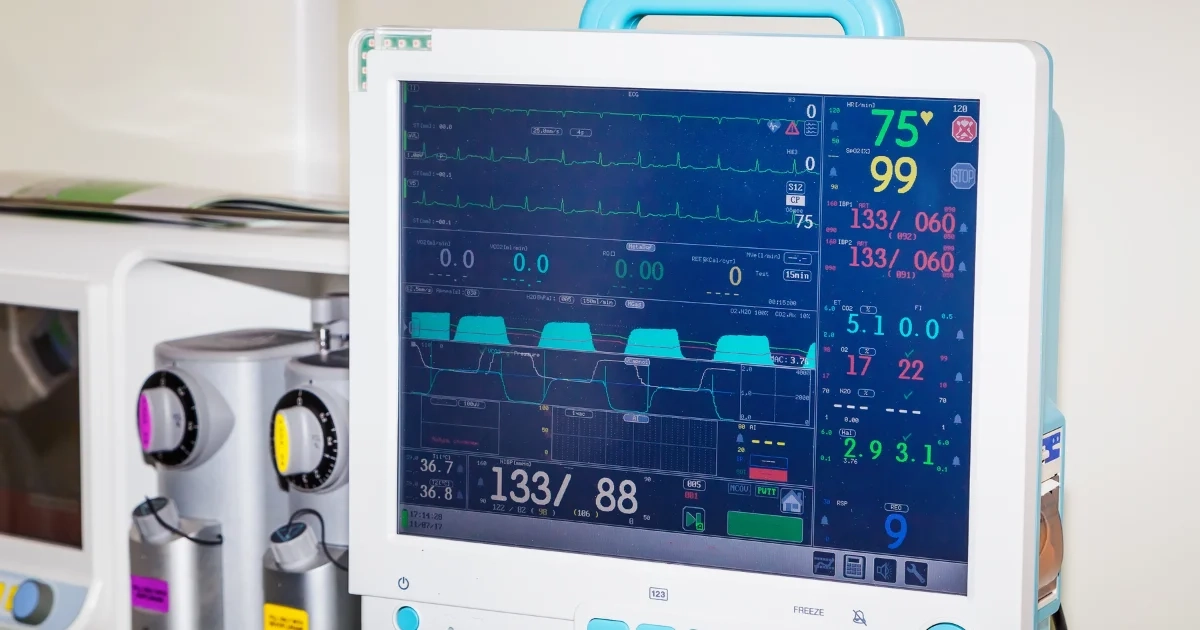
The push for exact diagnosis drives steady steps in screen clearness. Medical monitors now often give 4K UHD (3840 x 2160) and even 8K skills. High pixel count, checked in pixels per inch (PPI), lets doctors spot tiny details—like blood tube small builds in angiography—without zoom errors that hurt full view.
Pixels per inch over 140 PPI on bigger panels (e.g., 27-inch 4K models) bring sharpness like printed films. It helps side-by-side checks of multi-type pictures. Link with 3D making boosts space sense. Stereo screens rebuild volume data from CT or MRI. They cut reading mistakes by 25%, per studies in the Journal of Digital Imaging. Wide view angles, usually 178 degrees both ways, keep color truth in group view times. This is vital in surgery rooms.
High-Brightness: Overcoming Ambient Light Challenges
Surgery rooms and intense care units often have strong top lights over 1,000 lux. This brings glare issues for normal screens. Medical monitors fight this with bright backlights. They peak at 1,700 cd/m² or more. They use edge-lit or direct LED sets for even spread.
This light level keeps a low contrast of 1000:1, even under bright glare. It saves detail in high-range health pictures. Anti-glare layers and circle filters cut reflections more. They raise useful brightness by 30%. Set to DICOM curves, these screens change output on the fly. They save power and stretch backlight life to 50,000 hours.
Clear benefits show in use tests. Doctors note 40% quicker task finish on bright units. This links to less mind strain in long shifts. In far consult setups, where remote talks span different lights, such flex keeps diagnosis same as face-to-face checks.
Uniformity: Eliminating Visual Artifacts for Reliable Interpretation
Picture truth needs light evenness. Changes across the screen could look like sick signs. AAPM Task Group 18 rules say no more than 15% shift in a 5×5 grid. 30% is the top flaw line. Top making uses auto eye checks (AOI) to map and fix mura spots. It reaches under 5% change in best models.
Evenness tests use checker patterns under set light measure. They make sure steady gamma reply from middle to edges. Uneven panels risk wrong calls. Fake studies show 10-15% false plus in low-contrast cases. By adding live even fix via software, new monitors self-change. They hold rules through their life.
Isolated IOs: Seamless Connectivity in Complex Ecosystems
Smooth data move supports health work flows. It needs strong input/output links on monitors. Isolated HDMI, DisplayPort, and USB-C ports give current split. They stop ground loops that could add noise to touchy signals. These links support quick swap and chain link. They ease setups for multi-screen sets in PACS (Picture Archiving and Communication Systems).
Set function keys allow setting-based controls. Examples include window level for radiology or zoom sets for pathology. Ethernet link helps DICOM over IP. It boosts network checks. Such range fits varied add-ons, from ultrasound probes to AI edge tools. It builds a linked health setup.
Lifecycles: Long-Term Reliability and Cost Efficiency
Health settings need screens with long average time between breaks (MTBF). It often passes 100,000 hours. Unlike home models with 2-3 year old cycles, approved medical monitors give 7-10 year lives. They come with full guarantees including on-site help.
Future-ready builds use part-based plans. They allow backlight swaps without full unit change. This cuts total cost of own (TCO) by 40%, per life studies from Frost & Sullivan. Strong heat control and shake resist keep work in move carts or ambulances. It fits changing rules like HL7 FHIR for data keep.
Image Consistency: Sustained Performance Over Time
Drop in brightness and contrast hits normal LCDs. It falls 50% in five years. Medical monitors use better LED colors and spread films. They limit yearly light loss under 5%. They keep 1000:1 contrast levels. Auto set cycles, started by use counts, save DICOM follow. They ensure steady long-term in row imaging studies.
FAQ
What is IEC 60601-1 certification, and why is it essential for medical monitors?
IEC 60601-1 is a global rule for the safety and work of medical electrical tools. It makes sure devices like monitors do not send harmful electromagnetic waves. They meet electrical safety needs. This is key to stop breaks in life-support units.
How does DICOM calibration improve diagnostic accuracy?
DICOM calibration sets standard grayscale light for health pictures. It allows exact show of tiny details in X-rays or MRIs. This cuts sight errors and keeps steady across view settings.
What features make medical monitors suitable for sanitation protocols?
These monitors have IP-rated cases, smooth plans, and antibacterial layers. They stand clean agents and fight germ growth. They fit CDC clean rules.
Why is high resolution important in medical displays?
High resolutions like 4K give pixel counts that show fine body details without zoom. They support true calls and 3D rebuilds from advanced imaging.
How do medical monitors handle ambient light in clinical settings?
With brightness up to 1,700 cd/m² and anti-glare cares, they keep sight and contrast under strong top lights. They boost use in surgery rooms.
What is the typical lifecycle of a medical monitor compared to consumer displays?
Medical monitors offer 7-10 years of steady work with little drop. Versus 2-3 years for home models. They cut replace costs and stop time.
Partner with Kadi Display for Tailored Medical Solutions
For display makers, OEM suppliers, and factory joiners seeking strong, custom medical-grade monitors, Kadi Display stands as a top partner. As a Shenzhen-based manufacturer and wholesale supplier with over 20 years of skill, Kadi Display runs a 10,000+㎡ make site approved to ISO9001, ISO13485, and IATF16949 rules.
Focusing on TFT-LCD, AMOLED, and touch-joined answers—from 7-inch MIPI AMOLED panels (1080×1920, 600 nits) to 15.6-inch 4K eDP displays—Kadi gives one-stop custom with no MOQ. It includes HDMI/DSI links and built options for Raspberry Pi. Serving industrial and medical fields, Kadi Display’s core team from Huawei, Tianma, and Samsung ensures high-brightness, DICOM-follow products for checks and tracking.
Contact Kadi Display today at sales@sz-kadi.com or +86-13662585086 to talk bulk get, sample make, or join—lift your supply chain with factory-direct trust and new ideas.
PREVIOUS
LCD Display Vs OLED: Which is Better and Why
NEXT
What Is An AMOLED Display And How It Works?
Leave A Comment

Latest Blog & News
- Designing Touchscreens for Medical Devices: Strategies to Prevent Failures and Enhance Reliability
- Multi-Function Combination LCD Display for Golf Carts
- Top Custom LCD, TFT, OLED Display Manufacturers in China
- Farming Display Solutions for Modern Agriculture
- How Golf Car Vehicle Display Improve Performance and User Experience