
What to Specify in an Outdoor Display Harness RFQ
2026-11-27
12:08
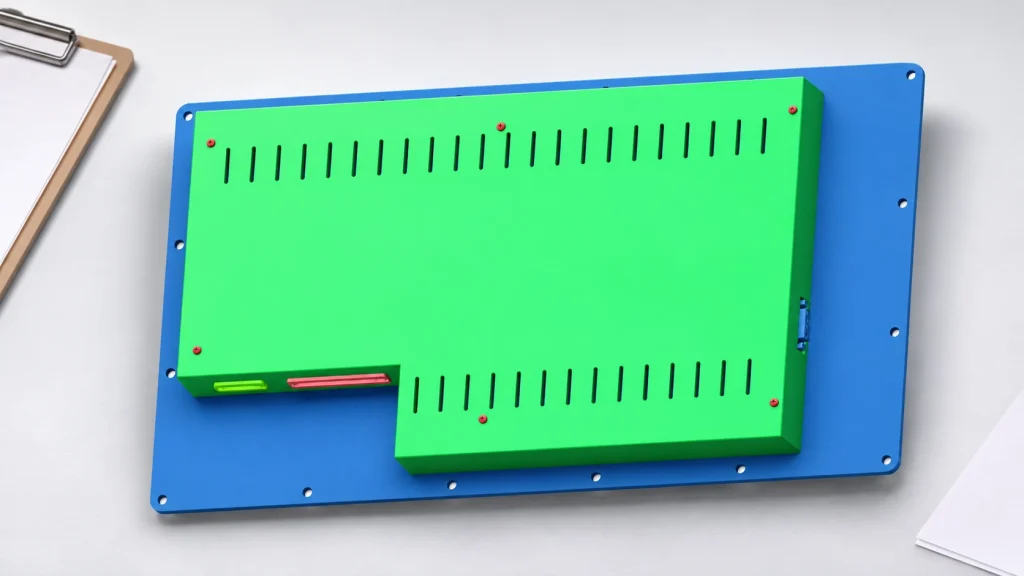
A useful display harness request for quotation (RFQ) defines the electrical mapping, mating hardware, physical route, environmental boundary, validation, and revision control. These details let an OEM compare proposals against the real charger assembly rather than a connector photo or an incomplete cable count.
Outdoor display work adds a practical complication: several functions may share one harness while remaining electrically distinct. The RFQ should state what is being consolidated, how the sample will be accepted, and which parts of the enclosure or display carry separate protection requirements.
State the project boundary and existing connection
Identify the equipment, host board, display assembly, and point where the harness connects the two. Describe whether the quoted item includes internal display wiring, an interface board, or only the external connection. Include the before-and-after connection diagram if existing cable groups are being combined.
List the functions carried by the assembly: image data, touch communication, backlight control, and power as applicable. Distinguish the backlight supply from enable and dimming signals. Name the party supplying each power rail and identify the intended return path.
This boundary prevents scope differences between supplier quotes. It also makes service planning clearer because the replacement task can be tied to the actual connector pair that an installer handles.
Include controlled electrical and mechanical documents
Attach the host and display specifications, approved schematic, pin map, connector drawings, cable route, and assembly model where available. State drawing numbers and revisions. Show pin numbering from a defined connector view so the mating face and wire-entry view cannot be confused.
For an LVDS display, identify pair assignments, polarity, and any interface requirements that constrain cable construction. For I2C, specify voltage, bus speed, pull-up arrangement, and the host and touch-controller limits. For backlight and power, provide supply voltage, measured or specified load, control logic, and startup or shutdown requirements.
Show overall cable length with tolerance, branch locations if any, connector orientation, exit direction, installation slack, minimum bend requirements from the cable design, retention, and strain relief. Mark clearance limits around hot parts, sharp edges, moving covers, and sealing surfaces. The industrial display stack design guide provides complementary context for these mechanical constraints.
If the mating connector has a familiar DVI shell but custom signal assignments, say so prominently. Include the custom pin assignment and a prohibition on substitution by appearance alone. A custom connector mapping is project documentation, not a universal DVI video definition.
Describe the charger environment at the display boundary
Provide operating and storage temperature requirements, sunlight exposure, expected duty cycle, cleaning agents, vibration, impact, humidity, and any condensation concerns that apply. Distinguish exposure at the front panel from exposure behind the display. Describe how the charger enclosure manages heat and how water is kept away from the rear electronics and cable entry.
An IP rating needs a stated boundary. In the Kadi Display case, IP65 applies to the front panel. The RFQ for a new charger should identify the protected surface and assembly configuration, then define the test and acceptance conditions for the complete enclosure separately.
UV requirements also need scope. Identify the materials exposed to sunlight and the property of interest, such as transmission or post-exposure optical change. Request the test method, wavelength range where applicable, specimen stack, exposure conditions, and measured result. Material coupon evidence and finished-display evidence should be labeled separately.
Do not use a UV-blocking percentage by itself as a promised display lifetime. Define which parts the adhesive shields, which surfaces remain exposed, and how appearance and function will be evaluated after exposure.
Turn phrases into sample acceptance criteria
Terms such as stable image, working touch, and weather resistant are not complete pass criteria. State the test condition and observable outcome. For example, define the resolution and test image for LVDS, touch regions and operating states to exercise, brightness-control conditions, and any acceptable interruptions or recoveries.
An RFQ can request a cable continuity and polarity report, a pin-map comparison, and evidence that assigned power conductors meet the agreed requirements. Define how connectors, labels, retention, routing, and workmanship will be inspected. If a charger-level environmental test is required, state who supplies the enclosure, fixtures, samples, and final report.
Include the required quantity of engineering samples, planned changes between sample and pilot stages, and the person authorized to approve deviations. Record the tested host and display revisions with each result. A passed sample is meaningful only when its configuration can be reproduced.
Compare proposals beyond a unit price
Ask each supplier to identify assumptions, exclusions, chosen components, open engineering questions, and required customer inputs. Compare whether proposals address the same cable boundary, drawing revision, test conditions, sample quantity, and production configuration.
Review service access and repair implications as well. One assembled harness may reduce connection handling during installation, but may also change how a display assembly is removed. Include connector access, replacement availability, and revision identification in the design review.
Avoid assigning savings before a pilot. The number of cable groups is observable; labor, rework, cost, and field reliability require a defined measurement method and project data. A supplier should state which claims come from a tested configuration and which remain engineering estimates.
A practical RFQ checklist
Before issuing the request, confirm that the package contains:
- Equipment and connection boundary, with a diagram of existing and proposed cable groups.
- Host and display specifications, interface schematics, controlled pin map, and revisions.
- Connector part numbers, mating orientation, contact assignment, and project-specific notes.
- LVDS pair requirements, I2C conditions, backlight controls, power rails, load, and grounds.
- Cable length and tolerance, route, bend and strain-relief needs, clearance, and service access.
- Outdoor operating conditions and the exact front-panel or enclosure protection boundary.
- UV material requirements, test method, sample construction, and finished-assembly checks.
- Sample quantity, required electrical and mechanical reports, pass criteria, and deviation process.
- Pilot and production quantities, traceability expectations, and change-approval owner.
This checklist is an input set, not a substitute for technical review. If a drawing or parameter is unknown, mark it open and assign an owner before sample release instead of silently allowing different interpretations.
How the Kadi Display project maps to an RFQ
For one outdoor charger, the customer confirmed three original cable groups: LVDS, backlight, and I2C. These were packaged as one harness, with backlight power and dimming carried in that path. Power was a function in the design but was not confirmed as a fourth original cable group.
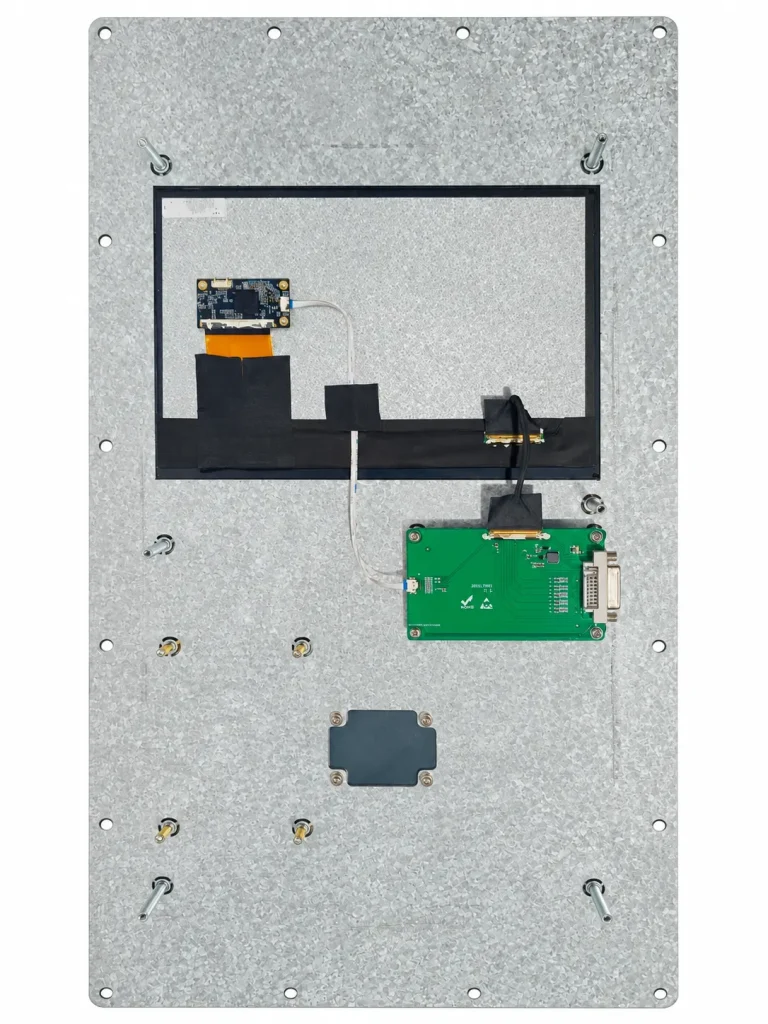
The confirmed display configuration was 10.1 inches, 1280 × 800, 850 cd/m² typical brightness, 10-point capacitive touch, IK08, and -20°C to +70°C operation. The optical stack used G6610 OCA with UV-blocking material data above 99%. IP65 applied to the front panel. The project connector was DVI with project-specific pin assignments.
These facts make a useful example of a well-scoped request: specify the display, distinguish cable functions, identify the custom connector mapping, and keep material evidence separate from product-level claims. Kadi Display’s project-based display customization includes cable and interface adaptation for application-specific configurations. Its EV charger display selection guide provides complementary context for the display requirements that should accompany a harness RFQ.
The project demonstrates consolidation of cable groups. It does not provide measured labor, cost, reliability, or service-life improvements, so those should remain customer-specific validation items in another RFQ.
Schlussfolgerung
An outdoor display harness RFQ should make electrical intent, cable boundaries, enclosure exposure, and acceptance criteria explicit. Controlled drawings and a project-specific pin map reduce ambiguity; representative sample tests show whether the proposed assembly works in the actual charger. Keep quantified benefits tied to measurements from the program.
Frequently asked questions
Do I need a finished cable drawing before requesting a quote?
A released drawing is ideal. If it is not ready, provide the host and panel documents, connection diagram, pin assignments, route, and open questions so the supplier can identify what remains to be engineered.
What tests should I request for a combined display harness?
At minimum, define mapping, continuity, polarity, image, touch, backlight, power, and installed-routing checks. Add environmental and electromagnetic tests according to the charger requirements.
Does front-panel IP65 cover the cable entry?
Not by itself. State the rated boundary and specify how the rear enclosure and cable entry will be protected and tested in the final charger.
Can I compare quotes by connector and price alone?
No. Confirm the electrical mapping, cable construction, route, revision, included engineering work, tests, and sample conditions before comparing prices.
To prepare a project review, Kontakt Kadi Display with the RFQ package, target quantities, operating environment, and known test requirements.
Vorherige
Nicht mehr
Nächster
How to Simplify Outdoor EV Charger Display Integration with a Custom Cable Harness
Hinterlasse einen Kommentar

Neueste Blog & Nachrichten
- What to Specify in an Outdoor Display Harness RFQ
- How to Simplify Outdoor EV Charger Display Integration with a Custom Cable Harness
- How to Validate an Outdoor EV Charger Display for Sunlight and UV
- EV Charger Display Integration With One Custom Cable Harness
- What to Ask an Industrial Display Manufacturer Before Design-In: Lifecycle, EOL, and Customization