
Startseite
-
Blog & Neuigkeiten
-
AG/AR-Oberflächenbehandlungen: Verbesserte Lesbarkeit in rauen Industrieumgebungen
AG/AR-Oberflächenbehandlungen: Verbesserte Lesbarkeit in rauen Industrieumgebungen
2026-05-22
00:00
Einführung
Die Industrielandschaft im Jahr 2026 wird von Automatisierung, Außenanlagen und vernetzten Systemen geprägt sein. Die Anwendungsbereiche reichen von Ladestationen für Elektrofahrzeuge bis hin zu Navigationstafeln für Schiffe. Die Nachfrage nach robuster und sonnenlichttauglicher Displaytechnologie hat neue Höchststände erreicht. Anwender sind auf visuelle Informationen angewiesen, insbesondere dort, wo Licht, Schmutz und Reflexionen die Sicherheit und Genauigkeit beeinträchtigen könnten.
Das Problem mit der Lesbarkeit von Bildschirmen ist real: Helles Sonnenlicht oder grelles Deckenlicht können wichtige Details auf industriellen LCD-Displays verblassen lassen. Dies führt häufig zu Arbeitsunterbrechungen oder sogar Unfällen. Industrieanlagen benötigen robuste Displays, die auch unter schwierigen Bedingungen zuverlässig funktionieren und in jeder Lichtsituation eine klare Lesbarkeit gewährleisten.
Um diesen Problemen entgegenzuwirken, sind Antireflexions- (AG) und Antispiegelungsbeschichtungen (AR) für Displayhersteller unerlässlich. Diese optischen Verbesserungen optimieren nicht nur die Sichtbarkeit, sondern erhöhen auch die Betriebssicherheit von Bildschirmen in anspruchsvollen Industriebereichen.
Kadi Anzeige Als erfahrener Hersteller mit über 20 Jahren Erfahrung hat sich das Unternehmen dank überzeugender optischer Lösungen zu einer festen Größe für globale OEMs entwickelt. Der Schwerpunkt liegt auf optischem Bonden, AG/AR-Beschichtungen und kundenspezifischen TFT-LCD-Modulen für anspruchsvolle B2B-Anwendungen weltweit.
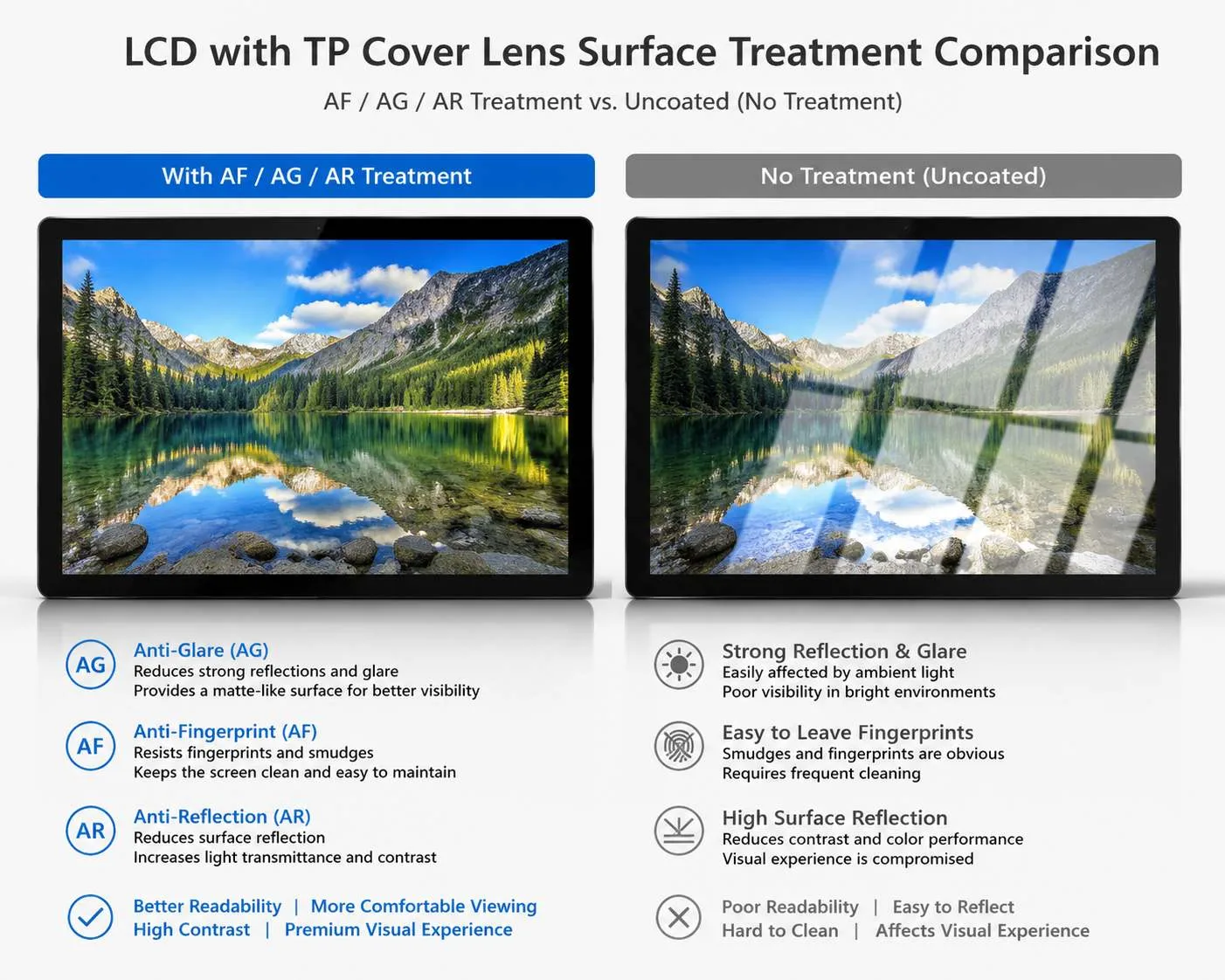
Entspiegelung (AG): Die Wissenschaft der Diffusion
Die Antireflexionsbeschichtung streut das einfallende Licht und verhindert so, dass es direkt auf den Betrachter zurückgeworfen wird. Diese Streuung wird durch chemisches Ätzen oder Sprühbeschichtung erreicht. Dabei entstehen winzige, raue Stellen auf dem Glas. Das Ergebnis ist eine ebene Oberfläche, die Reflexionen reduziert. Die Bildschärfe wird dabei kaum beeinträchtigt.
Die Vorteile sind vielfältig. Dazu gehört die Reduzierung von Spiegelreflexionen. Auch Fingerabdrücke werden besser abgewiesen. Zudem wird die Haptik verbessert. Dies erweist sich als besonders nützlich bei Touch-Bedienfeldern, an denen Mitarbeiter Handschuhe tragen. Entspiegelte Brillen werden häufig für LCD-Displays im Außenbereich oder bei starker Beleuchtung eingesetzt. Typische Anwendungsbereiche sind Geldautomaten, Ultraschallmonitore und Fabrikterminals unter hellem LED-Licht.
Mit AG behandelte Bildschirme eignen sich am besten für Hallen in Fabriken mit starker Beleuchtung. Sie sind aber auch für halboffene Stände mit etwas Sonneneinstrahlung geeignet. In diesen Fällen sorgen AG-Beschichtungen für eine gute Lesbarkeit der Schrift und reduzieren die Augenermüdung bei langen Arbeitstagen.
Antireflexbeschichtung (AR): Die Kraft der Lichtdurchlässigkeit
Antireflexbeschichtungen funktionieren anders als die Ausbreitungsmethode von Antireflexbeschichtungen. Sie basieren auf Interferenz. Das bedeutet, dass die Schichten nur wenige Nanometer dünn sind. Viele dieser Schichten werden im Vakuumverfahren aufgebracht. Sie blockieren bestimmte Lichtwellen, die reflektiert werden. Dieses Verfahren erhöht die Lichtdurchlässigkeit deutlich und verbessert den Bildschirmkontrast bei direkter Sonneneinstrahlung.
Betrachten wir normales, unbehandeltes Glas. Es lässt etwa 90 % des einfallenden Lichts durch. Antireflexbeschichtungen erhöhen diesen Wert auf über 98 %. Das Ergebnis sind schärfere Bilder und sattere Schwarztöne. Dies ist besonders wichtig für Bildschirme oder Tastatursysteme. Entspiegelung, Antireflexion und Antifingerabdruck sind drei gängige Oberflächenbehandlungen von LCDs, um visuelle Störungen zu reduzieren und eine bessere Bildqualität zu erzielen.
Außenanwendungen wie Ladeanschlüsse für Elektrofahrzeuge oder Armaturenbretter auf Booten demonstrieren die Leistungsfähigkeit von AR-Beschichtungen. Sie verwandeln ein verblasstes Display in einen klaren, auch bei Sonnenlicht gut lesbaren Bildschirm. Die Bedienung ist von früh morgens bis spät abends einwandfrei. Hochhelle Displays gewährleisten die Lesbarkeit der Inhalte unter verschiedenen Lichtverhältnissen, insbesondere bei starkem Außenlicht.
AG vs. AR: Welches Modell passt besser zu Ihrem Produkt?
Die Wahl zwischen AG und AR hängt von den Rahmenbedingungen und den finanziellen Plänen ab.
| Eigenschaften | Glanzschutz (AG) | Antireflektierend (AR) |
| Mechanismus | Lichtstreuung durch Mikrotextur | Lichtwelleninterferenz durch Beschichtung |
| Optische Klarheit | Leichter Matt-Effekt | Kristallklare Transparenz |
| Langlebigkeit | Hohe Kratzfestigkeit | Mäßige mechanische Belastbarkeit |
| Kostenniveau | Niedriger | Höher |
| Ideale Umgebung | Innenbereich / Halb-Außenbereich | Vollständige Outdoor-/Medizin-/Marine-Ausrüstung |
In vielen Fällen empfiehlt Kadi Display eine Kombination beider Verfahren. Dadurch entsteht eine kombinierte „AG + AR“-Beschichtung für optimale Lichtausbeute. Diese Mischung erzeugt ein Ergebnis, das von Fachleuten als „Deadfront“ bezeichnet wird. Sie sorgt für geringe Reflexionen und feine Transparenz. Dies funktioniert sogar mit zusätzlichem Schutzglas.
Diese Oberflächenbehandlungen passen gut zu Kadi Displays TFT-LCD-Module mit hoher Helligkeit die eine Helligkeit von über 1000 Nits für industrietaugliche Sichtbarkeit im Freien erreichen.
Anwendungsinnovationen in rauen Umgebungen im Jahr 2026
Marine & Offshore: Die Displays müssen salzbeständig sein und gleichzeitig ihre Klarheit unter direkter Sonneneinstrahlung, die von Wasseroberflächen reflektiert wird, bewahren – ein Albtraumszenario ohne angemessenen AR-Schutz.
Medizin & Labor: Hier kommt es mehr auf Präzision als auf Ästhetik an; AR-Beschichtungen verbessern die Kontrastverhältnisse, die für eine genaue Diagnostik erforderlich sind, und sind gleichzeitig resistent gegen alkoholbasierte Desinfektionsmittel, die bei Reinigungsroutinen verwendet werden.
Intelligente Energieversorgung & Elektrofahrzeugladung: Da die Anlagen rund um die Uhr im Außenbereich betrieben werden, ist Langlebigkeit von größter Bedeutung. Die Paneele benötigen sowohl eine AG-Streuung zur Reduzierung der Blendung am Tag als auch eine verbesserte AR-Lichtdurchlässigkeit in der Nacht, wenn künstliches Licht dominiert.
Für den Einsatz im Freien sollten Sie Displays mit höherer Helligkeit für bessere Lesbarkeit bei Sonnenlicht, Antireflexbeschichtungen und robuste Bauweisen zur Beständigkeit gegenüber Umwelteinflüssen in Betracht ziehen.
Technische Integration: Optische Verbindung und Deckglas
Eine Oberflächenbehandlung allein reicht nicht aus, wenn innere Reflexionen zwischen den Glasschichten und dem Panelträger bestehen bleiben. Deshalb setzt Kadi Display auf optisches Bonding. Dieser Schritt beseitigt den Luftspalt zwischen LCD-Modul und Deckglas. Hierfür werden transparente Klebstoffe verwendet.
Diese Maßnahme erhöht nicht nur den Kontrast, sondern stärkt auch die Widerstandsfähigkeit gegen Erschütterungen und Stöße, wie sie bei schweren Maschinen auftreten. Die Einhaltung der IK10-Schlagfestigkeitsklasse ist bei Kadi-Produkten mittlerweile Standard.
In Kombination mit chemisch gehärtetem Deckglas und einer AG/AR-Oberflächenveredelung entsteht ein vollständig gehärtetes industrielles LCD-Display, das für den Einsatz in extremen Umgebungen geeignet ist – von Ölplattformen bis hin zu Solarparks.
Schlussfolgerung
Da sich die Industrie bis 2026 auf hochentwickelte Automatisierungsprozesse umstellt, ist die Lesbarkeit von Displays eng mit Arbeitssicherheit und reibungslosen Abläufen verknüpft. AG/AR-Oberflächenbehandlungen haben sich von zusätzlichen Optionen zu Kernanforderungen in Bereichen wie Energiemanagement, Verkehrsinfrastruktur und Medizintechnik entwickelt.
Kadi Display treibt diesen Wandel weiter voran, indem es vollständige Individualisierung bietet – von TFT-LCD-Picks über optisches Bonden bis hin zu Beschichtungsschritten. Alles ist darauf ausgerichtet, den Anforderungen der globalen Herausforderungen gerecht zu werden.
Dies umfasst die Herstellung robuster Tablets oder Außenbeschilderungssysteme, die sonnenlichttaugliche Bildschirme mit einer Helligkeit von über 1000 Nits erfordern. Kadis Ingenieurteam Bietet eine gleichbleibende Produktionsleistung dank jahrelanger Fertigungserfahrung.
Häufig gestellte Fragen
Frage 1: Können AG und AR zusammen auf einem Paneel aufgebracht werden?
A: Ja. Die Kombination beider Verfahren führt zu einer „AG+AR“-Lösung, bei der die Oberfläche zunächst chemisch geätzt und anschließend eine Antireflexionsschicht im Vakuum aufgebracht wird – was sowohl eine Streuung der Blendung als auch eine überlegene Lichtdurchlässigkeit bietet.
Frage 2: Beeinflussen diese Behandlungen die Berührungsempfindlichkeit?
A: Ganz und gar nicht. Beide Beschichtungen sind ultradünn; sie gewährleisten volle Kompatibilität mit kapazitiven Berührungssensoren, die auf modernen industriellen LCD-Displays verwendet werden, und verbessern gleichzeitig die Gleitfähigkeit der Finger bei der Bedienung mit Handschuhen.
Frage 3: Wie lange halten AG/AR-Beschichtungen im Außenbereich?
A: Behandlungen der Premiumklasse halten in der Regel fünf bis zehn Jahre, ohne dass es zu Abblättern oder Verblassen kommt, selbst nach längerer UV-Bestrahlung oder Temperaturschwankungen zwischen -30 °C und +85 °C.
Frage 4: Verringert eine Antireflexionsschicht die Auflösungsqualität?
A: Nur bei fehlerhafter Verarbeitung. Kadi Display steuert die Dunstparameter präzise, sodass Text scharf bleibt, während Reflexionen gedämpft sind – ein für hochauflösende Visualisierungsaufgaben entscheidendes Gleichgewicht.
Frage 5: Warum sollte man sich für AR entscheiden, anstatt einfach die Helligkeit zu erhöhen?
A: Eine höhere Helligkeit führt zu einem höheren Stromverbrauch und einer stärkeren Wärmeentwicklung; eine AR-Beschichtung verbessert hingegen den wahrgenommenen Kontrast, indem sie die Umgebungsreflexion reduziert – was sie zu einer energieeffizienten Wahl für jedes Szenario macht, in dem ein Bildschirm bei Sonnenlicht lesbar sein muss.
Vorherige
Der König des Preis-Leistungs-Verhältnisses? Warum 1280×720 (720p) auch 2025 das Rückgrat des Marktes für industrielle Displays bleibt.
Nächster
HDMI-TFT-Displaymodule: Plug-and-Play für industrielle HMI- und Bedienfelder
Hinterlasse einen Kommentar

Neueste Blog & Nachrichten
- Industrial LCD EOL: What Happens from Pre-Announcement to Replacement Mass Production?
- Electronic Component Obsolescence Management for Industrial Displays: An OEM Guide
- How to Develop a Production Ready Custom Display Assembly TFT Module Touch Cover Glass FPC Bonding and Mounting
- 15 Pin vs 22 Pin Raspberry Pi DSI Connectors Cable Pinout and Compatibility
- Native MIPI DSI vs LVDS or HDMI Bridge: An OEM Display Architecture Decision Guide