BLOG & NOUVELLES
Accueil
-
Blog & Actualités
-
En savoir plus sur la taille et le rapport d'aspect de l'écran LCD industriel

Affichages LCD industriels travailler comme pièces importantes dans des endroits difficiles comme les planchers d'usine, les installations d'automatisation, l'équipement médical et les kiosques extérieurs. Choisir la bonne taille de l'écran et le bon rapport d'aspect permet des vues claires, une utilisation facile et un bon ajustement avec les programmes de contrôle. Ces choses affectent la façon dont les gens lisent les informations, affichent les données et maintiennent l'ensemble du système en douceur dans des endroits difficiles.
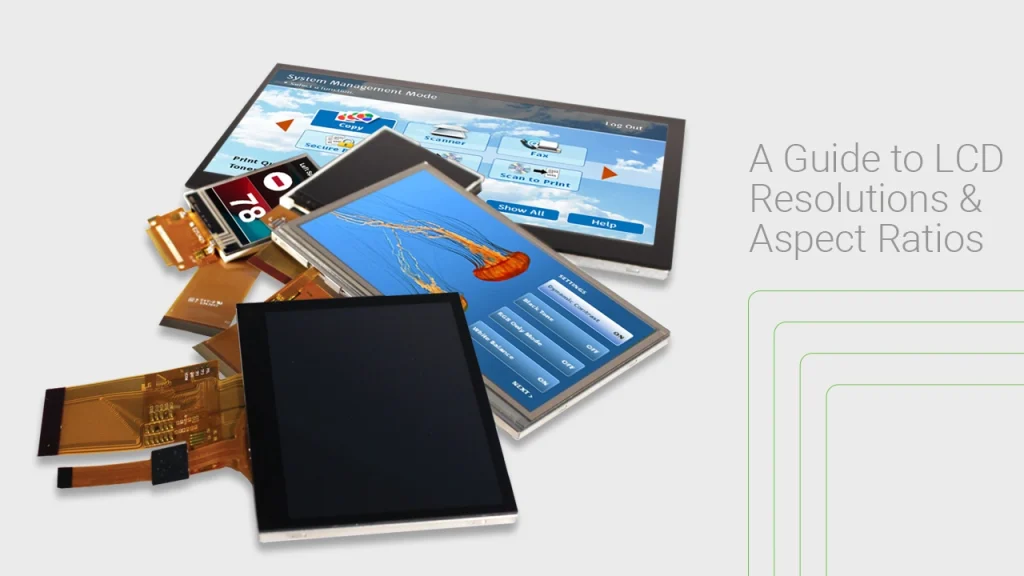
La taille de l'écran et le rapport d'aspect ont un grand effet sur la façon dont écrans LCD industriels travail. Les tailles plus grandes permettent d'afficher plus d'informations à la fois. Cela est très important pour les écrans occupés dans les panneaux de commande ou les systèmes de montre. Le rapport d'aspect change l'apparence des choses sur l'écran. Cela affecte la façon dont l'affichage correspond au logiciel fabriqué pour certaines formes.
Dans les zones industrielles difficiles, une mauvaise taille ou un mauvais rapport peut rendre les travailleurs plus lents. Cela peut causer des yeux fatigués ou forcer une échelle supplémentaire qui nuit à la qualité de l'image. Les modules LCD TFT industriels à haute luminosité sont souvent livrés avec de grands angles de vision et une construction solide. Ils font de leur mieux lorsque la taille réelle correspond à ce dont le travail a besoin. Par exemple, les écrans avec des niveaux de luminosité allant jusqu'à 1100 nits et de larges plages de température restent clairs quel que soit le temps ou la chaleur lorsqu'ils sont bien dimensionnés.
La taille de l'écran signifie la mesure diagonale de la partie visible. Les gens le donnent généralement en pouces. Cette taille réelle détermine l'espace qu'elle prend et à quelle distance elle fonctionne le mieux dans les lieux industriels.
La résolution montre le nombre de pixels côte à côte et haut et bas, comme 1920 × 1080. Une résolution plus élevée donne des détails plus clairs sur la même taille. Mais il faut un matériel et un logiciel correspondants pour arrêter la déformation.
Les usages industriels se soucient des deux. Une taille d'écran plus grande donne de la place à des images détaillées. Une bonne résolution rend le texte et les icônes nettes. Les résolutions courantes dans les écrans LCD TFT industriels comprennent 1280 × 800, 1920 × 1080 et 1024 × 768. Ils équilibrent des vues claires avec ce que le système peut gérer.
Aucune taille unique ne convient à tous les emplois industriels. Le meilleur choix vient de la tâche, des limites d'espace pour le montage et des besoins de travail.
Les petits écrans jusqu'à 7 pouces fonctionnent bien dans des équipements portables ou dans des espaces étroits. Ils fonctionnent en unités portatives ou en petites HMI. Ces écrans offrent un transport facile et un coût moindre. Ils montrent encore ce qui compte pour les tâches de montre simples.
Les écrans moyens de 7,1 à 13,5 pouces donnent un bon milieu. Ils gèrent des écrans plus complexes. Ils ajoutent des options de connexion et de l'espace supplémentaire pour des fonctionnalités de construction plus solides. Des tailles telles que 10,1 pouces et 12,1 pouces apparaissent souvent dans les systèmes de contrôle et les configurations intégrées. Beaucoup utilisent des résolutions telles que 1280 × 800 ou 1024 × 600.
Les grands écrans de 13,6 pouces et plus grands supportent des programmes avancés. Ils permettent des vues multi-fenêtres, des images 3D ou des cartes de big data. Des tailles telles que 15,6 pouces, 18,5 pouces et plus grandes montrent des détails clairs pour les plans ou la vidéo dans les salles de contrôle et les grandes configurations de machines.
Les écrans LCD TFT industriels de ces groupes ajoutent souvent une luminosité élevée, une large plage de températures comme -30 ° C à 85 ° C dans de nombreux modèles, et différentes connexions telles que LVDS ou eDP pour un ajustement facile.
Le rapport d'aspect montre la proportion entre la largeur et la hauteur d'un écran. Ce ratio permet de garder le contenu à l'air sans stretch ou barres vides.
Les formes à écran large, principalement 16:9, mènent dans les utilisations industrielles actuelles. Ils donnent beaucoup d'espace latéral. Cela fonctionne parfaitement pour la vidéo, les programmes de contrôle de processus et le contenu HD.
Les formes standard comme 4:3 sont toujours importantes pour les anciens systèmes ou les emplois qui nécessitent un aspect plus carré. Certains outils médicaux ou logiciels industriels plus anciens les utilisent.
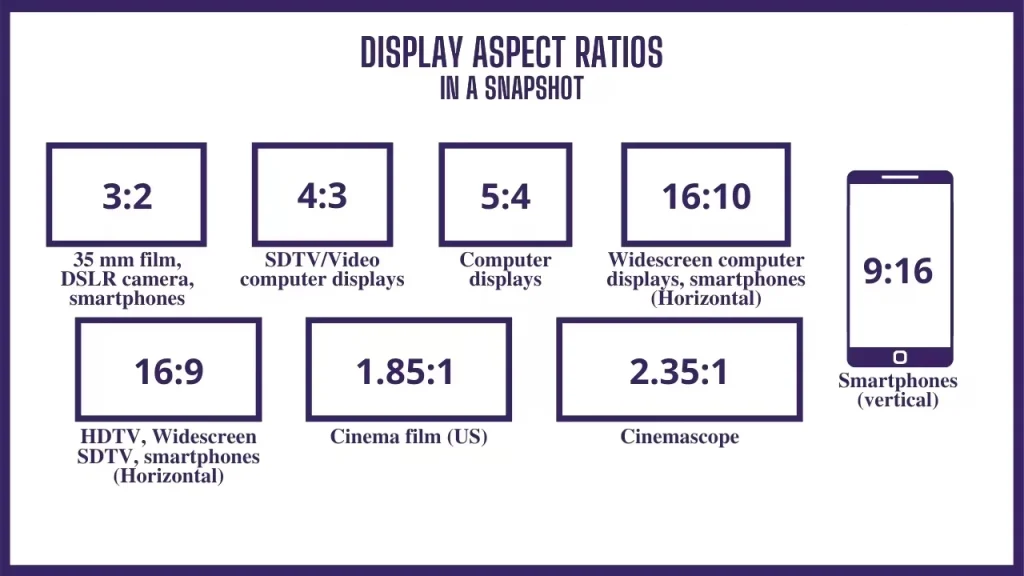
Le ratio 4:3 rend un écran environ 33% plus large que haut. Il s'adapte au contenu ancien et aux utilisations où l'espace haut et bas compte plus que l'étirement latéral.
Le rapport 16:9 donne un écran environ 78% plus large que haut. Il ajoute plus d'espace latéral. Cette forme correspond au nouveau logiciel. Il permet de mieux regarder les tâches et suit les règles HD.
Les fabricants industriels fournissent souvent les deux formes pour couvrir différents besoins de projet.
Au-delà de 4:3 et 16:9, les utilisations industrielles incluent des ratios spéciaux tels que 16:10, souvent avec une résolution de 1280 x 800. Ils utilisent également des formats ultra-larges tels que 21:9 ou 32:9, ainsi que des configurations de type barre ou de portrait telles que 1920×360 ou 720×1920. Ces choix permettent des ajustements personnalisés pour des interfaces impaires. Parmi les exemples, on peut citer de longues barres d'état ou de hauts panneaux dans des endroits industriels.
Affichage Kadi, un fabricant et fournisseur professionnel d'écran LCD TFT industriel basé à Shenzhen avec plus de 20 ans d'expérience, offre une gamme complète de solutions personnalisables. En tant qu'usine établie spécialisée dans les modules LCD TFT de haute fiabilité, les écrans tactiles intégrés et les services OEM / ODM à guichet unique, Kadi Display prend en charge des projets industriels, médicaux et embarqués avec une production certifiée ISO, des options de haute luminosité, des performances à grande température et une personnalisation flexible.
Les clients qui recherchent des écrans LCD TFT industriels de haute performance bénéficient d'un partenariat avec une usine dédiée comme Kadi Display. Explorez des options personnalisables, y compris différentes tailles d'écran, rapports d'aspect, modules à haute luminosité, intégration tactile et fonctionnalités robustes adaptées aux exigences industrielles. Contactez l'équipe dès aujourd'hui pour discuter des spécifications du projet, demander des échantillons ou lancer une collaboration à long terme pour des solutions d'affichage fiables et de haute qualité. Contactez-nous via le site officiel ou email sales@sz-kadi.com pour élever les projets de visualisation industrielle.