
Home
-
Blog & News
-
Designing Touchscreens for Medical Devices: Strategies to Prevent Failures and Enhance Reliability
Designing Touchscreens for Medical Devices: Strategies to Prevent Failures and Enhance Reliability
2026-04-09
12:26
Touchscreens serve as key parts in current medical devices. They offer user-friendly interfaces that boost work speed for health workers and better patient contact. From patient monitors and ventilators to diagnostic tools and surgical systems, these interfaces allow fast movement, clear data views, and easy control. Yet, in vital safety areas, any breakdown can bring grave results. Manufacturers need to focus on solid design plans that stop failures. At the same time, they must keep strong reliability.
Touchscreens: A Solution with Many Benefits for Medical Devices
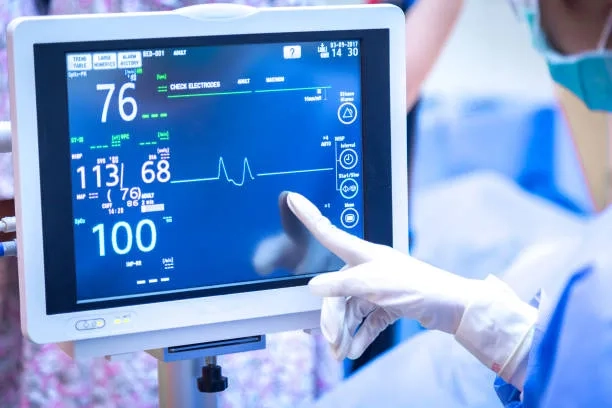
Touchscreens bring clear gains in medical uses. They allow lively graphic parts, movements, and live data shows. As a result, doctors can grasp tough details quickly. Capacitive touch technology gives quick multi-touch skills and even operation. This cuts training time for workers. Pairing with sharp TFT LCD panels gives good color truth and broad view angles. These features matter a lot in group settings like operating rooms or intensive care units.
In medical gear, touch interfaces help make small designs. This lets portable items like hand-held diagnostic tools exist. Traits like strong brightness (up to 1100 nits or more) keep sight clear under bright surgery lights. Wide work temperature spans (e.g., -30°C to 85°C) fit different clinic spots. These gains push new ideas forward. However, they must match strict safety and work rules. That way, they avoid harming patient results.
The Risk of Failure: A Major Challenge in the Medical Sector
Medical devices work in high-risk places. There, stoppages or wrong inputs can threaten lives. Unlike home gadgets, touchscreens in medical uses meet steady contact with cleaners, electromagnetic noise, physical strain, and nonstop work. Breakdowns might cause wrong readings, stopped tasks, or unplanned device actions. Rules groups stress risk control. Thus, stopping failures forms a main part of product making.
Risks come from outside factors, material wear, and joining problems. Heat shock, static discharge (ESD), and chemical touch from regular cleaning speed up damage. Without good fixes, these troubles can lead to part or full loss of work. This shows the need for full design and test plans.
What Are the Failure Modes of a Touchscreen?
Touchscreens have two main parts: the display (usually TFT LCD with backlight) and the touch layer (often capacitive). Breakdowns can hit either part.
Screen Failures
LCD breakdowns often link to power path issues in rows or columns. These cause dark lines, strips, or dead spots. Column control path faults may bring color twists or lost parts. Main change path troubles can make the whole screen black. Backlight breakdowns cover full light loss, single LED wear, or lower light strength. These often stem from getting old or bad heat handling. In line-linked LED groups, one breakdown can dull big screen areas.
Touch Interface Failures
Control layer breakdowns break talk between the touch handler and the main chip. This happens through signs like I2C or USB. Spotting breakdowns create false touches, wrong spots, or full no-response. Reasons include sign strength drop, setup shift, electromagnetic noise, or dirt on the top. In medical spots, regular cleaning with strong chemicals can wear guard layers. This makes these problems worse.
Identifying the Risks of Touchscreen Failures
Good risk spotting starts with deep study and checks.
Risk Analysis
Groups should check possible breakdown effects on device work and patient safety. They use rules like ISO 14971 for risk control. Work among electronic, mechanical, and user factor experts spots weak points early in the design step.
Testing
Sign strength checks confirm links like LVDS, MIPI-DSI, or parallel RGB. This stops data twists. Software checks and setup make sure right touch mapping over the full top and steady color making. Before-rule checks handle electromagnetic match (EMC). Physical and outside checks copy real spot conditions. These include heat cycles, wetness, shakes, and drop hits.
Regulatory Standards
Following IEC 60601-1 (general rules for basic safety and key work), IEC 60601-1-2 (EMC), and IEC 62366 (usability building) stays required. Extra guides cover home-use gear and risk control steps. No special touchscreen rule exists. So, manufacturers blend these frames as a whole.
Incorporating Measures to Mitigate the Risks of Failure
Various design plans raise reliability. They do this without losing ease of use.
Enabling Cleaning and Disinfection
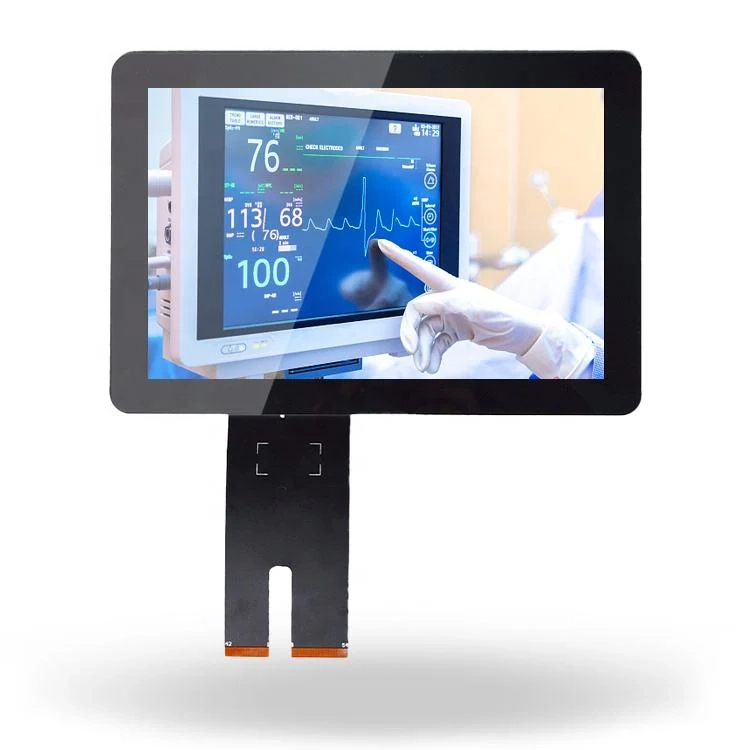
Pick tough glass-based touch tops over plastic sheets for better fight against cleaners. Use anti-fingerprint (AF), anti-glare (AG), and anti-reflective (AR) covers. Sometimes, they mix as 3A films. Light joining between the touch sheet and LCD cuts air spaces. This boosts strength and light work. It also lowers dirt risks.
Adding a Monitoring Circuit
Add paths that watch video signs or power use to spot odd things. When a fault shows, the setup can start warnings, switch to safe state, or show alerts. This lets workers act fast.
Incorporating Mechanical Buttons
Mixed links pair touchscreens for normal movement with real buttons or foot pads for key tasks. This extra layer keeps work going if the touchscreen breaks. It helps most for emergency stops or state shifts.
Adding a Second Touch Detection Method
Two spotting ways, like mixing capacitive with infrared or another tech, give checks. If one way breaks, the setup can shut it off and use the spare. At the same time, it tells users. This raises costs. But it greatly lifts reliability in key safety uses.
Other strong steps include using factory-grade parts with broad heat limits, strong light backlights for sight, and firm cases. Tailor-made choices let fitting to exact medical needs. For example, glove-fit touch for surgery spots or IP-rated guard against liquids.
Material Selection and Integration Best Practices for Medical Touchscreens
Picking the correct materials builds the base of steady work. Top TFT LCD sheets from known makers ensure even spot control and backlight steadiness. Capacitive touch sheets with planned tech back exact input even through thin gloves or guard covers. Broad view angles (85°/85°/85°/85° usual) and sharpness up to 1920×1080 or more give clear sights from many spots.
Joining needs care for links: LVDS and eDP give steady, long-reach sign sending fit for built medical setups. Work temperature spans from -30°C to 85°C fit store and move changes common in health moving. Strong light picks (1000+ nits) and sun-view designs with light joining work well in bright clinic areas.
Manufacturers should think about EMC shields to stop noise from near gear like MRI tools or electric surgery items. Long-time part supply steadiness stops old-stock problems in gear with long life spans.
Environmental and Usability Considerations in Touchscreen Design
Medical spots bring special strains. Gear faces regular cleaning with rough stuff. This calls for chemical-fight tops. Shakes from moving or hand-carry use need stronger holds. Electromagnetic match checks make sure touchscreens do not send or give to noise that could hit key watching.
Usability building per IEC 62366 aims at easy plans that cut mistakes. Big touch goals, clear signs, and quick reply lift contact for users in gloves or under rush. User factor checks prove work flows. They ensure touch links help, not block, clinic jobs.
For hand-carry or home-use gear, extra rules like IEC 60601-1-11 lead design for steadiness outside set hospital spots.
Customization Options for Enhanced Safety and Performance
Tailor-made fixes let fine-tuning for exact gear. Choices cover set sizes (from 7-inch to 27-inch or more), custom sharpness, and joined touch with set driver chips. Traits like light joining raise contrast and strength. Anti-germ covers or easy-clean tops meet clean needs.
Manufacturers can pick car-grade or factory-grade sheets for better long life. Bendable OEM/ODM help back full tailor-made, from sheet pick to firm setup. This ensures smooth join into end goods.
Why Reliability Matters: Case Examples in Medical Applications
In patient watching setups, a broken backlight or false touch could bring wrong life sign reads. In surgery shows, strong light and broad angles keep sight for the full group. Ventilators and fluid pumps count on right input for dose control. Real spot strains—like repeated cleaning or power changes—show the worth of extra designs and tough materials.
By fixing breakdown types ahead, makers build gear that holds work over its full life. This cuts back calls and builds faith among health givers.
FAQ
What are the main failure modes in medical touchscreens?
Common issues include LCD row/column circuit failures, backlight LED degradation, touch detection inaccuracies, and signal integrity problems caused by environmental factors or aging.
Which standards govern touchscreen design in medical devices?
Key standards include IEC 60601-1 for safety, IEC 60601-1-2 for EMC, IEC 62366 for usability, and ISO 14971 for risk management.
How can manufacturers mitigate touchscreen failures?
Strategies involve durable glass surfaces with protective coatings, monitoring circuits, hybrid mechanical backups, dual touch detection methods, rigorous testing, and high-quality component selection.
What features make a touchscreen suitable for medical equipment?
Important attributes include high brightness, wide temperature range, chemical resistance, optical bonding, wide viewing angles, and compliance with medical regulations.
Kadi Display operates as a professional TFT LCD and touch display manufacturer and factory based in Shenzhen, China, with over 20 years of expertise in providing custom display modules for medical equipment and other demanding applications. Holding certifications including ISO13485 for medical quality management, the company offers a wide range of industrial-grade TFT LCD displays and capacitive TFT touch solutions featuring high brightness, wide temperature operation, optical bonding, and flexible OEM/ODM services.
Contact Kadi Display today via email at Sales@sz-kadi.com or phone at +86-13662585086 to discuss requirements, request samples, or initiate a custom development project.
PREVIOUS
Exploring Bar-Type TFT LCD Modules: A Comprehensive Guide
NEXT
Multi-Function Combination LCD Display for Golf Carts
Leave A Comment

Latest Blog & News
- Industrial LCD EOL: What Happens from Pre-Announcement to Replacement Mass Production?
- Electronic Component Obsolescence Management for Industrial Displays: An OEM Guide
- How to Develop a Production Ready Custom Display Assembly TFT Module Touch Cover Glass FPC Bonding and Mounting
- 15 Pin vs 22 Pin Raspberry Pi DSI Connectors Cable Pinout and Compatibility
- Native MIPI DSI vs LVDS or HDMI Bridge: An OEM Display Architecture Decision Guide