Gerekte Bar LCD Displays Gids: Kosten, Installatie & Belangrijkste voordelen
2026-01-22
11:50
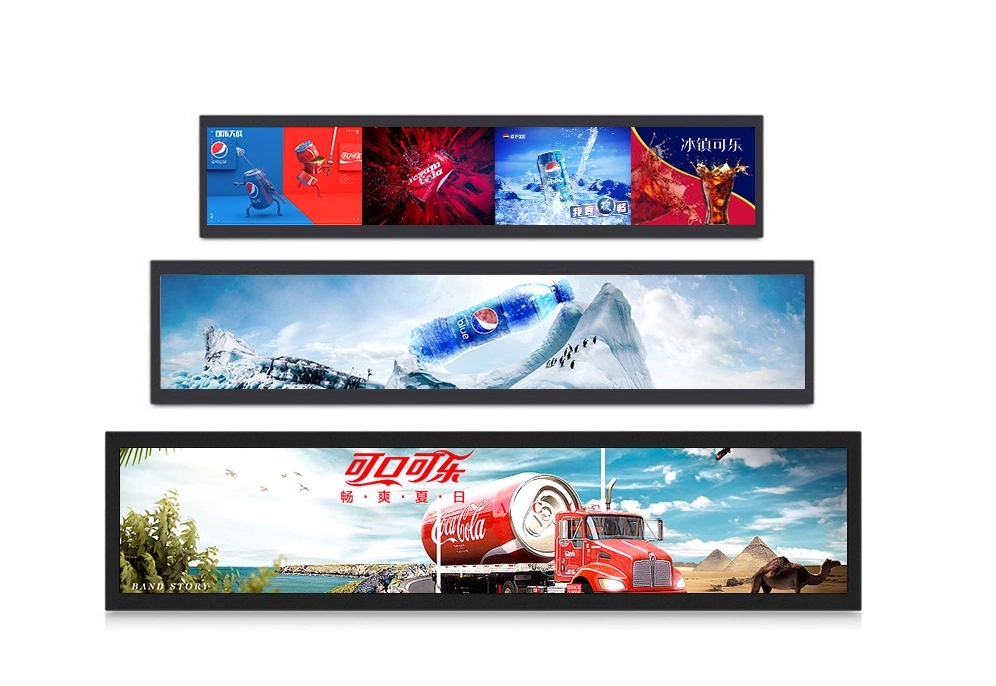
De afgelopen jaren is de wereldwijde markt voor uitgestrekte bar LCD-schermen is veel gegroeid. Deze sterke stijging komt voort uit digitale veranderingen in retail, transport en slimme systemen. Deze zeer brede schermen geven frisse manieren om informatie in strakke plekken te tonen. Ze verslaan reguliere displays in flexibiliteit en gebruikersinteresse.
Wat is een Stretched Bar LCD Display?
Stretched bar LCD-schermen, ook bekend als bar-type of ultra-brede LCD's, hebben lange aspectverhoudingen. Deze gaan vaak van 16:3 tot 32:9 of zelfs breder. Dus ze werken goed in slanke of horizontale plekken waar normale 16:9 schermen niet gemakkelijk passen. De displays maken gebruik van speciaal gesneden glazen panelen. Ze hebben ook moderne LED-achtergrondverlichting die helderheidsniveaus geeft meestal van 300 tot 1000 nits. Bovendien komen ze met sterke constructies die vaak een breed temperatuurgebruik en een groot duurzaam vermogen ondersteunen.
Kerntechnologieën omvatten LVDS-interfaces voor stabiele gegevensoverdracht. Er is optioneel capacitieve touch (CTP). Sommige hebben ook anti-glare of anti-vingerafdruk coatings. Aanvankelijk gebruikten mensen ze veel in het transport voor borden. Nu stretched bar LCD's doen erg goed in de detailhandel voor levendige inhoud. Ze groeien samen met veranderingen in IoT en automatisering.
Key Sizes: Populaire opties op de markt
Gemeenschappelijke maten mix nut en prijs goed:
-
8.8″ naar 12,3″ Resoluties zoals 1280×320 of 1920×720 werken geweldig voor kleine toepassingen zoals automotive dashboards of kleine kiosken. Prijsklasse: $ 150- $ 600 afhankelijk van helderheid en aanraking.
-
15.0″ 1920×720 past bij industriële of slimme huisbehoeften. Het komt vaak met een hoge helderheid (tot 1000 nits).
-
19.0″ naar 28.0″ 1920×360 of soortgelijke maten zijn gebruikelijk voor transportgebieden en grotere borden. Prijsklasse: $400-$900.
-
29.0″ naar 37.0″ 1920×540 is geschikt voor grote installaties zoals videomuren of openbare schermen.
Deze maten leiden de markt. Ze hebben goede aspectverhoudingen, gemakkelijke levering van fabrikanten en passen bij standaard monteringsinstellingen.
Toepassingen in verschillende industrieën: waar stretched bar Excel weergeeft
Detailhandel & Supermarkten
Stretched bar LCD's fungeren als shelf-edge displays. Ze vervangen vaste tags door live prijzen, aanbiedingen en productinformatie gekoppeld aan voorraadsystemen. Aan de gangpunten tonen 28-inch modellen kaarten, suggesties of seizoensgebonden items. Dit lifts snel koopt met heldere en bewegende foto's.
Gastvrijheid & Voedingsdienst
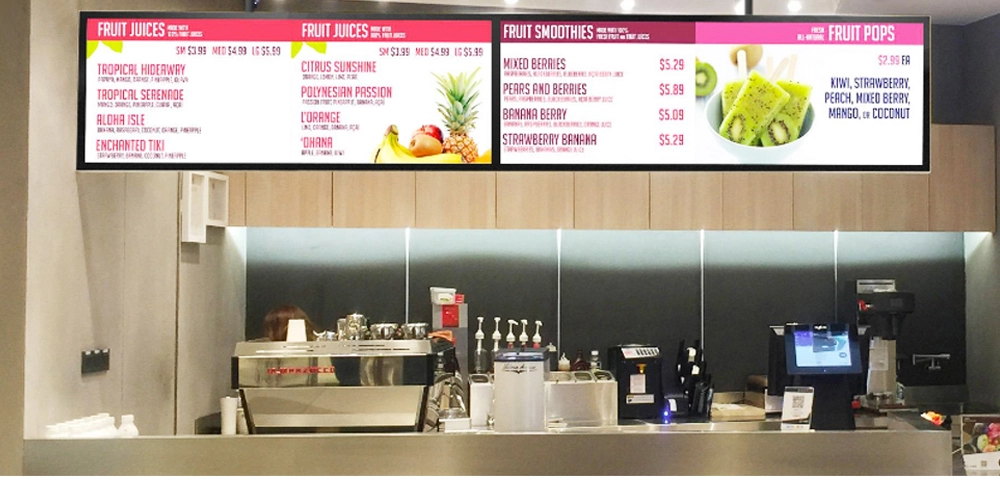
In cafés en restaurants werken 28-inch bar displays als menuborden voor dagelijkse specials of wisselende aanbiedingen. Hotels plaatsen ze in liften om tijden, weer of advertenties te tonen. Drive-thru plaatsen gebruiken ze voor scherpe, heldere menu's. Dit vermindert fouten en versnelt bestellingen.
Vervoer & Openbare ruimtes
Luchthavenporten, metrostations en metroplatforms gebruiken 28-inch of grotere bar LCD's voor live informatie over aankomsten, vertrekken, tarieven en waarschuwingen. Hun dunne vormen passen bij kleine gebieden zoals ticketbalies of platformzijden.
Bedrijfsleven & Kantoorruimten
Conferentiezalen gebruiken bar displays voor schema's en openingstijden. De lobbies hebben meerdere panelen voor soepele ultrabrede merkshows of infomuren.
Industriële & Overige sectoren
Automotieve interfaces, slimme productie HMI's en medische gereedschappen profiteren van modellen met hoge helderheid en brede temperatuur (bijvoorbeeld -20 ° C tot 70 ° C).
Prijzen: Begrijpen van de kosten voor gestrekte bar LCD-schermen
Kosten veranderen op basis van specificaties:
-
Ingangsniveau (kleinere maten, standaard helderheid): $ 150- $ 500.
-
Midden-bereik (hoge helderheid 700-1000 nits, touch-enabled): $ 400- $ 900.
-
Premium (grotere maten, zonlicht-leesbaar, aangepaste interfaces): $ 900.
Belangrijkste factoren die de kosten verhogen zijn onder meer helderheid (meer nits voor buiten of lichte plaatsen), aanrakingsfunctie, temperatuurbereik en extra's zoals AF-coatings of ingebouwde PCBA. Het kopen van grote hoeveelheden van fabrikanten verlaagt de kosten per eenheid.
Installatie & Implementatie: flexibiliteit in de kern
Installatiekeuzes verbeteren hoe eenvoudig ze te gebruiken zijn:
-
Rek-gemonteerd met klembeugels voor retail setup.
-
Wand of plafond ophangen via slanke randen voor platte of ophangende plaatsing.
-
Vrijstaande draagbare standaarden voor evenementen of kortetermijngebruik.
De connectiviteit omvat LVDS (gebruikelijk voor modules), optionele HDMI, Wi-Fi/Ethernet voor CMS-wijzigingen op afstand en USB/I²C voor touch. Cloud-gebaseerde content tools maken snel updates via netwerken mogelijk. Dit helpt grote setups gemakkelijk te groeien.
Belangrijkste kenmerken
-
Hoge resolutie voor heldere tekst en multimedia.
-
Duurzaamheid met grote kijkhoeken (tot 178°), energiebesparende LED-achtergrondverlichting en sterke bescherming tegen de omgeving.
-
Veelzijdigheid in media ondersteuning: video's, afbeeldingen, scrollende tekst.
-
Content agility via updates op afstand.
Bar LCD vs. Standaard LCD vs. LED
|
Eigenschap |
Bar LCD-scherm |
Standaard LCD |
LEIDEN |
|
Aspectverhouding |
Ultrabreed (bijvoorbeeld 16:3) |
16:9 |
Aangepaste |
|
Kijkhoek |
Tot 178° |
160°–178° |
140°–160° |
|
Helderheid |
Tot 1000 nits |
300-700 nits |
Tot 8000 nits |
|
Beste gebruik |
smalle ruimtes, signage |
Algemene monitoren/tv's |
Buiten billboards |
Bar LCD's onderscheiden zich in strakke ruimtes. Ze bieden een betere pasvorm en scherp uitzicht.
Kies de Bar LCD-oplossingen van Kadi Display
Kadi Display, een professionele fabrikant en leverancier gevestigd in Shenzhen met meer dan 20 jaar expertise, is gespecialiseerd in hoogwaardige gestrekte bar-type TFT LCD-schermen. Het bedrijf biedt aanpasbare oplossingen, waaronder modellen zoals 8.8″ , 12.3″ , 15.0″ , 28″ en grotere maten, met functies zoals hoge helderheid (tot 1000 nits), capacitieve aanraakopties, LVDS-interfaces en brede temperatuurbereiken. Gecertificeerd volgens ISO9001, ISO14001, ISO13485 en IATF16949, biedt Kadi Display one-stop-diensten van snelle prototyping tot schaalbare productie in 10.000 ㎡ faciliteit, die de industriële, detailhandel, auto- en medische sectoren bedient.
Veelgestelde vragen
Wat zijn de typische aspectverhoudingen voor stretched bar LCD-schermen?
Veel voorkomende verhoudingen zijn 16:3, 32:9 of aangepaste ultrabrede formaten zoals 1920×360 of 1920×720, afgestemd op specifieke installatiebehoeften.
Hoeveel kosten stretched bar LCD-schermen?
De prijzen variëren van $ 150 voor kleinere entry-level modellen tot meer dan $ 900 voor premium hoge helderheid of touch-enabled versies, beïnvloed door grootte, helderheid en aangepaste functies.
Welke industrieën profiteren het meest van bar-type LCD's?
Retail voor shelf-edge en menu-toepassingen, transport voor signage, gastvrijheid voor dynamische borden en industriële/automotive voor HMI's.
Zijn stretched bar LCD's aanpasbaar?
Ja, opties omvatten grootte, resolutie, helderheid, touch-integratie, interfaces en milieubeoordelingen van fabrikanten.
Wat is het verschil tussen bar LCD en standaard LCD?
Bar LCD's bieden langdurige beeldverhoudingen voor smalle ruimtes, hogere aanpasbaarheid en vaak helderdere panelen in vergelijking met standaard 16:9 LCD's.
Partner met een betrouwbare fabrikant en leverancier
Kadi weergave is een professionele vertoningsfabrikant van Shenzhen. Kadi Display richt zich op het leveren van betrouwbare industriële en medische displays oplossingen voor de klant.
Voor bedrijven die betrouwbare stretched bar LCD-schermen zoeken, contact met Kadi Display als een toonaangevende fabrikant, leverancier en fabriek in Shenzhen. Neem contact op via e-mail op sales@sz-kadi.com of telefoon op 86-13662585086 om aangepaste oplossingen te bespreken, offertes aan te vragen of OEM/ODM-opties te verkennen. Het team biedt deskundige begeleiding voor op maat gemaakte bar-type displays om aan specifieke projectvereisten te voldoen.
Voorgaande
Zonlicht leesbare schermen - de belangrijkste parameters van buiten LCD-schermen die u moet weten
Volgende
7 Inch LCD Selectie Gids: 800×480 naar FHD | RGB/LVDS/MIPI DSI display | Kadi
Laat een reactie achter

Laatste Blog & Nieuws
- How to Choose High Brightness LCD Displays for Outdoor Applications
- How to Choose the Best Industrial TFT LCD for Your Embedded Device
- IPS vs Andere Panelen Hoe selecteer je Display Interfaces voor Embedded en Industrial TFT LCD
- 7-inch MIPI DSI-schermen: Top specificaties en beste keuzes in 2026
- Brede temperatuur TFT-schermen voor industriële toepassingen