
TN vs IPS – Wat’ S Het verschil?
2025-12-19
11:50
In display technologieën staan TN (Twisted Nematic) en IPS (In-Plane Switching) als twee basissoorten van LCD-panelen (Liquid Crystal Display)Deze schermen verschillen veel in hoe ze binnenin zijn gebouwd, hoe foto's eruit zien en welke taken ze het beste passen. Dit heeft invloed op keuzes in consumentengadgets, fabriekssystemen en professionele gereedschappen. Ingenieurs, ontwerpers en fabrikanten profiteren van het duidelijk kennen van deze verschillen. Het helpt hen om apparaten beter te laten werken, lekker te voelen in gebruik en goedkoper te blijven produceren.
Dit artikel kijkt nauwkeurig naar hoe TN en IPS werken, hun sterke punten, zwakke punten en algemene toepassingen. Het legt de basisideeën uit, vergelijkt echte prestaties en laat zien hoe ze worden gekoppeld aan nieuwe functies zoals touchscreens. Lezers krijgen handige tips om het juiste paneel voor hun producten te kiezen.
Hoe werken LCD's
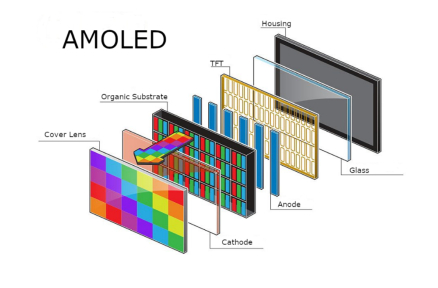
LCD-panelen hebben een achtergrondverlichting nodig om licht te schijnen omdat de pixels zelf geen licht kunnen maken. Dat is anders dan OLED schermen. Het licht gaat door vloeibare kristallen en speciale filters. Elektrische velden bewegen de kristallen rond. Dit bepaalt hoeveel licht doorkomt. Uiteindelijk creëert het afbeeldingen met verschillende helderheid en kleuren.
Vloeibare kristallen handelen als een dikke vloeistof, maar hun moleculen blijven netjes in lijn, bijna als vaste kristallen. In LCD's werken ze als kleine poorten. Ze draaien of kantelen wanneer spanning hen raakt. Dit bepaalt of gepolariseerd licht kan passeren. De exacte manier waarop ze bewegen verandert tussen paneeltypen. Daarom gedragen TN en IPS zich zo verschillend.
TN (Twisted Nematic) schermen
TN-displays focussen op zeer snel schakelen. Mensen houden ervan waar zelfs kleine vertragingen belangrijk zijn. In TN-panelen zitten de vloeibare kristallen in het begin rechtop tegen het glas. Ze vormen natuurlijk een spiraaldraai. Deze draai draait gepolariseerd licht precies 90 graden zodat het kan uitgaan en de pixel helder maakt.
Dit idee begon in 1970. Martin Schadt en Wolfgang Helfrich van Hoffmann-La Roche in Zwitserland hebben het uitgevonden. Hun werk maakte moderne platte schermen mogelijk door slimme lichtregeling.
Hoe vloeibare kristallen werken in TN LCD's
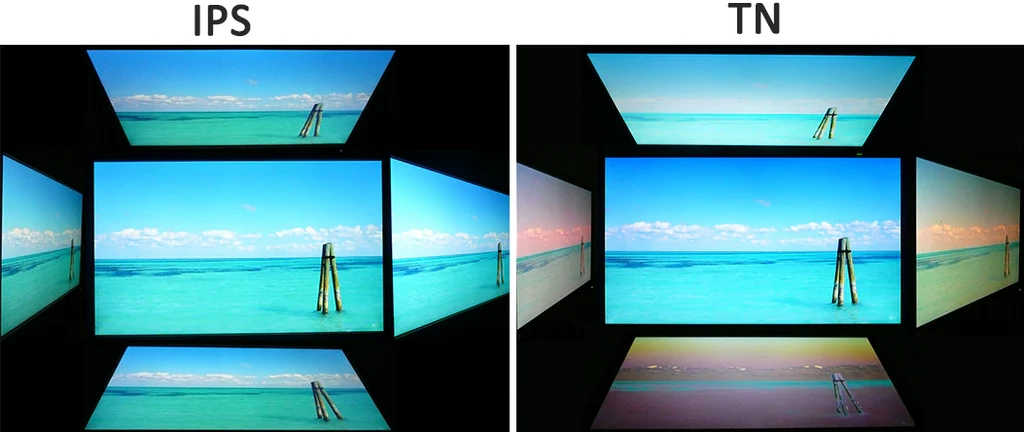
Wanneer geen spanning wordt toegepast, draait de spiraalvorm het licht. Het licht bereikt het voorfilter en de pixel gloeit. Zodra de spanning aankomt, rechtmaakt de spiraal zich snel uit. De kristallen komen in lijn met het veld. Het licht wordt volledig geblokkeerd. Deze snelle aan-uit schakelaar geeft supersnelle wijzigingen. Het maakt echter dat kleuren gemakkelijk verschuiven wanneer ze vanuit de zijkant worden bekeken.
TN-panelen schijnen mechanisch bij het draaien van licht. Ze updaten pixels snel, wat perfect is voor snel bewegende beelden.
Voordelen van TN LCD's
TN-technologie biedt duidelijke voordelen waar snelheid het meest telt:
· Hoge refresh Rates: Velen gaan voorbij 240Hz. Beweging ziet er soepel en natuurlijk uit, geweldig voor games en snelle video's.
· Snelle reactietijden: Vaak onder 1ms grijs-naar-grijs. Dit vermindert blur en ghosting bijna volledig.
· Lagere kosten: Eenvoudige bouwstappen houden prijzen laag, perfect voor het maken van duizenden eenheden.
· Energie-efficiëntie: Ze gebruiken minder stroom dan IPS. Batterijen duren langer in draagbare apparaten.
Deze sterke punten maken TN een solide keuze wanneer geld en snelheid belangrijker zijn dan een perfect uiterlijk.
Nadelen van TN LCD's
Zelfs bij grote snelheid worstelen TN-panelen met beeldkwaliteit:
· Kleurennauwkeurigheid en consistentie: Kleuren zien er saaier uit en verschuiven gemakkelijk. Het bereik is kleiner.
· smalle kijkhoeken: verder dan ongeveer 160 graden, contrastdruppels en kleuren wassen uit.
· Negere zwartniveaus en contrast: Verhoudingen blijven rond 1000:1. Donkere scènes lijken grijs.
· Minder effectief in direct zonlicht: Glare doet buiten leesbaarheid pijn.
TN Display Toepassingen
TN panelen passen op plaatsen waar snelle reactie mooie beelden verslaat. Gamers kiezen ze om vertraging in esports te verminderen. Goedkope rekenmachines, keukenapparaten en eenvoudige laptops gebruiken ze omdat ze weinig kosten. Fabrieksmachines, CNC-bedieningen en draagbare medische gereedschappen zoals glucometers houden van hun lage vermogen en taaiheid.
IPS-schermen (In-Plane Switching)
IPS-panelen geven meer om even beelden vanuit elke hoek. De vloeibare kristallen draaien vlak in de schermlaag in plaats van omhoog en neer te draaien. Hitachi lanceerde dit idee in 1996. Het heeft het grote kijkhoekprobleem opgelost dat TN altijd had.
Hoe vloeibare kristallen werken in IPS LCD's
Zonder spanning liggen kristallen vlak en parallel. Licht gaat rechtstreeks door. Wanneer de spanning komt, draaien ze voorzichtig zijwaarts. De polarisatie verandert een beetje, maar het beeld blijft constant ongeacht de kijkrichting. Dit houdt kleuren en helderheid waar, zelfs vanuit scherpe hoeken.
IPS beweegt kristallen horizontaal. Dat geeft stabiel licht en getrouwe kleuren.
Voordelen van IPS LCD's
IPS schijnt als kwaliteit op de eerste plaats komt:
· Kleurennauwkeurigheid en consistentie: Dekt tot 100% sRGB gemakkelijk. Kleuren blijven waar na kalibratie.
· Brede Kijkhoeken: Tot 178 graden met bijna geen verschuiving. Geweldig voor groepen die samen kijken.
· Snelle reactietijden: Nieuwere bereiken 4ms of minder, prima voor de meeste games en video's.
· Goede zonlicht zichtbaarheid: betere coatings knippen schittering terwijl hoeken sterk blijven.
Nadelen van IPS LCD's
Er zijn nadelen:
· Hogere kosten: complexere delen verhogen de prijs, vooral op grote schermen.
· Backlight Bloeding: Sommige lichtlekken rond randen in donkere kamers.
· Langzamere reactietijden dan TN-panelen: niet de beste voor extreme snelheidsbehoeften.
IPS Display Toepassingen
IPS regels waar exacte kleuren belangrijk zijn. Premium telefoons, laptops en tv's hebben zijn rijke look nodig. Grafische ontwerpers, fotoeditors en artsen vertrouwen op IPS-monitors in studio's en ziekenhuizen. Factory touch panels in automatisering blijven leesbaar vanaf elke plek op de lijn.
TN tegen IPS
TN kiest voor rauwe snelheid maar offert beeldkwaliteit op. IPS kiest nauwkeurigheid en brede hoeken, maar geeft wat snelheid op. Wanneer ze van de zijkant worden bekeken, vervagen TN-beelden en verschuiven ze slecht van kleur. IPS houdt alles levendig.
| Eigenschap | TN vertoont | IPS-schermen |
|---|---|---|
| Prijs | Over het algemeen goedkoper | Meestal duurder |
| Bekijk hoeken | smaler | Breed |
| Kleurennauwkeurigheid | Minder nauwkeurig | Superieur |
| Zwarte niveaus | Laager | Goed |
| Contrastverhouding | Laager | Hoger |
| Reactietijd | Sneller | Langzamer |
| Vernieuwingssnelheid | Hoger | Over het algemeen lager dan TN, maar verbeterend |
| Energieverbruik | Meestal lager | Iets hoger |
| Gebruik | Gaming (vanwege hoge refresh rates en snelle reactietijden). Budgetvriendelijke consumentenapparaten. Industriële toepassingen die een snelle weergave nodig hebben. | Professioneel grafisch ontwerp en videobewerking (vanwege kleurnauwkeurigheid). Consumentenelektronica waar kwaliteit van het display een prioriteit heeft (smartphones, tablets). Professionele en gaming monitoren waar kleurkwaliteit net zo belangrijk is als prestaties. |
Levensduur en veroudering van het scherm: hoe TN en IPS in de loop van de tijd vasthouden
Beide soorten duren meer dan 50.000 uur in goede omstandigheden. IPS houdt zijn kleuren langer stabiel omdat de kristallen vlakker blijven. TN hanteert schudden goed, maar zijn polarisators kunnen sneller gelen. In fabrieken helpt de juiste afdichting beide te overleven. Toch blijft IPS meestal langer nauwkeurig op hete of vochtige plaatsen.
TN en IPS met Touch Technology
Touch lagen werken op beide soorten. TN verliest nog meer hoek na het toevoegen van touch, dus het past het beste bij kiosken voor één persoon. IPS houdt 170 graden bekijken, zelfs met aanraking, perfect voor teamdashboards.
Beeldkwaliteit is het grootste verschil
Side-by-side tests bewijzen dat IPS er vanuit hoeken veel beter uitziet. Het scoort hoger in technische beeldtests. TN werkt prima voor eenvoudige getallen of tekst, maar worstelt met foto's of video's.
Hoe kies je tussen TN en IPS voor je productontwerp
Besluit wat het belangrijkst is. Kies TN wanneer elke milliseconde en elke dollar telt. Kies IPS wanneer mensen vanuit veel hoeken kijken of echte kleuren nodig hebben. Denk aan kamerverlichting, toekomstige 4K-behoeften en ook de levensduur van de batterij.
Voorbeelden uit de echte wereld: Waar TN- en IPS-schermen worden gebruikt
TN draait oude arcademachines en harde fabrieksmeters die onmiddellijke updates nodig hebben. IPS zorgt voor medische scopes in operatiekamers en grote projectoren in vergaderzalen waar iedereen hetzelfde heldere beeld moet zien.
Conclusie
TN en IPS bezitten elk hun hoek van de LCD-wereld. TN brengt snelle, goedkope prestaties. IPS levert mooie, betrouwbare foto's. Het koppelen van het paneel aan de taak creëert de beste producten.
Veelgestelde vragen
Wat is het belangrijkste verschil tussen TN en IPS schermen?
Het belangrijkste verschil ligt in hoe vloeibare kristallen bewegen. TN draait ze voor snelheid. IPS draait ze zijwaarts voor betere kleuren en hoeken.
Welk schermtype is beter voor gaming?
TN panels leiden nog steeds in serieuze competitieve gaming dankzij snellere respons en hogere refresh rates. Moderne IPS sluit de kloof en voegt prachtige visuals toe.
Zijn IPS-displays duurder dan TN?
Ja, IPS kost meestal meer omdat de build moeilijker is. De extra prijs betaalt terug wanneer nauwkeurigheid belangrijk is.
Kunnen TN-displays grote kijkhoeken hanteren?
Nee, kleuren en contrast vallen snel uit het centrum. IPS blijft bijna helemaal sterk tot aan de rand.
Hoe werken TN en IPS in zonlicht?
IPS hanteert helder licht beter met minder verblinding en stabieler contrast.
Welke toepassingen passen bij TN-displays?
Budget gadgets, industriële bedieningen en high-speed gaming setups houden van TN.
Is touch integratie eenvoudiger op IPS of TN?
Beide accepteren touchlagen, maar IPS behoudt zijn brede hoeken en kwaliteit daarna.
Partner met een betrouwbare schermafabriek Kadi Display voor aangepaste TN- en IPS-oplossingen
Als een toonaangevende fabrikant, leverancier en fabriek die zich specialiseert in TFT LCD-modules, Kadi weergave levert TN- en IPS-panelen op maat voor industriële, medische en commerciële behoeften. Met meer dan 20 jaar expertise in Shenzhen, ISO-gecertificeerde productie van meer dan 10.000 ㎡, en 100 aangepaste projecten per jaar, verzekert Kadi Display hoge helderheid, groothoekoplossingen zoals 10.1″ IPS TFT's met HDMI-interfaces. Neem vandaag contact op met Kadi Display bij Sales@sz-kadi.com of bezoek https://www.kadidisplay.com/ om een offerte aan te vragen en productprototypen te verhogen met betrouwbare, schaalbare weergave technologie.
Voorgaande
Wat zijn Transflectieve TFT Displays?
Volgende
Dingen die u moet weten voordat u Raspberry Pi Touch Screen LCD koopt
Laat een reactie achter