
اتجاهات تكنولوجيا العرض الصناعي 2025-2026
2026-05-07
11:47
اتجاهات تكنولوجيا العرض الصناعي 2025-2026
من 720p إلى 4K: خارطة طريق ترقية الدقة التي يحتاجها كل مهندس صناعي
من إعداد الفريق الفني لشركة كادي ديسبلاي | www.kadidisplay.com | تكنولوجيا العرض الصناعي
الحوار حول حل المشكلات الذي تستمر الفرق الصناعية في تأجيله
تجوّل اليوم في مصنع متوسط الحجم لقطع غيار السيارات، ولاحظ عدد الشاشات. ستجد لوحات تحكم بشرية على آلات قولبة الحقن تعود لعام ٢٠١٦. كما ستجد محطة عمل SCADA مزودة بشاشة تم تحديد مواصفاتها في عام ٢٠١٨. أما بث كاميرا محطة فحص الجودة فيتم عبر شاشة كانت متطورة للغاية عند إنشاء المصنع. لكل شاشة من هذه الشاشات قصة دقة عرضها، وفي معظم الحالات، تكون هذه القصة متأخرة بجيل أو جيلين عما تتطلبه المعدات المحيطة بها الآن.
هذا ليس انتقاداً. فالمنشآت الصناعية لا تُحدّث شاشات العرض بالطريقة التي يُحدّث بها المستهلكون هواتفهم. قاعدة مثبتة من الألواح بمقاس 1280×720 و1280×800 إن مجالات التصنيع والخدمات اللوجستية والبنية التحتية للطاقة والنقل واسعة النطاق، ومعظمها يعمل بكفاءة. السؤال المطروح في اجتماعات المشتريات وجلسات مراجعة البحث والتطوير في عام 2025 ليس "هل يجب علينا التحديث؟" بل "ما الذي يحفز التحديث، وإلى ماذا نُحدِّث؟"
تتناول هذه المقالة هذا السؤال بشكل منهجي. وتغطي الوضع الراهن لسوق دقة شاشات العرض الصناعية، والقوى التقنية الدافعة نحو دقة Full HD وما بعدها، ومسارات الترقية المحددة ذات الجدوى الاقتصادية، وحالات الاستخدام التي يكون فيها استخدام دقة 4K مبرراً فعلياً وليس مجرد تكهنات. وتستند أرقام السوق المذكورة إلى أبحاث عامة في القطاع وملاحظات سلسلة التوريد، وهي مؤشرات عامة وليست تنبؤات دقيقة.
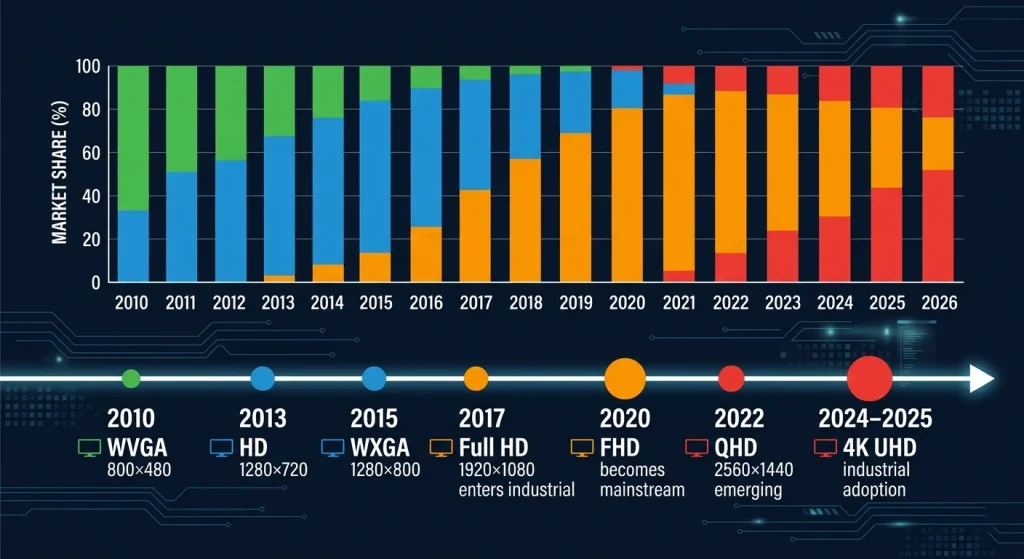
سياق الصناعة: وفقًا لدراسة عامة حول سلسلة توريد شاشات العرض نُشرت أواخر عام 2024، تفوقت دقة Full HD (1920×1080) على دقة WXGA (1280×800) لتصبح الدقة الأكثر طلبًا في سوق الشاشات الصناعية لأول مرة، حيث استحوذت على ما يُقدّر بنحو 24% من الطلبات الجديدة. وقد بدأ هذا التحول منذ عدة سنوات، ولكنه يتسارع الآن مع انخفاض تكاليف أنظمة SoC وتزايد تعقيد البرمجيات.
أين يقف سوق شاشات العرض الصناعية فعلياً في عام 2025
توزيع الدقة الذي قد يفاجئك
قبل الحديث عن التوجهات، يجدر بنا توضيح وضع قاعدة المستخدمين الحالية. فسوق شاشات العرض الصناعية ليس متجانساً، إذ يتراوح بين شاشات طرفية مدمجة بحجم أقل من 5 بوصات في الأجهزة الطبية، وصولاً إلى جدران فيديو ضخمة بحجم 55 بوصة في مراكز التحكم. ويختلف الطلب على الدقة اختلافاً جذرياً باختلاف حجم كل شاشة.
في شريحة 5-10 بوصة - التي تغطي الجزء الأكبر من لوحات واجهة المستخدم المثبتة على الآلات، ومحطات العمل الميدانية المحمولة، وشاشات التحكم المدمجة - 1280×720 و 1280 * 800 ستظل دقة العرض السائدة هي الدقة النشطة حتى أوائل عام 2025. وقد نضجت إمدادات الشاشات بهذه الدقة، واستقرت الأسعار، وتم استهلاك تكاليف خطوط إنتاج شاشات TFT LCD بالكامل، مما يُبقي التكاليف منخفضة. وتُعدّ شاشة IPS بحجم 7 بوصات ودقة 1280×800 بكسل متوفرة بكميات كبيرة وبأسعار معقولة في عام 2025، بل وأكثر من شاشة Full HD مكافئة بحجم 7 بوصات، والتي تتطلب كثافة بكسل أعلى وتوزيعًا أدق للإضاءة الخلفية.
في فئة الشاشات من 10 إلى 21 بوصة، 1920 × 1080 أصبح هذا الخيار هو المعيار الافتراضي للتصاميم الجديدة. وهنا يبرز التحول السوقي بشكلٍ جليّ. قبل ثلاث سنوات، كان المهندس الذي يحدد مواصفات شاشة صناعية بحجم 15 بوصة يختار عادةً دقة 1280×800 أو 1024×768. أما اليوم، فيختار الخيار الافتراضي هو دقة Full HD. تقلصت الفروقات السعرية، ونضج نظام SoC، وأصبحت أطر البرمجيات التي تعمل على الشاشات الصناعية - مثل Qt وElectron HMI وواجهات SCADA المستندة إلى الويب - مُحسّنة جميعها للعمل بدقة FHD كهدف أساسي للعرض.
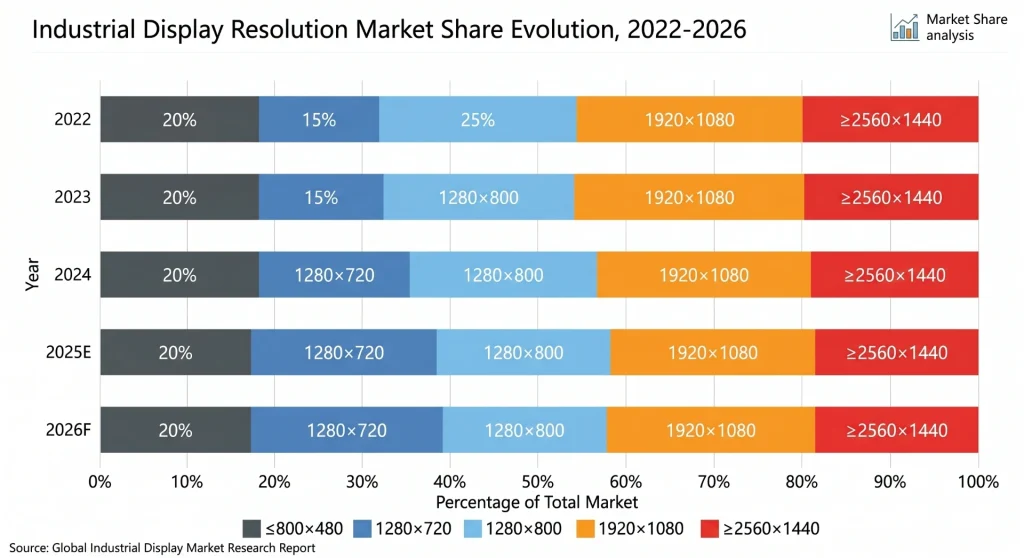
مسار الحصة السوقية، 2022-2026
يوضح الجدول التالي الحصة السوقية التقديرية حسب مستوى الدقة في قطاع شاشات العرض الصناعية (الشاشات التي تتراوح أحجامها بين 5 و24 بوصة والمخصصة للتطبيقات الصناعية والطبية والنقلية والتجارية). وقد جُمعت هذه الأرقام من مصادر متعددة في سلسلة التوريد، وهي تمثل تقديرات عامة وليست أبحاثًا سوقية معتمدة.
حصة السوق لدقة العرض الصناعية - تقديرات 2022-2026
* الأرقام هي تقديرات إرشادية تستند إلى مصادر متعددة في القطاع. قد تختلف بيانات الموردين الفردية اختلافًا كبيرًا.
ما يلفت الانتباه في هذا الجدول هو سرعة التحول. يفقد قطاع الشاشات الفرعية WXGA (كل ما هو أقل من 1280×720) حصته السوقية بوتيرة أسرع مما توقعه معظم العاملين في هذا المجال قبل عامين، مدفوعًا بثلاثة عوامل: انخفاض أسعار شاشات FHD، وتزايد تعقيد برامج واجهة المستخدم الرسومية التي تستفيد من كثافة البكسل الإضافية، ومتطلبات التطبيقات الجديدة في مجال رؤية الآلة والتفتيش المدعوم بالذكاء الاصطناعي والتي تتطلب عمليًا دقة أعلى.
شرح دقة العرض الثلاث الأساسية: HD و WXGA و Full HD
قبل الخوض في منطق الترقية، يجدر بنا أن نكون دقيقين بشأن ما يقدمه كل من الحلول النشطة الرئيسية الثلاثة في الواقع العملي، وأين تكمن حدود فائدتها.
1280×720 — لا تزال مفيدة، لكنها تقترب من نهايتها
إن 1280×720 (عالي الدقة، أو 720 بكسل) دخلت دقة العرض العالية سوق شاشات العرض الصناعية بقوة في الفترة ما بين عامي 2012 و2013، مدعومةً بإنتاج شاشات LCD الاستهلاكية التي اعتمدت نسبة العرض إلى الارتفاع 16:9. فعلى شاشة بحجم 7 بوصات، توفر دقة 1280×720 كثافة بكسل تبلغ حوالي 210 بكسل لكل بوصة، ما يمنحها وضوحًا فائقًا عند مسافات المشاهدة العادية التي تتراوح بين 30 و60 سم.
تبدأ قيود تقنية الوضوح العالي (HD) بالظهور في تعقيد البرمجيات. تُصمَّم أُطر عمل واجهة المستخدم الرسومية الحديثة - وخاصةً تلك المُصممة للعرض عبر الويب أو القائمة على Qt - على أساس دقة WXGA كحد أدنى، مع تفضيل دقة Full HD. يتطلب تشغيل تصميم واجهة مستخدم Full HD على شاشة بدقة 1280×720 إما تقليل الدقة (مما يؤدي إلى تشويش التفاصيل الدقيقة) أو تصميم تخطيط مخصص منخفض الدقة، الأمر الذي يتطلب جهدًا إضافيًا في التطوير. إن التكلفة الحقيقية لدقة 1280×720 في عام 2025 ليست تكلفة اللوحة، بل تكلفة تصميم البرمجيات. دعم دقة أقل من المستوى المطلوب.
فيما يتعلق بتوريد الشاشات، لا تزال دقة 1280×720 بحجمي 7 و8 بوصات متوفرة، وستبقى متاحة لصيانة المنتجات القديمة طوال هذا العقد. لكن تصميمات المنتجات الجديدة التي تبدأ اليوم تواجه سؤالًا واضحًا: هل يستحق فرق السعر الذي يتراوح بين 8 و15 دولارًا أمريكيًا للوحدة بين شاشة بدقة 1280×720 وشاشة بدقة 1920×1080 بحجم 10 بوصات التنازل عن جودة البرمجيات؟ بالنسبة لمعظم التطبيقات في عام 2025، فالإجابة هي لا.
مرجع: وحدات عرض TFT LCD الصناعية - كادي ديسبلاي — وحدات TFT LCD قياسية وواسعة النطاق الحراري من 4.3 إلى 10.1 بوصة بما في ذلك خيارات 1280×720 و1280×800 و1920×1080 مع واجهة MIPI DSI وLVDS وeDP.
1280×800 — النقطة المثالية التي لا تزال قائمة
إن 1280×800 (WXGA) لقد استمرت دقة العرض العالية في السوق الصناعية لفترة أطول مما توقعه العديد من المحللين، وذلك لأسباب وجيهة. فنسبة العرض إلى الارتفاع 16:10 أفضل بالفعل من 16:9 لمعظم تصميمات واجهة المستخدم الصناعية: إذ تتيح الزيادة في الارتفاع الرأسي بمقدار 80 بكسل مقارنةً بدقة 1280×720 إضافة صف إضافي من معلومات الحالة، أو شريط تنقل ثابت، أو منطقة لمس أكبر دون المساس بسهولة القراءة.
كانت أجهزة العرض الطبية، على وجه الخصوص، بطيئة في التخلي عن دقة WXGA. يتوافق تنسيق 16:10 مع نسب أبعاد المستندات الورقية الشائعة، وتُعرض سجلات المرضى بشكل أفضل في التنسيقات المتوافقة مع الوضع الرأسي، كما أن النظام البرمجي الحالي للعديد من منصات الأجهزة الطبية قد طُوّر بناءً على WXGA كمعيار. دورات اعتماد الأجهزة الطبية طويلة - إذ يؤدي تغيير مواصفات الشاشة إلى إعادة التحقق - لذا تبقى تصميمات WXGA العاملة قيد الإنتاج لفترة طويلة بعد أن تكون الأسواق الاستهلاكية أو التجارية قد انتقلت إلى استخدام دقة أعلى.
يتمثل التحول الذي بدأ في عام 2025 في ظهور تقنية Full HD كبديل منافس من حيث التكلفة حتى في الشاشات التي يتراوح حجمها بين 8 و10 بوصات، حيث كانت تقنية WXGA هي السائدة. عندما شاشة IPS مقاس 10 بوصات بدقة 1920×1200 (النسبة 16:10 لشاشة WXGA التي تعادل دقة Full HD) تكلف أكثر بقليل من شاشة WXGA المكافئة، ومنصة المعالجة تدعم بالفعل دقة FHD بشكل أصلي، وبالتالي تصبح حجة الترقية واضحة.
1920×1080 — المعيار الصناعي الجديد
Full HD 1920 × 1080 لم يعد هذا الدقة مجرد خيار طموح لشاشات العرض الصناعية، بل أصبح المعيار الأساسي لتصميمات المنتجات الجديدة التي تبدأ من 10 بوصات فما فوق. ومن المهم فهم العوامل الكامنة وراء هذا التحول، لأنها تفسر أيضاً سبب الانتقال إلى دقة QHD و4K بوتيرة أسرع مما يتوقعه الناس حالياً.
القوة الأولى هي توافر نظام على شريحةتدعم المعالجات الشائعة الاستخدام في الأنظمة المدمجة الصناعية - مثل NXP i.MX 8M وRockchip RK3568 وسلسلة Allwinner A وما يماثلها - إخراج 1080p بشكل أصلي، وغالبًا ما تتضمن تسريعًا لفك تشفير الفيديو عبر الأجهزة، مما يجعل عرض الفيديو بدقة FHD شبه مجاني من حيث استهلاك وحدة المعالجة المركزية. قبل ثلاث سنوات، كان تشغيل شاشة بدقة 1920×1080 من نظام على شريحة صناعي يتطلب إدارة دقيقة للطاقة وتصميمًا حراريًا متقنًا. أما اليوم، فقد أصبح ذلك إجراءً روتينيًا.
القوة الثانية هي مواءمة النظام البيئي للبرمجياتتم تصميم Qt 6، المستخدم على نطاق واسع في تطوير واجهات المستخدم الرسومية الصناعية، وتحسينه للعمل مع خطوط معالجة الصور بدقة FHD وما فوق. وتفترض أطر عمل واجهات المستخدم الرسومية المستندة إلى الويب، والتي تعمل على محركات مشتقة من Chromium، دقة 1080p على الأقل. أما برامج SCADA من كبرى الشركات المصنعة، فتأتي الآن مزودة بدقة 1920×1080 كحد أدنى موصى به في وثائق متطلبات النظام.
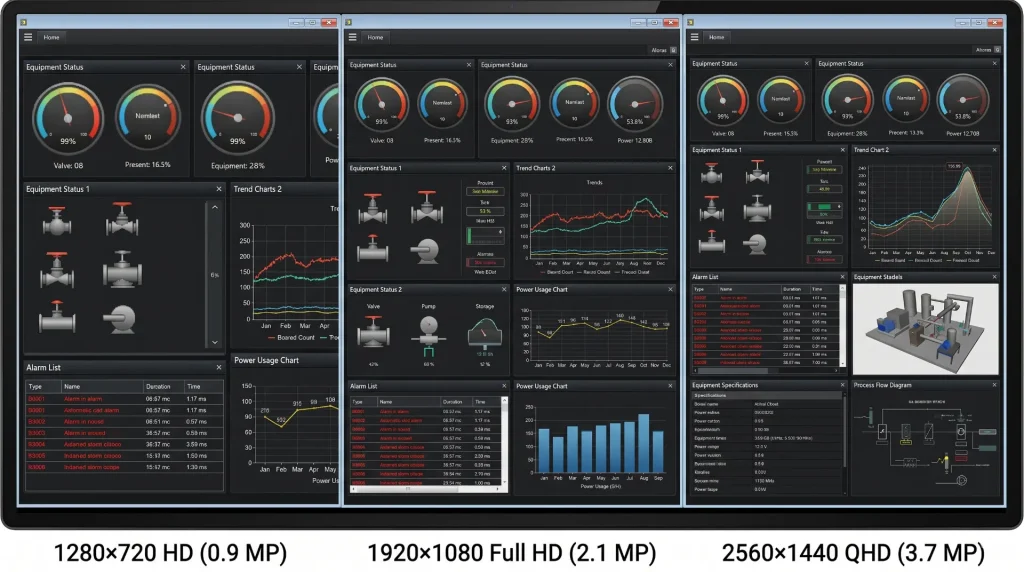
مرجع: شاشات العرض الصناعية - كادي ديسبلاي — شاشات صناعية بأحجام تتراوح من 10.1 إلى 21.5 بوصة، بتكوينات 1920×1080 و1920×1200، مع حماية أمامية بمعيار IP65، ونطاق واسع لدرجة حرارة التشغيل، وخيار شاشة لمس PCAP. مدخلات eDP وHDMI.
مرجع الدقة الكاملة — من WVGA إلى 4K
يغطي الجدول التالي النطاق الكامل لدقة العرض المستخدمة في التطبيقات الصناعية اليوم، مع المعايير الهندسية ذات الصلة بتصميم النظام.
مصفوفة مرجعية لدقة العرض الصناعي
* تم حساب كثافة البكسل بناءً على حجم اللوحة المستخدم عادةً لكل دقة. متطلبات وحدة معالجة الرسومات هي الحد الأدنى الإرشادي لعرض واجهة المستخدم بسلاسة بمعدل 60 إطارًا في الثانية.
تحليل مسار الترقية - التكلفة الفعلية للقفزة
الأبعاد الهندسية لترقية الدقة
لا تقتصر ترقيات دقة العرض في أنظمة العرض الصناعية على مجرد استبدال اللوحات. فالشاشة هي الطرف المرئي لسلسلة إشارات تشمل المعالج، ونظام الرسومات، وواجهة العرض، وبرنامج معالجة الرسومات. لذا، فإن تغيير مواصفات الدقة في اللوحة قد يؤثر على جميع هذه الطبقات.
التكلفة الأكثر شيوعًا التي يتم التقليل من شأنها هي حمل عرض البرامجيؤدي الانتقال من دقة 1280×720 إلى 1920×1080 إلى زيادة عدد البكسلات بنسبة 125%. قد تعمل واجهة المستخدم التي تُعرض بمعدل 30 إطارًا في الثانية بدقة 720p على معالج معين بمعدل 18 إطارًا في الثانية بدقة 1080p على نفس الجهاز، وهو أقل بكثير من عتبة 60 إطارًا في الثانية اللازمة لتفاعل سلس. هذا ليس مجرد افتراض، فالمهندسون الذين قاموا بترقية الدقة مباشرةً دون ترقية المعالج يواجهون هذه المشكلة بشكل متكرر، ويكون حلها (الرجوع إلى دقة 720p أو استبدال المعالج) مكلفًا في المراحل الأخيرة من المشروع.
جدول التكلفة والفوائد للتحديث
تحليل مسار ترقية الدقة
يستحقّ صفّ الترقية من 1280×720 إلى 1280×800 التنويه. فزيادة عدد البكسلات بنسبة 11% ضئيلة لدرجة أنها لا تتطلب عادةً أي تغييرات في نظام SoC أو واجهة المستخدم - إذ يتولى نفس رابط LVDS أو MIPI DSI معالجة كليهما، ويكون حمل معالجة الرسومات على وحدة معالجة الرسومات متطابقًا فعليًا. بالنسبة للأنظمة المصممة على منصة 1280×720 والتي تحتاج إلى نسبة العرض إلى الارتفاع 16:10 لإعادة تصميم واجهة المستخدم، فإن هذا يُعدّ قريبًا من... ترقية مجانية من منظور تصميم النظام.
يُصبح الانتقال من دقة 1920×1080 إلى 2560×1440 ذا أهمية بالغة على مستوى النظام. يتطلب ذلك منفذ eDP 1.4 (مقارنةً بـ eDP 1.2 لدقة FHD)، كما أن عرض نطاق ذاكرة وحدة معالجة الرسومات (GPU) اللازم لعرض سلس بدقة QHD بمعدل 60 إطارًا في الثانية يُعادل تقريبًا ضعف عرض نطاق ذاكرة FHD. تتعامل أنظمة SoC الصناعية التي ستُطرح في الأسواق في الفترة 2024-2025 - وخاصةً تلك المبنية على معالجات ARM Mali-G57 وG68 الرسومية، ومعالج Rockchip RK3588 - مع دقة QHD بكفاءة. لكن المنصات القديمة لا تستطيع ذلك، مما يُجبر المستخدمين في معظم الحالات على ترقية نظام SoC.
قوى التطبيق التي تدفع الدقة للأعلى
الرؤية الآلية والتفتيش بالذكاء الاصطناعي
من بين جميع العوامل التطبيقية التي تدفع شاشات العرض الصناعية نحو دقة أعلى في عام 2025، رؤية الآلة المدعومة بالذكاء الاصطناعي يُعدّ هذا الأمر بالغ الأهمية. فأنظمة فحص الجودة المدمجة - التي تتحقق من وصلات لحام لوحات الدوائر المطبوعة، وتكشف عيوب الأسطح في الأجزاء المصنّعة، وتتحقق من مستويات التعبئة في عبوات الأدوية - تستخدم الآن كاميرات بدقة تتراوح بين 4 و12 ميجابكسل بشكل روتيني. وتحتاج شاشة العرض الخاصة بالمشغل، التي تعرض لقطات الكاميرا وتُضيف تعليقات توضيحية على العيوب في الوقت الفعلي وتُضيف نتائج استدلال الذكاء الاصطناعي، إلى عدد كافٍ من البكسلات لجعل التعليقات التوضيحية على العيوب ذات معنى عند المشاهدة من مسافة بعيدة.
شاشة عرض بدقة 1280×720 تعرض بثًا مباشرًا من كاميرا بدقة 4 ميجابكسل بملء الشاشة تعمل بنحو 23% من دقة المصدر - فكل تعليق على عيب ما يكون بطبيعته أقل دقة من البيانات الأصلية. أما شاشة بدقة 1920×1080 فترفع هذه النسبة إلى 52% لنفس المصدر. وتصل شاشة 4K إلى 97% - أي أن الشاشة لم تعد العامل المحدد. هذه الحسابات هي السبب في أن محطات عمل فحص الذكاء الاصطناعي في صناعات السيارات وأشباه الموصلات والأدوية تُعد من أسرع القطاعات نموًا نحو شاشات العرض الصناعية عالية الدقة الكاملة (FHD) وعالية الدقة الكمومية (QHD).
التوأم الرقمي وتصور نظام التحكم الإشرافي وتحصيل البيانات (SCADA)
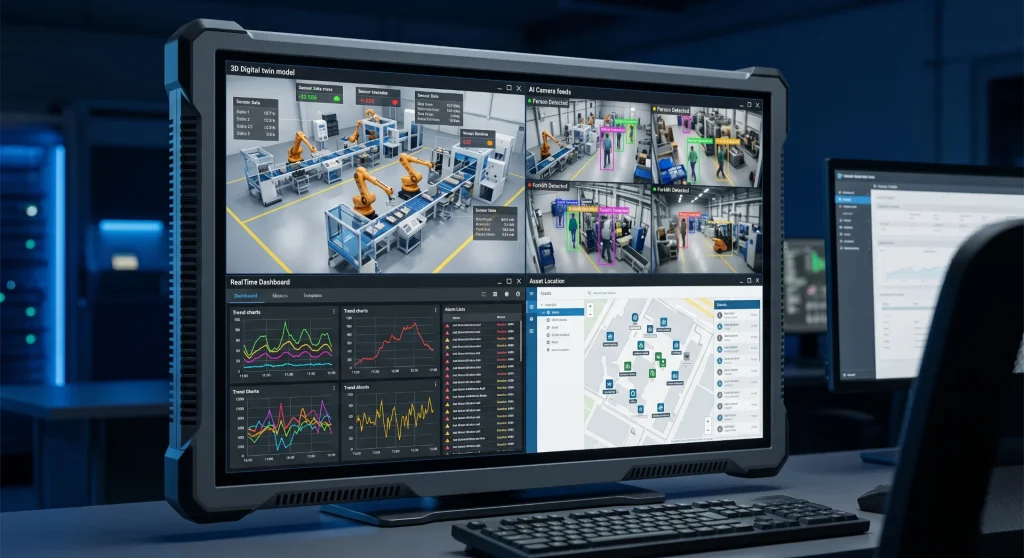
مفهوم التوأم الرقمي انتقل مفهوم التوأم الرقمي، وهو نموذج بيانات آني لأصل مادي أو عملية، من مجال البحث إلى الإنتاج في قطاعي التصنيع والبنية التحتية للطاقة خلال السنوات الثلاث الماضية. وتتميز واجهات التوأم الرقمي بكثافة بياناتها، حيث تعرض نماذج ثلاثية الأبعاد للأصول، وبيانات أجهزة الاستشعار، ومخططات الاتجاهات، ولوحات الإنذار، والإرشادات الإجرائية في آن واحد. ويؤدي تعقيد واجهة المستخدم الذي تتطلبه تطبيقات التوأم الرقمي إلى امتلاء شاشات العرض بدقة 1280×800 بكسل، مما يضطر المطور إلى اتخاذ قرارات صعبة بشأن ترتيب المعلومات لعرض جميع البيانات على الشاشة.
تُغيّر تقنية Full HD قواعد اللعبة. إذ يُمكن لشاشة بدقة 1920×1080 عرض نموذج ثلاثي الأبعاد إلى جانب مخطط اتجاهات رباعي الأجزاء وجدول تنبيهات مباشر في آنٍ واحد، بتصميمٍ يراه المصمم طبيعيًا ومريحًا. وتُضيف تقنيتا QHD و4K مساحةً أكبر لعرض البيانات السياقية. هذا ما يدفع إلى اعتماد مواصفات FHD وما فوقها لمحطات تشغيل التوأم الرقمي الجديدة في تطبيقات الطاقة والتصنيع والبنية التحتية.
شاشات العرض العريضة وشاشات العرض الشريطية في مجال الخدمات اللوجستية
ثمة اتجاه أقل وضوحاً في مجال الحلول يستحق الملاحظة في قطاعي الخدمات اللوجستية والتجزئة: النمو السريع لـ شاشات عرض من النوع الشريطي أو الشاشات فائقة العرض تُستخدم هذه الشاشات في لوحات حالة خطوط النقل، وملصقات حواف الرفوف، وشاشات إدارة الطوابير. وتعمل هذه الشاشات - التي غالبًا ما تعمل بدقة عرض مثل 1920×360 أو 1280×400 أو 3840×1080 - وهي مشتقة من شاشات FHD عريضة، وتتمتع بنفس ميزة كثافة البكسل على المحور الأفقي. ويدعم نظام واجهة eDP وMIPI DSI نفسه المستخدم في شاشات FHD القياسية هذه التنسيقات غير القياسية.
انظر أيضاً: شاشات عرض TFT LCD من النوع الشريطي - كادي ديسبلاي — وحدات LCD فائقة العرض ووحدات LCD من النوع الشريطي بنسب أبعاد غير قياسية، بما في ذلك 1920×360 و1280×480 ودقة مخصصة للخدمات اللوجستية ولافتات البيع بالتجزئة وشاشات عرض الحالة الصناعية.
QHD و 4K في المجال الصناعي - هل هي حاجة حقيقية أم ضغط تسويقي؟
القضية الصادقة لتقنية QHD (2560×1440)
توجد تطبيقات صناعية محددة حيث QHD بدقة 2560×1440 إنها بالفعل المواصفات المناسبة في عام 2025، وليست مجرد هدف طموح. شاشات التصوير الجراحي والتداخلي مثال على ذلك. دقة التفاصيل المطلوبة لتقييم نسيج الأنسجة، وموضع الأدوات، والتباين الفلوري في الجراحة طفيفة التوغل كافية لتشبع شاشة FHD بحجم 15 بوصة. توفر شاشة QHD بنفس الحجم دقة خطية أعلى بنسبة 40% تقريبًا - والفرق بين تحديد ميزة تشريحية هامشية وتفويتها حقيقي.
تُعد مراكز القيادة في قطاعي الدفاع والسلامة العامة تطبيقًا مشروعًا آخر لتقنية QHD. تستفيد شاشات العرض المركبة متعددة المصادر - التي تعرض لقطات الطائرات المسيّرة، وبيانات أجهزة الاستشعار الأرضية، وتراكبات الخرائط، وواجهات الاتصال في آنٍ واحد - من دقة QHD الإضافية، مما يُحسّن الوعي الظرفي بشكل مباشر، وليس فقط جماليات الشاشة. في هذه البيئات، لا تُمثّل تكلفة أجهزة العرض عائقًا، وحيث يُحقق عرض المزيد من المعلومات أمام الأشخاص المناسبين في الوقت المناسب قيمة تشغيلية ملموسة.
دقة 4K (3840×2160) - التركيز على المنتجات المتخصصة الآن، والبنية التحتية لاحقاً
في عام 2025، بات عرض 4000 بكسل مواصفةً متخصصةً في شاشات العرض الصناعية. توجد تطبيقات عملية لها، مثل شاشات مراكز التحكم كبيرة الحجم (27-55 بوصة)، ومحطات عمل التصوير الطبي عالية الدقة في مجالات الأشعة وعلم الأمراض، ومحطات عمل التصميم والتصنيع بمساعدة الحاسوب (CAD/CAM) في هندسة التصنيع، حيث تتطلب رؤية التفاصيل الدقيقة للتجميعات المعقدة بمستويات تكبير متعددة في آنٍ واحد. إلا أن هذه التطبيقات لا تمثل سوى جزء صغير من سوق شاشات العرض الصناعية من حيث حجم الوحدات.
ما يجعل تقنية 4K مهمة لمقال خارطة الطريق للفترة 2025-2026 ليس مدى انتشارها الحالي، بل... مسار البنية التحتيةأصبحت واجهات eDP 1.4b وDisplayPort 2.0، التي تدعم دقة 4K بمعدل 60 هرتز، معيارًا في منظومة أنظمة SoC. وتشهد إنتاجية تصنيع الشاشات بدقة 4K للأحجام الصناعية تحسنًا ملحوظًا. لذا، يجدر التساؤل عما إذا كان من الضروري تصميم منصة منتج جديدة تدعم دقة 4K، حتى في حال إطلاق المنتج بدقة FHD، لأن قرار تصميم واجهة العرض المتخذ الآن سيُمكّن أو يُعيق الترقية إلى دقة 4K في الفترة 2027-2028.
ملاحظة تصميمية لمنصات منتجات 2025: إذا كان نظامك على شريحة يدعم برنامج eDP 1.4 أو DisplayPort 1.4، وتطبيق العرض الخاص بك كثيف البيانات (رؤية الآلة، SCADA، الأوامر) مركزضع في اعتبارك تصميم موصل الشاشة وواجهتها لدعم دقة 4K على مستوى المنصة، حتى لو كان إطلاق المنتج بدقة 1920×1080. تكلفة هذا القرار التصميمي ضئيلة، بينما تكلفة إعادة تصميم لوحة الدوائر المطبوعة لإضافة دعم دقة 4K بعد ثلاث سنوات باهظة.
واجهة العرض - قرار معماري يُقيّد مسار الترقية الخاص بك
لماذا يحدد اختيار واجهة المستخدم الحد الأقصى للدقة؟
هذا هو بُعد تصميم النظام الذي غالبًا ما تكتشفه فرق تطوير المنتجات متأخرًا جدًا. كل مستوى دقة أعلى من 1280×800 يتطلب واجهة عرض قادرة على نقل تردد البكسل وعرض النطاق الترددي اللازمين. LVDSكانت واجهة LVDS هي الواجهة السائدة لشاشات العرض الصناعية من 7 إلى 15 بوصة خلال العقد الماضي، ويبلغ الحد الأقصى العملي لعرض النطاق الترددي حوالي 1280×800 بكسل بمعدل 60 إطارًا في الثانية للتطبيقات أحادية القناة. بينما تستطيع واجهة LVDS ثنائية القناة التعامل مع دقة 1920×1080 بكسل بمعدل 60 إطارًا في الثانية، إلا أنها تُعتبر واجهة قديمة تتجه التصاميم الحديثة إلى التخلي عنها.
برنامج eDP (منفذ العرض المدمج) يُعدّ eDP الخيار الأمثل حاليًا لأي دقة عرض تتراوح من 1280×800 إلى 4K. يدعم eDP 1.2 دقة 1080p بمعدل 60 إطارًا في الثانية بسلاسة على مسارين. بينما يدعم eDP 1.4 دقة 4K بمعدل 60 إطارًا في الثانية على أربعة مسارات. بالنسبة للتصميمات الصناعية المدمجة، يُعدّ eDP الآن الخيار الاستراتيجي لأي منصة جديدة مصممة لدعم دقة FHD أو أعلى. MIPI DSIبينما تهيمن على الأجهزة المحمولة والشاشات المدمجة الأصغر حجمًا (عادةً ما تكون أقل من 10 بوصات)، فإنها تشهد اعتمادًا أوسع في المحطات الصناعية المدمجة التي تعمل بدقة 1080 بكسل على أنظمة SoC من فئة ARM مثل NXP i.MX 8M Plus و Rockchip RK3568.
التخطيط للتحديث الذي لم تحدده بعد
إنّ أهمّ ما يُمكن لمهندس الأنظمة المُدمجة فعله في عام 2025 عند تصميم منصة عرض صناعية جديدة هو تصميم موصل الشاشة وتوجيه الواجهات لمستوى دقة أعلى من مواصفات الإطلاق. فإذا كان الإطلاق بدقة 1280×800، فوجّه الواجهات لدعم دقة 1920×1080. وإذا كان الإطلاق بدقة 1920×1080، فوجّه المسارات لدعم دقة 2560×1440. تُعدّ تكلفة السيليكون لتحديد واجهة ذات قدرة أعلى قليلاً (مثل وحدة تحكم eDP 1.4 بدلاً من eDP 1.2) ضئيلة على مستوى النظام على شريحة واحدة (SoC). كما أنّ تكلفة مساحة اللوحة لإضافة زوجين تفاضليين إضافيين في مسار eDP ضئيلة للغاية على مستوى لوحة الدوائر المطبوعة (PCB).
أما البديل، وهو اكتشاف بعد ثمانية عشر شهرًا من إطلاق المنتج أن العملاء يرغبون بدقة FHD بينما لا تتجاوز إمكانيات بنية الجهاز دقة WXGA، فيتطلب إعادة تصميم اللوحة الأم، وتأهيلًا جديدًا للشاشة، وربما نظامًا جديدًا على شريحة واحدة (SoC)، ودورة اعتماد جديدة للمنتج. هذا ليس افتراضًا، بل هو نمط تكرر في تطوير المنتجات الصناعية أكثر من مرة.
يستكشف: حلول عرض مخصصة - كادي ديسبلاي — مشاريع شاشات مخصصة من مصنعي المعدات الأصلية (OEM) ومصنعي التصميم الأصلي (ODM)، بما في ذلك الدقة غير القياسية، ومواصفات الواجهة (MIPI DSI، LVDS، eDP)، والربط البصري، والتأهيل البيئي. دعم هندسي لتخطيط مسار ترقية الدقة.
ملخص خارطة الطريق 2025-2026 - أين تضع رهاناتك على قراراتك
القرارات المهمة الآن
إذا كان هناك استنتاجٌ واحدٌ بالغ الأهمية من بيانات اتجاهات دقة الشاشة لعام 2025، فهو التالي: إنّ فرصة تصميم منتجات جديدة بدقة 1280×720 كخيارٍ مُتعمّدٍ آخذةٌ في التلاشي. لم تنتهِ تمامًا، ولكنها تتلاشى. فقد تقلّصت ميزة السعر مقارنةً بدقة 1920×1080 إلى مستوىً لم يعد يُعوّض عن تكلفة تصميم البرمجيات الإضافية وقصر فترة ملاءمة المنتج.
بالنسبة للمنتجات التي يتراوح حجمها بين 7 و10 بوصات حيث WXGA (1280 * 800بعد أن أصبح معيارًا، يبقى السؤال المطروح على المدى القريب هو ما إذا كانت مزايا نسبة العرض إلى الارتفاع 16:10 تفوق تكلفة كونها أقل من معيار نظام FHD الأساسي. بالنسبة لمعظم التصاميم الجديدة التي تبدأ الآن، تشير الإجابة إلى Full HD - إما 1920×1080 لتطبيقات 16:9 أو 1920×1200 للتطبيقات التي تتطلب تنسيق 16:10.
بالنسبة للمنتجات التي يتراوح حجمها بين 10 و21 بوصة، 1920 × 1080 ليس هذا مجرد اتجاه، بل هو المعيار السائد في السوق حاليًا. والسؤال الذي يطرح نفسه مستقبلًا هو: هل يجب تصميم النظام ليتوافق مع دقة QHD؟ بالنسبة للتطبيقات كثيفة البيانات في مجال رؤية الآلة، وأنظمة التحكم الإشرافي وجمع البيانات (SCADA)، والتصوير الطبي، أو التوائم الرقمية، فالإجابة هي نعم: يجب التخطيط للواجهة واختيار نظام SoC مع مراعاة دقة 2560×1440 حتى لو كان المنتج الأولي يُطرح بدقة 1080p.
4K - على بعد ثلاث سنوات من الانتشار الصناعي
ستصبح دقة 4K معيارًا سائدًا في الشاشات الصناعية. فجدوى اللوحات، ومنظومة الواجهات، وقدرات أنظمة SoC كلها تسير على المسار الصحيح لجعل دقة 4K عمليةً لمجموعة أوسع من التطبيقات الصناعية بحلول عامي 2027-2028. والمهندسون وفرق المنتجات الذين سينجحون في نشرها هم من يعملون حاليًا على بنية الواجهات، لضمان أن تكون المنصات التي يصممونها في عام 2025 قادرة على دعم دقة 4K في مسارات التوصيل واختيار الواجهات، حتى لو تم طرحها بدقة FHD.
إنّ مسار تطوير دقة الشاشات الصناعية ليس خطًا مستقيمًا انطلاقًا من الوضع الحالي للشاشات المثبتة. بل هو سوق ذو مسارين: تحوّل سريع من دقة أقل من HD التقليدية إلى دقة FHD في الفئة المتوسطة، وتحوّل أبطأ ولكنه متسارع من دقة FHD نحو دقة QHD و4K في الفئة عالية الإمكانيات. كلا التحوّلين جارٍ بالفعل. والسؤال الذي يطرح نفسه على أي فريق يصمم منتج شاشة صناعية في عام 2025 هو ببساطة: أي جزء من هذا المسار تريد أن تكون متقدمًا عليه؟
للحصول على توصيات بشأن وحدات العرض التي تغطي دقة 1280×720 و1280×800 و1920×1080 وQHD في التكوينات الصناعية المعتمدة، تصفح كتالوج منتجات Kadi Display على kadidisplay.com. استفسارات هندسية ودعم مشاريع تصنيع المعدات الأصلية/تصميم المعدات الأصلية: Sales@sz-kadi.com — بما في ذلك لوحات الدقة المخصصة وتكامل الدوائر المتكاملة لجسر الواجهة لترقيات المنصات القديمة.
تنويه: تُعدّ أرقام الحصة السوقية وتوقعات التبني المذكورة في هذه المقالة تقديرات تقريبية مُجمّعة من مصادر صناعية متعددة متاحة للجمهور وملاحظات سلسلة التوريد. وهي ليست أبحاث سوق معتمدة، ولا ينبغي استخدامها كأساس لقرارات الاستثمار أو الشراء دون التحقق المستقل. تخضع توافر التكنولوجيا ومواصفات نظام على شريحة (SoC) ومعايير الواجهة للتغيير. جميع أسماء العلامات التجارية والمنتجات مملوكة لأصحابها.
السابق
كيفية اختيار غطاء زجاجي متين للشاشات الصناعية الخارجية
التالي
"الأكثر سطوعًا هو الأفضل" هي أكبر خرافة في اختيار شاشات العرض الصناعية
اترك تعليق

آخر مدونة وأخبار
- MIPI DSI Display Driver Development for Embedded Linux What Hardware Buyers Need to Confirm
- Why Outdoor LCDs Fog Inside: Condensation, Sealing, Vents, and Heaters
- IP65 vs IP67 Industrial Displays: What the Rating Actually Covers
- How to Specify a Touchscreen for Food-Processing Equipment
- Thermal Management for High Brightness LCDs in Sealed Outdoor Enclosures
مدونة ذات صلة وأخبار
-
 TN مقابل IPS2024-7-9
 -
TN مقابل IPS2024-7-9