Startseite
-
Blog & Neuigkeiten
-
Gleiche „hohe Helligkeit“, unterschiedliche Technik: Wie sich die Hintergrundbeleuchtung von 1000-Nits- und 2000-Nits-LCDs tatsächlich unterscheidet
Gleiche „hohe Helligkeit“, unterschiedliche Technik: Wie sich die Hintergrundbeleuchtung von 1000-Nits- und 2000-Nits-LCDs tatsächlich unterscheidet
2026-05-26
08:34
Gleiche „hohe Helligkeit“, unterschiedliche Technik: Wie sich die Hintergrundbeleuchtung von 1000-Nits- und 2000-Nits-LCDs tatsächlich unterscheidet
Die richtige Wahl zwischen 400 Nits, 1000 Nits und 2000 Nits – unter Berücksichtigung optischer, thermischer und LED-Treiber-Logik
Vom technischen Team von Kadi Display | www.kadidisplay.com
Warum „Hohe Helligkeit“ zwei sehr unterschiedliche Bedeutungen hat
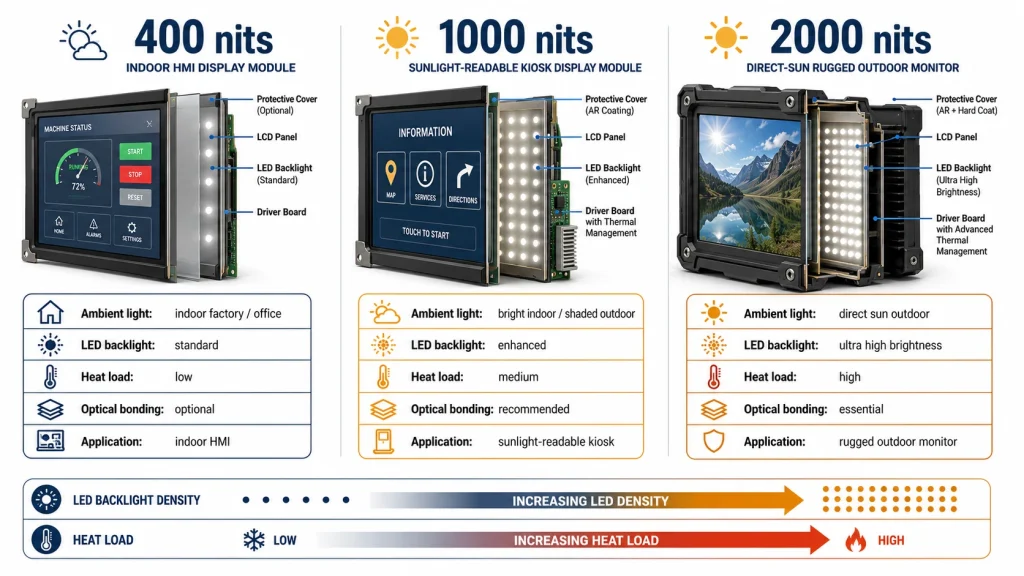
In den Spezifikationen für industrielle Displays werden 1000 cd/m² und 2000 cd/m² oft unter dem Begriff „hohe Helligkeit“ zusammengefasst. Diese Bezeichnung ist zwar praktisch, kann aber einen wesentlichen technischen Unterschied verschleiern. Ein LCD mit 1000 cd/m² ist in der Regel für die Nutzung bei Sonnenlicht optimiert. Ein LCD mit 2000 cd/m² hingegen ähnelt eher einem optisch und thermisch hochbelasteten System, das um die Hintergrundbeleuchtung herum aufgebaut ist.
Der Unterschied beginnt bereits bei der Anwendung. Ein 400-Nit-Display ist in der Regel ausreichend für HMIs in Innenräumen, medizinische Geräte, Bedienfelder in der Fabrik und eingebettete Systeme, die unter kontrollierter Beleuchtung eingesetzt werden. Ein 1000-Nit-Display eignet sich für helle Innenräume, halboffene Außenbereiche, Fahrzeuge, Kioske und schattige Außenbereiche. Ein 2000-Nit-Display ist nicht einfach ein helleres 1000-Nit-Panel. Es wird üblicherweise gewählt, wenn direktes Sonnenlicht, reflektierte Blendung, dickes Deckglas, abgedichtete Gehäuse, große Betrachtungsabstände oder sicherheitskritische Lesbarkeit die Anforderungen an die Lesbarkeit verändern.
In branchenüblichen Helligkeitsrichtlinien werden 1000 Nits oder mehr üblicherweise als Einstiegspunkt für Sonnenlichttaugliche TFT-LCDsKadi Display beschreibt sonnenlichttaugliche TFT-LCDs zudem als typischerweise heller als 800-1000 Nits bei schwierigen Lichtverhältnissen. Inhalte zur Helligkeitsauswahl 400, 1000 und 2000 Nits werden als unterschiedliche technische Bereiche unterschieden. Die praktische Schlussfolgerung ist einfach: 1000 Nits bedeuten oft eine Verbesserung der Lesbarkeit; 2000 Nits sind eine bewusste Systemoptimierung.
Der erste Weg: 1000 Nits durch effiziente LED-Hintergrundbeleuchtungsoptimierung
Ein industrielles LCD mit 1000 Nits Helligkeit nutzt üblicherweise eine bekannte LED-Randbeleuchtungs- oder Direktbeleuchtungsarchitektur, jedoch mit optimierter LED-Selektion, höherer optischer Effizienz, leistungsstärkeren Lichtleitern und verbesserten Schichtsystemen. Ziel der Entwicklung ist es, die Leuchtdichte zu erhöhen, ohne dabei Stromverbrauch, Wärmeentwicklung, Kosten und Dicke außer Kontrolle zu bringen.
In vielen 7-Zoll- bis 15,6-Zoll-Größen industrielle TFT-LCD-ModuleDie 1000-Nit-Lösung hält die Abmessungen nahezu identisch mit Standard-LCD-Designs. Die Hintergrundbeleuchtung kann hocheffiziente weiße LEDs, eine höhere LED-Dichte, eine optimierte Lichtleiterplatte, hochtransparente Diffusorfolien und ein oder zwei Helligkeitsverstärkungsfolien verwenden. Dieser Ansatz ist attraktiv, da er LVDS, MIPI DSI, eDP, HDMI-Integration auf Boardebene, PCAP-Touch und optisches Bonding unterstützt, ohne dass eine komplette Gehäuseneugestaltung erforderlich ist.
Die TFT-LCD-Produktkategorie von Kadi Display umfasst ein 10,1 Zoll großes industrielles TFT-LCD-Display mit einer Auflösung von 1280 x 800 Pixeln, einer Helligkeit von 1000 Nits, LVDS-Schnittstelle und einem breiten Betriebstemperaturbereich. Monitorkategorie Ebenfalls aufgeführt werden Industriedisplays mit einer Helligkeit von ca. 800–1000 cd/m² für den sofortigen Einsatz. Dies sind typische Beispiele für Displays mit 1000 cd/m²: hoch genug für viele Außenanwendungen, aber dennoch kostengünstig, hinsichtlich Wärmeentwicklung und langfristiger Verfügbarkeit.
Der zweite Weg: 2000 Nits durch Hintergrundbeleuchtungsdichte und thermische Architektur
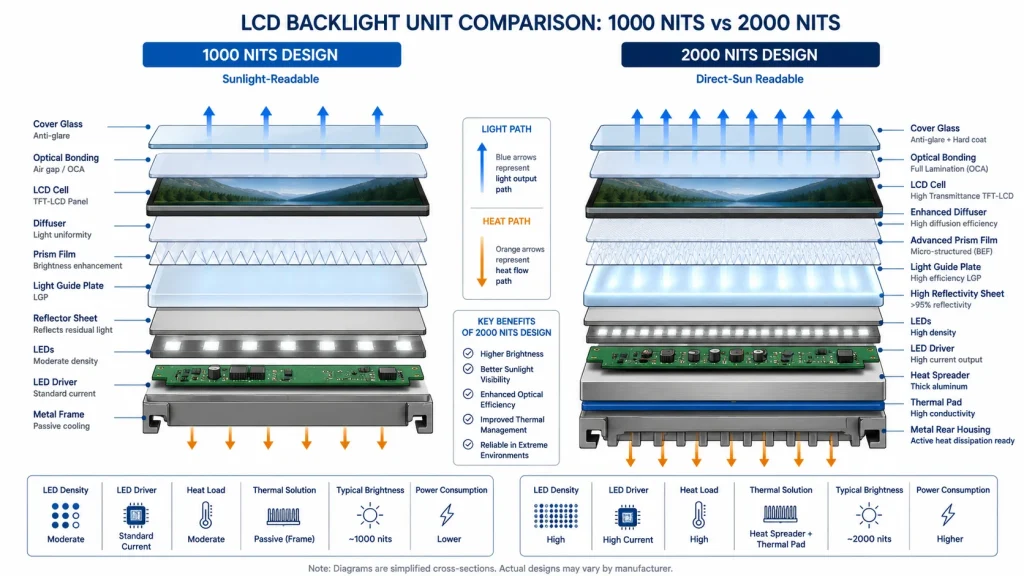
Der Weg zu 2000 Nits ist anders. Um die Bildschirmhelligkeit von 1000 auf 2000 Nits zu verdoppeln, kann der Hersteller nicht einfach die Hintergrundbeleuchtung verdoppeln und die Sache damit als erledigt betrachten. Die LED-Effizienz sinkt bei höherer Stromdichte, die Sperrschichttemperatur steigt, die optischen Schichten werden stärker thermisch beansprucht, und die Gleichmäßigkeit der Leuchtdichte wird schwieriger aufrechtzuerhalten. Anders ausgedrückt: Die zweiten 1000 Nits kosten mehr als die ersten 1000 Nits.
Ein hochwertiges Design mit 2000 Nits erfordert in der Regel mehrere Änderungen gleichzeitig: mehr LED-Gehäuse oder ein LED-Array mit höherer Dichte, engere LED-Sortierung, verbesserte Wärmeableitung, höhere Treiberstrombelastbarkeit, hitzebeständigere optische Folien, bessere Kontaktierung und oft eine rückseitige Metallstruktur, die als Teil des Wärmeleitpfads dient. Einige Anbieter von Hochleistungsdisplays beschreiben Produkte der 1500-2000-Nits-Klasse als solche, die anstelle einer einfachen Erhöhung des Hintergrundbeleuchtungsstroms Helligkeitsverstärkungsfolien, doppelte Helligkeitsverstärkungsfolien und Anpassungen der LED-Chips erfordern.
Auch die Herangehensweise der Entwickler ändert sich. Bei 1000 Nits ist die Hintergrundbeleuchtung ein Bestandteil des Displays. Bei 2000 Nits wird sie zu einem der wichtigsten Designfaktoren für das gesamte Produkt. Gehäuse, Anordnung der Wärmeleitpads, Deckglasstapel, Dimm-Firmware, Leistungsaufnahme und Wartungsplan müssen gemeinsam überprüft werden.
Warum Macht nicht höflich skaliert
Man geht allgemein davon aus, dass 2000 Nits etwa die doppelte Hintergrundbeleuchtungsleistung von 1000 Nits benötigen. Im Labor mag das für einen engen Betriebspunkt annähernd zutreffen. In der Praxis ist diese Annahme jedoch oft zu optimistisch. Die Effizienz von LED-Wandleuchten ändert sich üblicherweise mit Stromstärke und Temperatur. Mit steigender Temperatur der LEDs wird mehr elektrische Energie in Wärme anstatt in nutzbares Licht umgewandelt. Auch durch Folien, Klebstoffe, Touch-Schichten, Deckglas und Oberflächenbehandlungen geht Licht im optischen Aufbau verloren.
Für ein mittelgroßes Industriedisplay kann eine Hintergrundbeleuchtung mit 1000 cd/m² und passiver Wärmeleitung in einen Metallrahmen ausreichend sein. Eine Version mit 2000 cd/m² erfordert möglicherweise eine dickere Rückabdeckung, bessere Wärmeleitmaterialien, eine größere Wärmeableitungsfläche, einen geringeren Wärmewiderstand zwischen LED-Platine und Gehäuse oder eine optimierte Luftführung im Gerät. Auch das Netzteil benötigt mehr Reserve, da das Einschalten der Hintergrundbeleuchtung, Dimmvorgänge und die Leistungsreduzierung bei hohen Temperaturen berücksichtigt werden müssen.
Deshalb sollten 2000-Nit-Panels nicht allein anhand der Helligkeit auf der Vorderseite spezifiziert werden. Der Käufer sollte nach Stromverbrauch, LED-Lebensdauer, Betriebstemperatur, Messort der Wärmeentwicklung, Gleichmäßigkeit der Ausleuchtung, Dimmverfahren und danach fragen, ob die angegebene Helligkeit typisch, minimal oder maximal ist. Ohne diese Details kann die Angabe von 2000 Nits irreführend sein.
Vergleich der Hintergrundbeleuchtungsoptionen – 1000 Nits vs. 2000 Nits
Optische Folien: Der leise Unterschied zwischen nutzbarer und verschwendeter Helligkeit
Die Hintergrundbeleuchtungstechnologie beschränkt sich nicht nur auf LEDs. Es geht auch darum, was passiert, nachdem das Licht die LEDs verlassen hat. Eine hochauflösende LCD-Hintergrundbeleuchtung verwendet üblicherweise eine Lichtleiterplatte oder Diffusorstruktur, Prismenfolien, Helligkeitsverstärkungsfolien, Reflexionsfolien und mitunter eine doppelte Helligkeitsverstärkungsfolie. Diese Folien lenken das Licht zum Betrachter und reduzieren den Lichtverlust, jedoch hat jede Folie ihre eigenen Temperatur- und Alterungsgrenzen.
Bei einer Helligkeit von 1000 Nits kann der optische Schichtaufbau oft auf einer bewährten Industrieplattform basieren. Bei 2000 Nits hingegen wird die Folienauswahl anspruchsvoller, da höhere Lichtintensität und höhere Temperatur das Risiko von Verformungen, Vergilbung, Mura-Effekten, Hotspots und ungleichmäßiger Helligkeit erhöhen. Ein Display mag im Neuzustand hervorragend aussehen, kann aber nach längerem Betrieb bei hohen Temperaturen ungleichmäßige Hintergrundbeleuchtungsmuster aufweisen, wenn Folien und Klebstoffe nicht für diese Belastung ausgelegt sind.
Der optische Weg beeinflusst auch den Betrachtungswinkel. Eine Helligkeitsverstärkung mit engem Betrachtungswinkel kann zwar eine hervorragende Helligkeit nach vorne erzeugen, aber die Leistung außerhalb der optischen Achse ist schlecht. Das mag für einen Kiosk mit einem direkt davor stehenden Benutzer akzeptabel sein. Für eine Fahrzeug-HMI, ein Brückendisplay oder ein industrielles Bedienfeld, das aus verschiedenen Positionen betrachtet wird, ist es jedoch deutlich weniger akzeptabel.
Optische Verklebung und Oberflächenbehandlung: Reduzierung des Bedarfs an Übersteuerung der Hintergrundbeleuchtung
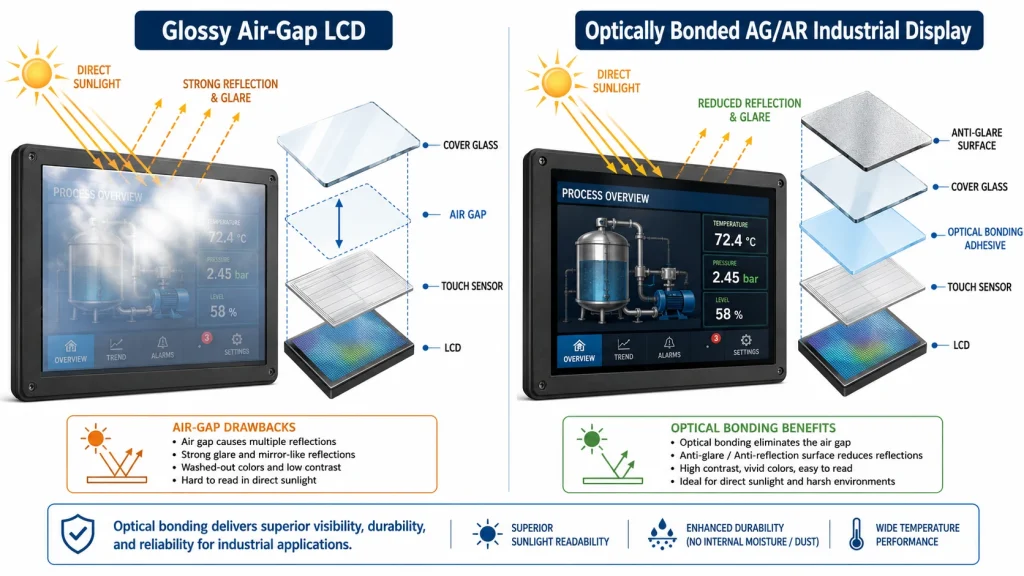
Die effizienteste Methode zur Verbesserung der Lesbarkeit im Freien ist nicht immer der Einsatz zusätzlicher LEDs. Oftmals liegt der Schlüssel in der Reduzierung von Reflexionen. Optisches Bonden füllt den Luftspalt zwischen LCD oder Touchsensor und Deckglas, wodurch interne Reflexionen verringert und der wahrgenommene Kontrast verbessert werden. Entspiegelungs- und Antireflexionsbeschichtungen reduzieren Spiegelungen auf der Vorderseite. Zusammen können sie dazu führen, dass ein 1000-Nit-Display in manchen realen Umgebungen einen schlechter behandelten, helleren Bildschirm übertrifft.
Dies ist wichtig beim Vergleich von 1000 Nits und 2000 Nits. Wenn das 1000-Nits-Display über optische Verklebung und entspiegeltes Glas verfügt, das 2000-Nits-Display jedoch eine glänzende Air-Gap-Struktur aufweist, ist der Vergleich der nominellen Helligkeit nicht aussagekräftig. Der Nutzer nimmt die Helligkeit in Nits nicht direkt wahr; er sieht den Kontrast erst nach Einwirkung von Sonnenlicht und Reflexionen.
Kadi Display verfügt über separate technische Inhalte auf Antireflex- und BlendschutzbehandlungDie LCD-Anzeige im Außenbereich hebt Helligkeit, Kontrast, Reflexionsminderung, Temperaturbeständigkeit und Verklebung als kombinierte Parameter hervor. Aus SEO-Gründen und im Sinne der Nutzerintention sollte dieser Abschnitt intern auf Kadi-Seiten verlinken. LCD-Displays mit hoher Helligkeit, sonnenlichttaugliche Displays, optische Klebeverbindungen, entspiegelte Displays und industrielle Touchscreens für den Außenbereich.
Wärmemanagement: Der eigentliche Unterschied zwischen 1000 und 2000 Nits
Beim Wärmedesign unterscheiden sich die beiden Helligkeitskonzepte am deutlichsten. Ein industrielles Display mit 1000 Nits kann oft mit passiver Wärmeableitung realisiert werden, insbesondere bei Verwendung einer effizienten LED-Hintergrundbeleuchtung und Betrieb in einem belüfteten Gehäuse. Ein Display mit 2000 Nits benötigt hingegen häufig einen gezielteren Wärmeableitungsweg von der LED-Leiterplatte zur Rückplatte und weiter in das Gehäuse.
Der Displayhersteller und der Geräteentwickler sollten sich auf die Testbedingungen einigen. Wurde die Helligkeit bei Raumtemperatur oder bei 60 °C Umgebungstemperatur gemessen? Wurde das Display im Freien oder in einem abgedichteten IP65-Gehäuse getestet? Lief die Hintergrundbeleuchtung im Dauerbetrieb oder im zyklischen Betrieb? Diese Fragen sind wichtig, da Outdoor-Displays oft nicht beim Einschalten, sondern erst nach mehreren Stunden Sonneneinstrahlung ausfallen, wenn sich das Gehäuse stark erhitzt hat.
Eine praktische Regel: Benötigt ein Produkt 2000 Nits nur bei direkter Sonneneinstrahlung, sollte adaptives Dimmen von Anfang an in die Entwicklung einbezogen werden. Kadi Display Helligkeitsauswahlhilfe Außerdem wird die adaptive Dimmung mit einem Umgebungslichtsensor, einem PWM-gesteuerten Hintergrundbeleuchtungstreiber und einer Firmware-Logik für den Einsatz in industriellen Anwendungen mit hoher Helligkeit hervorgehoben.
Treiberdesign: Stromstärke, PWM, analoge Dimmung und Sicherheitsmargen
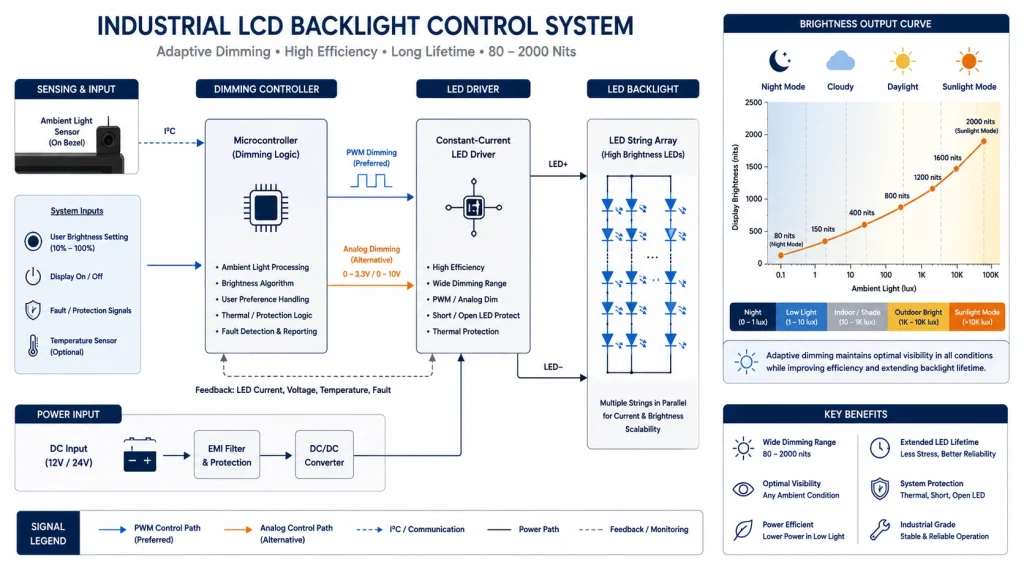
Der LED-Treiber ist ein weiterer Unterschied. Eine Hintergrundbeleuchtung mit 1000 Nits kommt oft mit einem einfacheren Konstantstromtreiber und einer moderaten Anzahl von LED-Ketten aus. Eine Hintergrundbeleuchtung mit 2000 Nits benötigt hingegen mehr LED-Ketten, eine höhere Strombelastbarkeit, eine bessere Stromanpassung, einen stärkeren Schutz und ein sorgfältigeres EMV-Design. Ist der Treiber nicht stabil, leiden Helligkeitsgleichmäßigkeit, Flimmern und Wärmeableitung.
Die Dimmsteuerung sollte ebenfalls klar spezifiziert werden. PWM-Dimmung ist gängig, die PWM-Frequenz muss jedoch hoch genug sein, um sichtbares Flimmern oder Kamerastörungen in der Zielanwendung zu vermeiden. Analoge Dimmung kann Flimmerprobleme reduzieren, jedoch bei niedrigem Strom die Farbe oder das Verhalten von LEDs verändern. Viele Industrieanwendungen nutzen einen Hybridansatz.
Bei Geräten für den Nachteinsatz ist die minimale Helligkeit genauso wichtig wie die Spitzenhelligkeit. Ein Bildschirm mit 2000 Nits, der sich nicht stufenlos auf ein angenehmes Nachtniveau abdunkeln lässt, stellt ein Sicherheitsrisiko in Fahrzeugen, Schiffsanlagen, Sicherheitstechnik und Wartungsterminals dar. Die Spitzenhelligkeit ist zwar ein Verkaufsargument, die Qualität der Dimmfunktion entscheidet jedoch darüber, ob die Bediener das Display tatsächlich rund um die Uhr nutzen können.
Lebensdauer und Zuverlässigkeit: Warum der Auslastungsgrad wichtig ist
Höhere Helligkeit bedeutet in der Regel eine höhere Belastung der LEDs. Das macht 2000 Nits nicht automatisch unzuverlässig, aber Angaben zur Lebensdauer müssen im Kontext betrachtet werden. Die Lebensdauer der Hintergrundbeleuchtung wird oft mit L70 oder T70 angegeben. Diese Werte bezeichnen den Punkt, an dem die Helligkeit auf 70 Prozent der anfänglichen Leuchtdichte abfällt. Der Wert hängt vom LED-Strom, der Sperrschichttemperatur, dem Tastverhältnis, der Wärmeableitung und den Umgebungsbedingungen ab.
Ein 1000-Nit-Display, das in einem Fabrikkiosk mit moderater Auslastung betrieben wird, kann seine vorgesehene Lebensdauer mit einfacher passiver Kühlung erreichen. Ein 2000-Nit-Display, das in einem geschlossenen Außengehäuse dauerhaft mit voller Leistung läuft, altert deutlich schneller, sofern es nicht über effiziente LEDs, reduzierten Stromverbrauch, gute Wärmeableitung und adaptive Dimmung verfügt. Sinnvoller ist es, nicht permanent mit 2000 Nits zu arbeiten, sondern diese Helligkeit nur dann bereitzustellen, wenn das Umgebungslicht sie erfordert.
Für Einkaufsteams bedeutet dies, mehr als nur die Helligkeitsanzeige (Nit) zu vergleichen. Fragen Sie nach der Lebensdauer bei der angegebenen Helligkeit und Temperatur, nicht nur nach der allgemeinen Lebensdauer der Hintergrundbeleuchtung. Erkundigen Sie sich, ob die Lebensdauer bei 25 Grad Celsius oder unter industrieller Betriebstemperatur angegeben wird. Fragen Sie, wie sich die Helligkeit nach dem Einbrennen verändert und ob es eine empfohlene Dimmkurve für den Feldeinsatz gibt.
Anwendungsmapping: Wann 1000 Nits ausreichen und wann sich 2000 Nits lohnen
Für helle Fabrikhallen, überdachte Außenkioske, Ladestationen für Elektrofahrzeuge unter Vordächern, Lagertore, landwirtschaftliche Hütten mit Halbschatten, medizinische Geräte in Innenräumen unter starkem Lampenlicht und Industriemonitore in Fensternähe ist ein Display mit 1000 Nits in der Regel die bessere Wahl. Es bietet eine hohe Lesbarkeit, ohne die thermische Belastung und den Stromverbrauch zu stark zu belasten.
Eine Displayhelligkeit von 2000 Nits ist gerechtfertigt, wenn das Gerät freiliegendem Sonnenlicht, direkter Sonneneinstrahlung, reflektiertem Wasser oder Schnee, Wüstenlicht, großer Entfernung, sicherheitskritischen Alarmen oder dickem Schutzglas ausgesetzt ist. Beispiele hierfür sind Navigationsdisplays für Schiffe, Bergbaufahrzeuge, Bahnsteigterminals, industrielle Displays am Straßenrand, SCADA-Panels im Außenbereich, HMIs von Baumaschinen und Fernüberwachungsterminals für Energiesysteme.
Die falsche Wahl führt zu unterschiedlichen Problemen. Eine zu geringe Helligkeit von 400 oder 1000 cd/m² kann zu einem blassen Bild und Reklamationen führen. Eine zu hohe Helligkeit von 2000 cd/m² in einem halbschattigen Gerät kann unnötige Wärmeentwicklung, Kosten, erhöhten Stromverbrauch und eine schnellere Alterung der Hintergrundbeleuchtung verursachen. Die richtige Wahl hängt von der Umgebungshelligkeit, der Oberflächenreflexion, dem Gehäusedesign und dem Betriebsprofil ab.
Helligkeitsauswahlkarte
Checkliste für die Beschaffung: Fragen vor der Bestellung eines 1000- oder 2000-Nits-LCD-Monitors
Vor der Freigabe eines LCD-Moduls mit hoher Helligkeit sollten die Entwicklungs- und Beschaffungsteams einige gezielte Fragen stellen. Handelt es sich bei der Zielhelligkeit um eine typische oder minimale Helligkeit? Wird sie vor oder nach dem Touchpanel und dem Deckglas gemessen? Wie hoch ist der Stromverbrauch bei voller Helligkeit? Wie lange ist die Lebensdauer der LED-Hintergrundbeleuchtung und unter welchen Temperaturbedingungen? Ist eine optische Verklebung enthalten? Welche Antireflexions- oder Antihaftbehandlung wird verwendet? In welchem Temperaturbereich ist das Modul einsetzbar? Gibt es einen Umgebungslichtsensor und eine Dimm-Firmware? Welche Gleichmäßigkeit wird bei hoher Helligkeit gewährleistet?
Bei 1000-Nit-Modulen steht in der Regel ein ausgewogenes Verhältnis im Vordergrund: ausreichende Lesbarkeit, stabile Stromversorgung, effizienter Stromverbrauch, einfache Integration und geringe Wärmeentwicklung. Bei 2000-Nit-Modulen hingegen ist kontrollierte Belastung das Ziel: Helligkeit nur bei Bedarf, hohe Wärmeableitung, geringe Reflexionen, robustes Glas und geprüfte Lebensdauer. Diese beiden Produktkategorien gleichzusetzen, führt unweigerlich zur falschen Displaywahl.
Zusammenfassung: Gleiche hohe Helligkeit, anderer Herstellungsansatz
Der Unterschied zwischen 1000 und 2000 Nits ist nicht nur eine Zahl im Datenblatt. Bei 1000 Nits geht es vor allem um eine effiziente LED-Hintergrundbeleuchtung und gute Lesbarkeit bei Sonnenlicht. Bei 2000 Nits hingegen stehen ein hochdichtes Hintergrundbeleuchtungsdesign, Wärmemanagement, Treiberreserven, optische Folien, Verklebung, Dimmbarkeit und Lebenszyklusmanagement im Vordergrund.
Für die meisten industriell genutzten, teils im Freien eingesetzten Displays bieten 1000 cd/m² mit optischer Verklebung und Entspiegelung oft das beste Preis-Leistungs-Verhältnis. Bei direkter Sonneneinstrahlung, Reflexionen im Meer, Wüsteneinsätzen und vollständig exponierten Außendisplays können 2000 cd/m² die richtige Wahl sein, jedoch nur bei korrekter Auslegung des gesamten Hintergrundbeleuchtungssystems.
Kurz gesagt: 400 Nits eignen sich für kontrolliertes Arbeiten in Innenräumen, 1000 Nits für gute Lesbarkeit bei Sonnenlicht und 2000 Nits für optimale Sichtbarkeit im Freien. Das beste Display ist nicht das hellste, sondern dasjenige, dessen Hintergrundbeleuchtung, Optik, Wärmeableitung, Dimmverhalten und Lebensdauer optimal auf die realen Umgebungsbedingungen abgestimmt sind.
Quellenangaben und Prüfgrundlage
Kadi Display: Leitfaden zur Auswahl der Helligkeit industrieller Displays: 400, 1000 und 2000 Nits. Wird für die Helligkeitsstufeneinteilung, das adaptive Dimmkonzept und die interne Verknüpfungsrelevanz verwendet.
Kadi Display: Produktkategorie TFT-LCD-Displaymodule. Beispiel: Industrielles 10,1-Zoll-TFT-LCD-Display mit 1280 x 800 Pixeln und 1000 cd/m² Helligkeit (LVDS).
Kadi Display: So wählen Sie LCD-Displays mit hoher Helligkeit aus. Dieser Artikel behandelt die Auswahl von LCD-Displays für den Außenbereich mit 1000 Nits oder mehr sowie die Diskussion über LED-Hintergrundbeleuchtung.
Kadi Display: Sonnenlichttaugliche TFT-LCDs für Außenanwendungen in Fahrzeugen und der Landwirtschaft. Geeignet für einen Helligkeitsbereich von ca. 800–1000 cd/m², der auch bei Sonnenlicht gut lesbar ist.
Kadi Display: Antireflexions- und Entspiegelungsartikel. Wird für interne Verlinkungen im Zusammenhang mit der AG/AR-Behandlung verwendet.
Orient Display TFT-Referenzdisplay mit hoher Helligkeit. Wird nur als allgemeiner Branchenvergleich für BEF/DBEF- und 1500-2000-Nit-Hintergrundbeleuchtungsvarianten verwendet.
Haftungsausschluss: Dieser Artikel dient als informativer Beitrag für Einkäufer und Ingenieure von Industriedisplays. Die Zahlenbeispiele stellen repräsentative technische Bereiche dar und sind keine garantierten Produktspezifikationen. Bitte klären Sie vor der Freigabe des Designs mit dem Display-Lieferanten die endgültige Helligkeit, Leistungsaufnahme, optische Verklebung, Wärmeleistung, Lebensdauer der Hintergrundbeleuchtung und Zertifizierungsanforderungen. Markennamen und zitierte Website-Namen sind Eigentum ihrer jeweiligen Inhaber.
Vorherige
Raspberry Pi-Bildschirme für industrielle HMIs
Nächster
Auflösung, Ausfallsicherheit und Integration: Ein Rahmenkonzept für die Auswahl zwischen industriellen Displays mit den Auflösungen 1280×720, 1280×800 und 1920×1080
Hinterlasse einen Kommentar

Neueste Blog & Nachrichten
- Industrial LCD EOL: What Happens from Pre-Announcement to Replacement Mass Production?
- Electronic Component Obsolescence Management for Industrial Displays: An OEM Guide
- How to Develop a Production Ready Custom Display Assembly TFT Module Touch Cover Glass FPC Bonding and Mounting
- 15 Pin vs 22 Pin Raspberry Pi DSI Connectors Cable Pinout and Compatibility
- Native MIPI DSI vs LVDS or HDMI Bridge: An OEM Display Architecture Decision Guide