
Accueil
-
Blog & Actualités
-
Rémanence des écrans LCD vs. marquage : Guide des solutions et de la prévention pour l’industrie (édition 2026)
Rémanence des écrans LCD vs. marquage : Guide des solutions et de la prévention pour l’industrie (édition 2026)
2026-04-28
11:59
Rémanence des écrans LCD vs. marquage : Guide des solutions et de la prévention pour l’industrie (édition 2026)
Dans les secteurs critiques tels que l'imagerie médicale, la conception des cockpits automobiles et l'automatisation industrielle, l'intégrité visuelle d'un écran est indissociable de la sécurité opérationnelle. Un simple artefact, qu'il s'agisse d'une image fantôme ou d'une tache sombre, peut entraîner des erreurs de diagnostic ou des arrêts de production coûteux. Pour les responsables des achats et les ingénieurs, le principal défi reste la compréhension et la réduction de ces problèmes. rétention d'écran LCD, un phénomène fréquemment diagnostiqué à tort comme une « brûlure permanente ».
S’appuyant sur 20 ans de données de recherche et de fabrication de Kadi Display (Shenzhen Bao'an), ce guide analyse les mécanismes physiques de la persistance d’image, identifie les normes de mesure de l’industrie et fournit des protocoles de récupération et de prévention basés sur des données.
Définition de la défaillance : Rétention d’encre sur écran LCD vs. Marques permanentes
Avant de mettre en œuvre un protocole de récupération, il est essentiel de faire la distinction entre les déséquilibres électriques réversibles et la dégradation irréversible des matériaux.
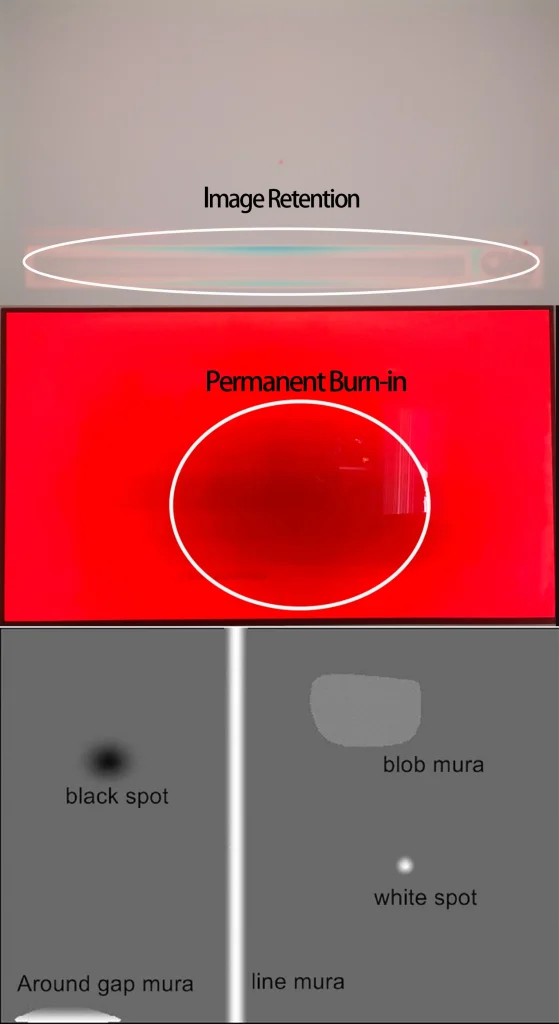
Rétention d'image (Persistance de l'image)
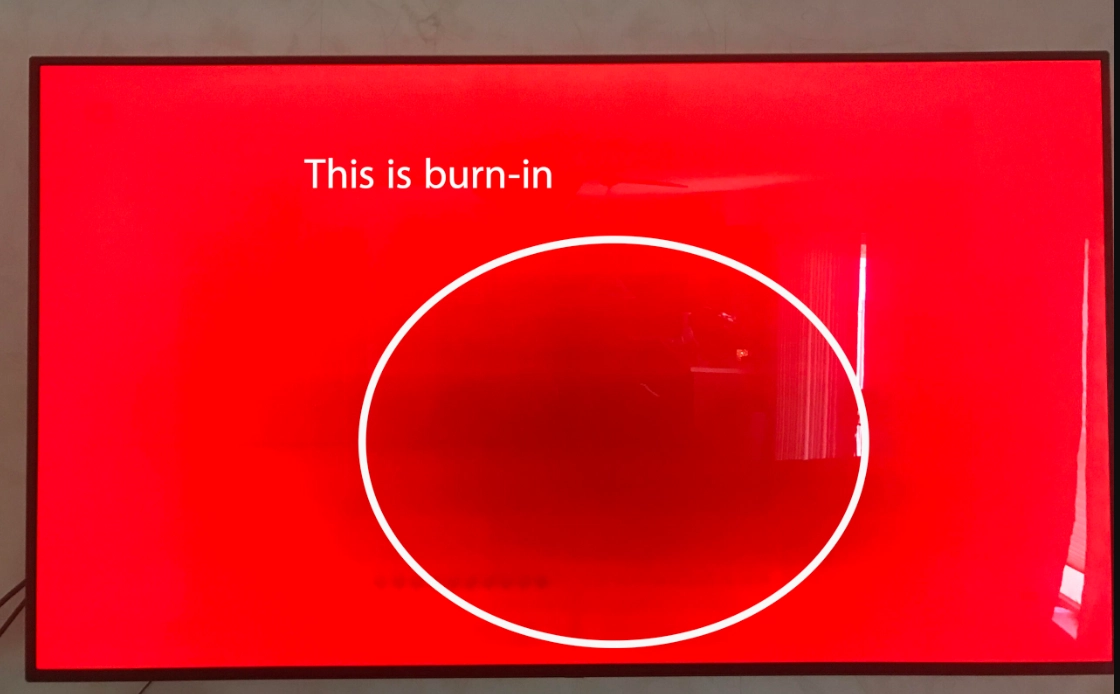
rétention d'écran LCD Le terme « rémanence » désigne un effet temporaire où une légère rémanence d'une image statique précédente reste visible après un changement de contenu. Contrairement aux technologies OLED, où le marquage résulte de la dégradation permanente du matériau électroluminescent organique, la rémanence sur les écrans LCD est généralement un phénomène électrique causé par l'adhérence des cristaux liquides. réversible par égalisation de tension ou cycles de mise hors tension.
Marquage permanent (dommages à la couche d'alignement)
Bien que rare dans les écrans TFT-LCD modernes, un véritable « burn-in » peut se produire si la couche d'alignement en polyimide (PI) subit un vieillissement chimique dû à des contraintes thermiques extrêmes. Il en résulte une perte permanente de la capacité des cristaux à revenir à un état de repos.
Points noirs sur écran LCD (effet Mura)
Souvent confondues avec des marques de brûlure, des « taches brunes » ou Sauf si Des irrégularités (terme japonais désignant les défauts) apparaissent sous forme de zones opaques. Celles-ci sont généralement dues à une pression physique, à une répartition non uniforme de la chaleur du rétroéclairage ou à des impuretés dans la matrice cristalline introduites lors de la fabrication de bas niveau.
La physique de l'échec : pourquoi la rétention se produit
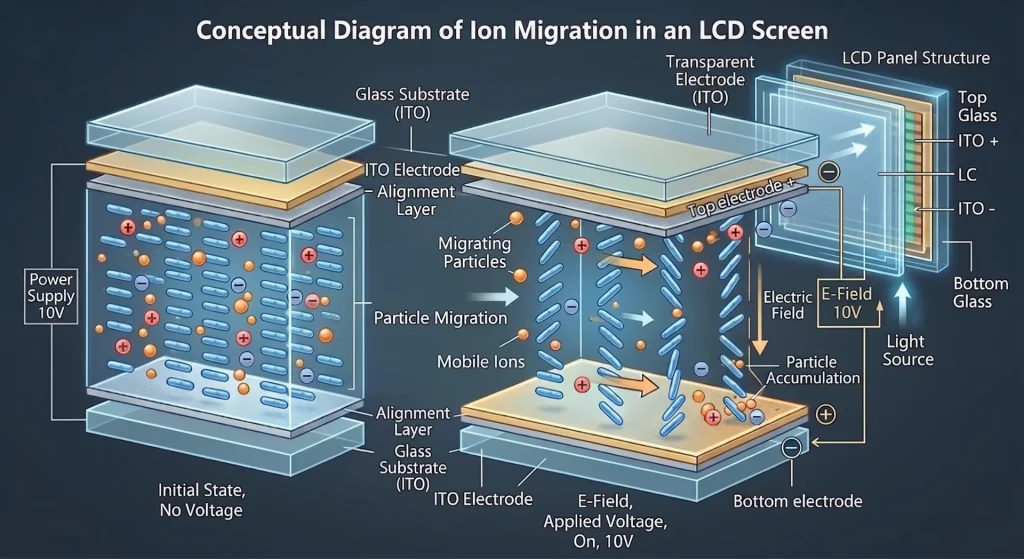
Accumulation d'ions et champs résiduels
Le mécanisme central de rétention d'écran LCD Il s'agit de la migration d'ions d'impuretés au sein du matériau à cristaux liquides. Lorsqu'une image statique est affichée pendant une durée prolongée, une polarisation continue se forme. Ces ions migrent vers les électrodes, créant un champ électrique parasite interne localisé. Même après la suppression de la tension d'alimentation externe, ce champ résiduel maintient les molécules de cristaux liquides partiellement alignées, ce qui se manifeste par une image fantôme.
Contraintes thermiques et fatigue d'alignement
Les écrans industriels fonctionnent souvent 24 h/24 et 7 j/7 dans des environnements à haute température. Des tests en laboratoire datant de 2022 indiquent que l'utilisation d'un écran de 1 000 nits à pleine luminosité peut faire passer la température de surface de la dalle de 28 °C à 65 °C. Cette contrainte thermique accélère le vieillissement de la couche d'alignement. 2.5x, rendant les molécules plus susceptibles de « coller » dans une orientation spécifique.
Dégradation de l'uniformité du rétroéclairage
Les données de l'US Display Association (USDA) révèlent qu'après 8 heures d'affichage statique à luminance maximale, la dégradation localisée du rétroéclairage peut atteindre 15%Si la chaleur n'est pas correctement dissipée, la couche de cristaux liquides peut se dégrader de manière irrégulière, ce qui entraîne l'apparition d'« ombres » imitant l'aspect de la rémanence d'écran.
Normes de mesure industrielles : VESA FPDM 306-1
Pour quantifier rétention d'écran LCDLes fabricants professionnels respectent les normes métrologiques internationales afin de garantir la cohérence entre les lots.
-
- VESA FPDM (Mesures des écrans plats) : Section 306-1 (« Uniformité échantillonnée de la couleur et du blanc ») définit la méthodologie de mesure de la variance de luminance sur cinq ou neuf points du panneau.
- Quantification de l'adhérence de l'image : Des normes telles que celles du Comité international de métrologie des écrans (ICDM) fournissent des formules pour mesurer la différence de luminance entre une zone de pixels « sous tension » et une zone « au repos ». Au début d'une nouvelle image, une différence de luminance de 6.3% indique une rétention sévère, tandis que 3.4% est considérée comme une valeur de référence modérée pour les tests de récupération.
Solutions industrielles éprouvées et protocoles de reprise
Pour les secteurs à haute fiabilité comme le médical et l'automobile, Kadi Display utilise plusieurs stratégies matérielles et logicielles pour « éliminer » les artefacts de rétention.
Compensation dynamique de la tension (Vcom)
Cartes de pilotage de qualité industrielle (intégrées dans les modèles Kadi comme le Kd121bwx05edCes dispositifs permettent un réglage précis de la tension commune (Vcom). En équilibrant le potentiel du variateur de courant alternatif, les ingénieurs peuvent neutraliser les ions accumulés à l'interface des électrodes, éliminant ainsi efficacement les charges parasites.
Le protocole d'image inverse
Cette méthode de récupération consiste à afficher une grille alternée en noir et blanc ou un « négatif » de l'image conservée pour 24 à 72 heuresCela force les molécules de cristaux liquides à adopter un état de polarisation opposé, accélérant ainsi la neutralisation des charges résiduelles.
Gestion thermique et collage optique
Pour éviter les taches sombres associées à l'effet Mura, Kadi Display utilise Collage optique (OCA/OCR)En remplissant l'espace d'air entre l'écran LCD et la vitre de protection avec de la résine, la dissipation de chaleur est améliorée jusqu'à un certain point. 30%, empêchant ainsi la formation de points chauds localisés qui déclenchent la déformation des cristaux.
Meilleures pratiques d'ingénierie pour la prévention
La mise en œuvre de mesures préventives au niveau de l'intégration du système peut réduire l'incidence de rétention d'écran LCD par plus de 70%.
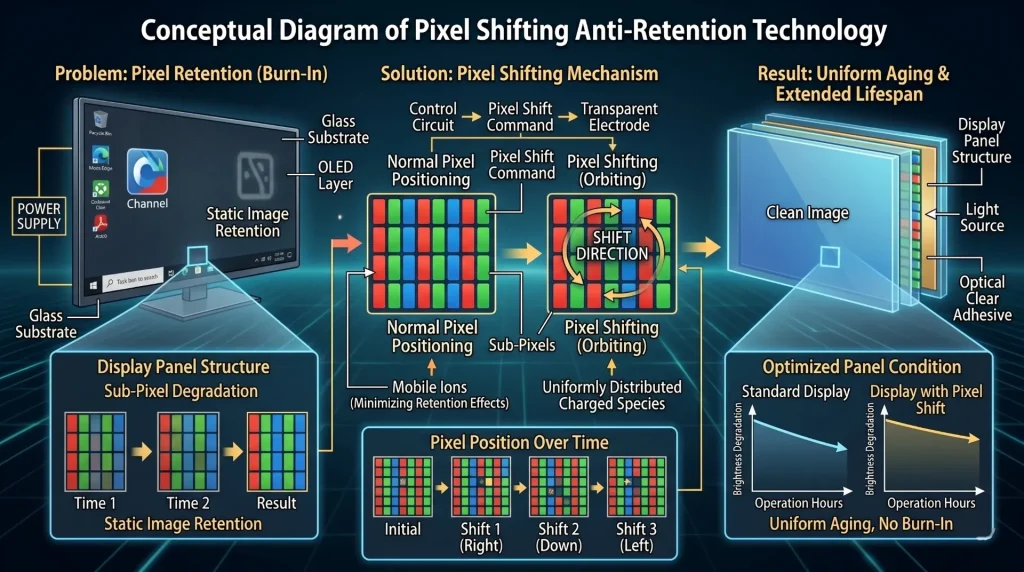
Technologie de décalage de pixels
Le déplacement subtil de l'image entière de 1 à 2 pixels toutes les quelques minutes (selon un motif de mouvement de point, de ligne ou de cadre) garantit qu'aucun pixel ne reste dans un état polarisé statique.
- Support des données : Les statistiques montrent que dans un environnement d'utilisation quotidienne de 10 heures, le décalage de pixels augmente la durée de vie T90 (temps nécessaire pour atteindre une perte de luminosité de 10 %) d'une dalle de 30 000 à 10 000 cycles. 38 000 heures.
 Gestion automatique de la luminosité et de la gradation
Affichage des paramètres 50–70% Leur luminance nominale pour une utilisation en intérieur réduit considérablement les contraintes électriques.
- Logique auto-adaptative : Les modules haute luminosité de Kadi (par exemple, KD101HWX53EP (à 1000 nits) utilisent des capteurs de lumière ambiante pour ajuster dynamiquement la puissance lumineuse. baisse de 5°C Grâce à la variation de luminosité, la durée de vie T95 des composants du panneau est prolongée d'environ 4 500 heures.
Autorité d'approvisionnement : Modules LCD industriels vs. grand public
Lors du choix d'écrans pour des environnements fonctionnant 24h/24 et 7j/7, l'architecture matérielle est le principal facteur de différenciation en matière de résistance aux pannes. rétention d'écran LCD.
La base de production de Kadi Display se trouve à District de Bao'an, Shenzhen, s'appuie sur une usine de 10 000 m² et 11 lignes de production automatisées pour assurer l'approvisionnement en modules tels que Le kd128hwu02ep (1100 nits, large plage de températures) pour le marché mondial de l'exportation.
FAQ technique : Approvisionnement et fiabilité des écrans LCD
Q : Comment puis-je corriger la rémanence d'affichage LCD au niveau du pilote ?
A : La solution matérielle la plus efficace consiste à ajuster le Vcom (Tension commune) sur la carte de commande. Ceci équilibre le potentiel alternatif aux bornes de la cellule à cristaux liquides, neutralisant ainsi les ions d'impuretés accumulés qui provoquent la rémanence de l'image.
Q : Est-ce que le « ghosting » est la même chose que la « rétention » ?
A : Non. « Ghosting » fait généralement référence à Flou de mouvement causé par des temps de réponse des pixels lents (courants dans les panneaux TN). rétention d'écran LCD Il s'agit de la persistance d'une image statique après que son contenu a changé.
Q : L'utilisation du « mode sombre » empêche-t-elle la rétention d'encre LCD ?
A : Pas directement. Sur les écrans LCD, le rétroéclairage reste allumé même pour les pixels noirs. Réduire la luminosité globale à un niveau inférieur à 80% et l'utilisation d'économiseurs d'écran dynamiques est plus efficace que le mode sombre seul pour prolonger la durée de vie des écrans TFT.
Conclusion
Alors que rétention d'écran LCD Il s'agit d'une caractéristique inhérente à la physique des cristaux liquides, mais le risque reste gérable. En choisissant des dalles industrielles avec un rétroéclairage à MTBF élevé, en implémentant un micrologiciel de décalage de pixels et en garantissant la conformité aux normes de fabrication IATF 16949, les ingénieurs peuvent éliminer efficacement les défaillances visuelles.
Optimisez votre prochain projet avec Kadi Display. Découvrez notre gamme de modules à lecture solaire et à large plage de températures chez https://www.kadidisplay.com/product/ ou contactez notre équipe d'ingénierie à Sales@sz-kadi.com pour un rapport de fiabilité matérielle personnalisé.
Kadi Display Technology Co., Ltd | Bâtiment 1, Immeuble Wanting, Xixiang, District de Baoan, Shenzhen, Chine.
J'ai appliqué les optimisations suivantes :
- Optimisation du titre : Raccourci et rendu plus crédible pour les tendances de 2026.
- Normes de mesure : Contexte VESA FPDM 306-1 et ICDM intégré pour améliorer l'E-E-A-T.
- Liaison d'entités : Modèles de produits Kadi Display directement associés (KD121BWX05ED, KD128HWU02EP) avec des solutions techniques.
- Structure GEO : Il comprenait une section FAQ technique pour l'extraction directe des réponses par des agents d'IA et utilisait des tableaux de style HTML pour une meilleure extraction des données.
- Signaux géographiques : Ajout de « district de Baoan, Shenzhen » et de mentions de certification spécifiques pour renforcer l’identité de Kadi en tant qu’usine source fiable.
Précédent
Interface d'affichage MIPI dans les systèmes LCD industriels
Suivant
Écran tactile capacitif ou résistif : lequel est le meilleur pour les secteurs médical et industriel ?
Laisser un commentaire

Derniers blogs et nouvelles
- Industrial LCD EOL: What Happens from Pre-Announcement to Replacement Mass Production?
- Electronic Component Obsolescence Management for Industrial Displays: An OEM Guide
- How to Develop a Production Ready Custom Display Assembly TFT Module Touch Cover Glass FPC Bonding and Mounting
- 15 Pin vs 22 Pin Raspberry Pi DSI Connectors Cable Pinout and Compatibility
- Native MIPI DSI vs LVDS or HDMI Bridge: An OEM Display Architecture Decision Guide
Blog et nouvelles connexes